

Your Compass in Basel By Isabel Balzer


Basel is a distinctive city: medium-sized, multicultural, and centred around a beautifully preserved medieval core. Deeply rooted in the tradition of the old masters, it has also established itself as one of Europe’s leading centres for contemporary artistic practice. The city is home to an exceptional concentration of world-class museums and cultural institutions, as well as Art Basel, widely regarded as the world’s premier fair for 20th- and 21st-century art.
Founded in 1970 by three local gallerists, Art Basel has grown into one of the most significant and closely watched events in the international art market. The influence of Art Basel, combined with Basel’s location at the meeting point of Switzerland, France, and Germany, helped the city’s art scene flourish over the following decades. New galleries, fairs, and independent spaces emerged, further strengthening its cultural profile.
In 1995, Liste Art Fair Basel was founded to support emerging artists and young galleries; in 2015, photo basel followed as Switzerland’s first fair dedicated entirely to photography.
During Art Week, Basel offers an exceptional range of events and exhibitions. In addition to Art Basel’s Unlimited and Parcours sectors, visitors encounter a broad array of side fairs, exhibitions, and cultural programmes across the city, alongside off-spaces and artist-run initiatives that reflect its experimental energy, as well as a small but outstanding group of galleries with strong local roots and international reach. Together, these elements create a scene that feels both globally connected and deeply embedded in the local community.
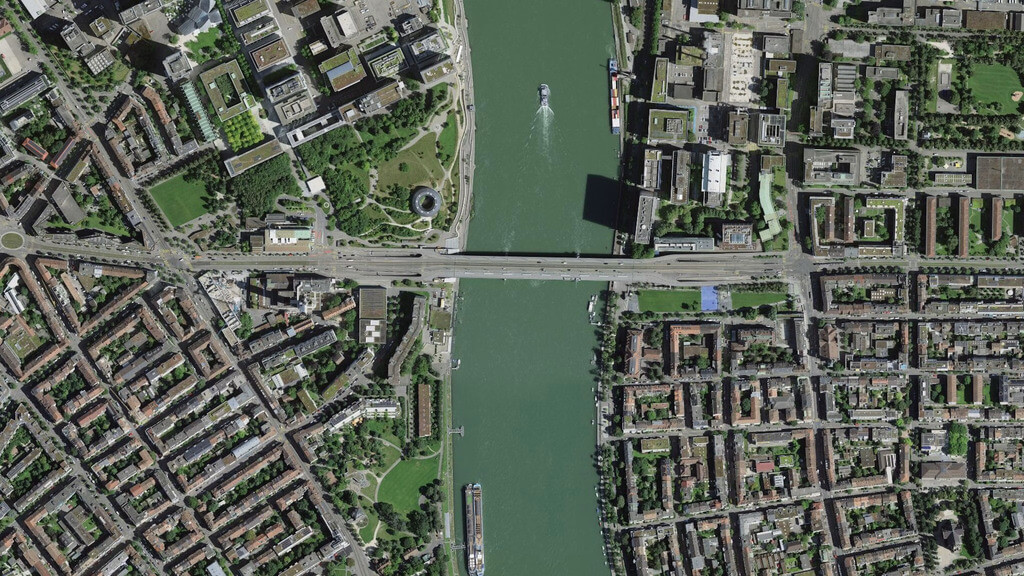
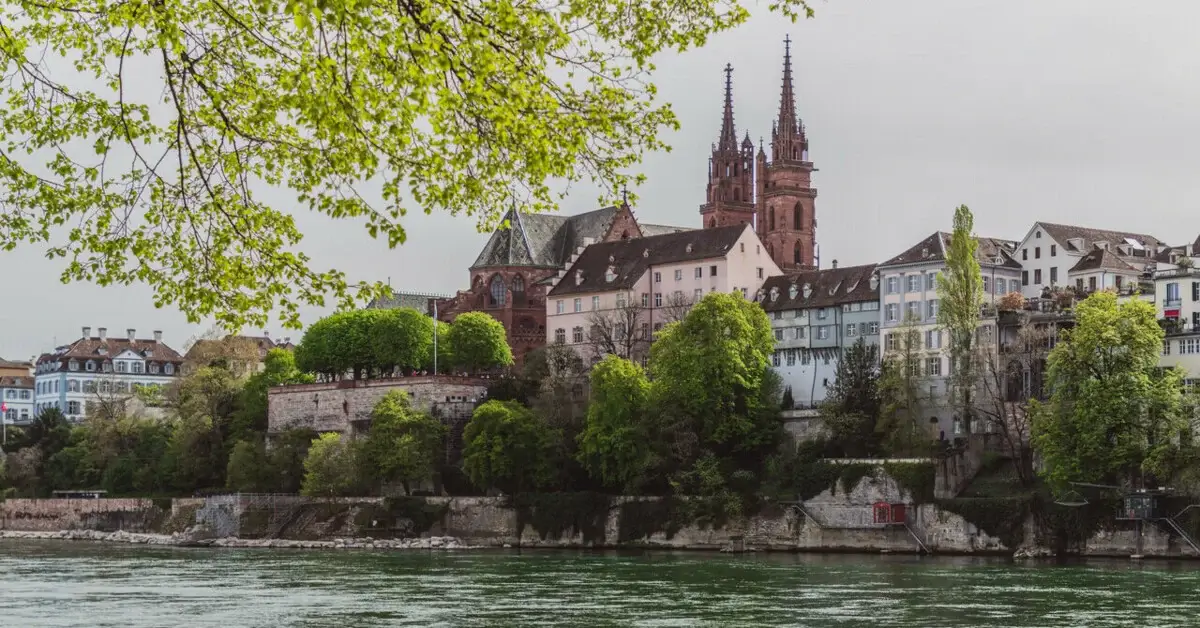
Set along both shores of the Rhine, Basel unfolds between two distinct yet deeply connected sides: the historic Grossbasel, with its medieval streets and old-world grandeur, and the more eclectic Kleinbasel, known for its lively, multicultural energy. The river itself acts less as a divide than as the city’s lifeblood—shaping its neighbourhoods, rhythms, and the particular charm that makes Basel feel both intimate and cosmopolitan at once.
Before we begin our tour, there is one thing we need to establish: once you arrive in Basel, your mood shifts. In summer, the city’s relaxed, almost southern atmosphere takes over, and suddenly you are ready to slow down and simply enjoy.
One ritual not to be missed is the Apéro: a pre-dinner drink accompanied by a few small bites, served across the city in bars, cafés, and eateries. Hardly any gallery or art space opens an exhibition without offering one. So please—indulge.
GROSSBASEL
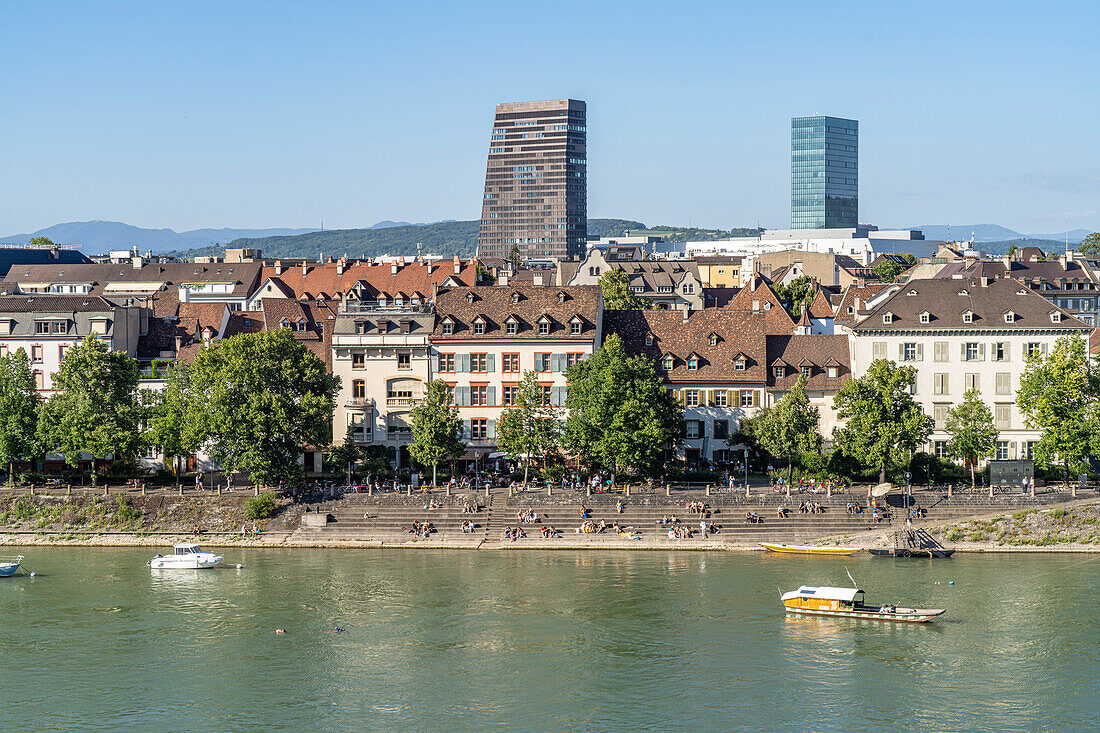
Our tour begins at the historic Münsterplatz, a spacious square at the heart and highest point of the old town, shaded by ancient trees. The stone benches on the Pfalz offer sweeping views across the Rhine into Kleinbasel, extending towards Germany and the Black Forest in the distance.
Nearby, the Museum der Kulturen and the Naturhistorisches Museum count among the jewels of Basel’s public collections and are both well worth a visit. Walking along the historic Rittergasse, we pass FOR ART, a new project by Klaus Littmann Kulturprojekte. Just around the corner, in Bäumleingasse, Knoell Rahmen is an insider tip for anyone who likes to look “behind the frames”.
Within close proximity is the Basel dependence of Hauser & Wirth, located across from the paramount Kunstmuseum Basel, with its world-leading collection housed across three buildings. It is one of the city’s most important landmarks and one of the oldest public art collections in the world.
Down the hill towards the river lies the Kunstmuseum Basel | Gegenwart, currently presenting works from its collection. Continuing past the city centre, we reach Kunsthalle Basel, which since its founding in 1872 has been dedicated to exhibiting, discussing, and reflecting on the art of the present, hosting some of the most groundbreaking exhibitions of its time.
Also not to be missed is S AM – Schweizerisches Architekturmuseum—housed in the Kunsthalle building. Next to Kunsthalle, a striking sculptural ensemble captures the viewer’s attention: Jean Tinguely’s Fountain (1977), Richard Serra’s Intersection (1992), and René Küng’s Grosse Mondleiter (1980).
This area is a popular local gathering place any time of the day and comes especially alive on the Saturday evening during Art Basel, when it buzzes all night with performances, music, and art during Finally Saturday.
A perennial recommendation is Restaurant Kunsthalle, which offers both casual outdoor dining and refined cuisine.
Passing Barfüsserplatz, with Basel’s Historical Museum housed in a former church, we arrive at Marktplatz, home to the striking red Rathaus. The daily market, with its local produce and regional specialities, invites visitors to linger and taste different foods.
Notable galleries such as Stampa, CFA – Contemporary Fine Arts and Gagosian are nestled among quaint speciality shops, traditional restaurants such as Hasenburg and Bohemia, and cafés like Bio Andreas and Beschle in and around Schneidergasse.
KLEINBASEL
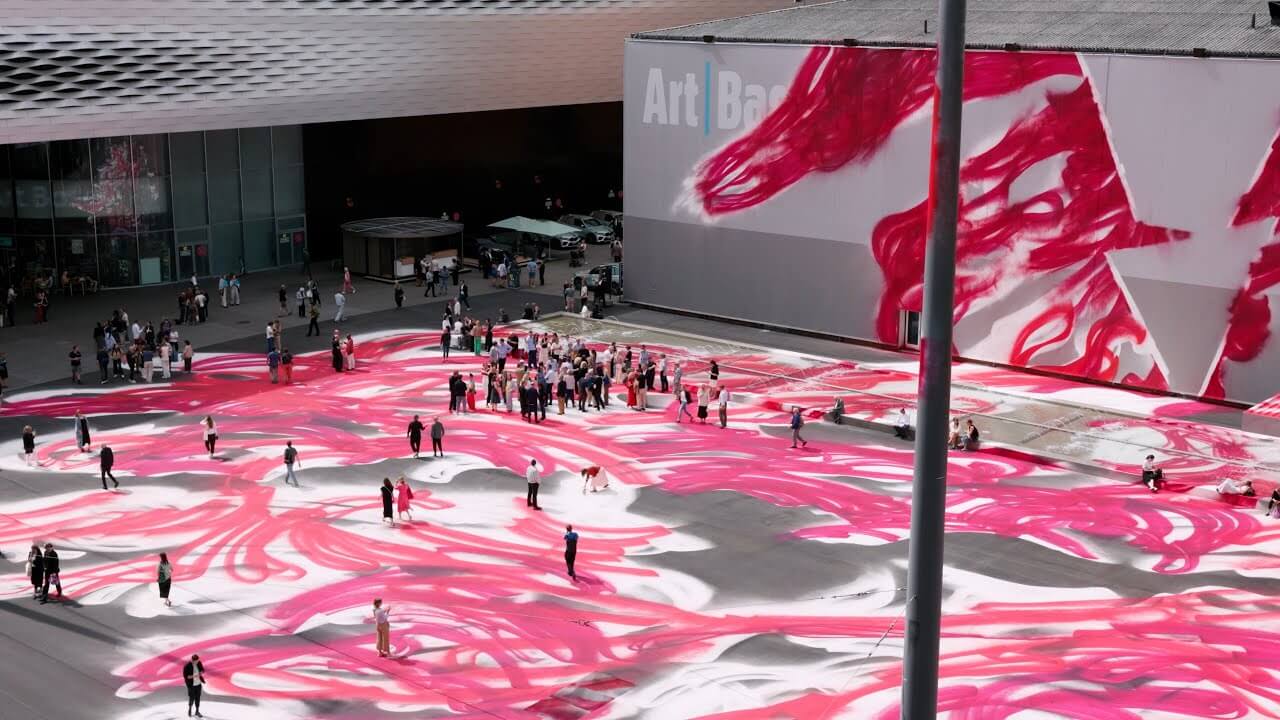
From here, we cross the bridge into Kleinbasel, a lively crossroads of artistic exchange where the city’s creative energy converges around Messeplatz, bringing together Art Basel, Unlimited, Parcours, Liste, the Swiss Art and Design Awards, and VOLTA.
The district is a cultural hotspot, packed with bars, cafés, restaurants, second-hand stores, bookshops, artists’ studios, galleries, and independent art spaces. Among them is kHaus in the former army barracks on the Rhine board, with its public workspaces, culinary offerings, artists’ studios, as well as Ausstellungsraum Klingental, one of the city’s most prolific artist-run spaces, located in a former Dominican convent.
Within walking distance are the Volkshaus and its bar and restaurant, alongside photo basel. Nearby galleries include Galerie Mueller, Falk Losniza, and Nicolas Krupp, as well as the artist-run space For. A visit here naturally calls for an apéro at Damatti.
The relatively young feminist and intergenerational gallery see you next tuesday—located just beyond Messeplatz along the No. 6 tram line—presents a diverse and international programme.
Kleinbasel pulses with activity, shaped by the presence of both locals and visitors, especially at night, when bars and restaurants such as Lauch, Renée, Zum goldenen Fass, Astro Fries, Klara, Lu’s, Lilly’s, Consum, and Pulpo carry the atmosphere of the district late into the evening.
A 20-minute walk or a short bus ride up the Rhine leads to one of the must-visit institutions, the Tinguely Museum. On the way there, you pass off-spaces such as Kasko in the former Warteck brewery. The red-brick complex now hosts exhibitions, performances, concerts, poetry slams, as well as food and drink, while the corner restaurant Brauerei serves local fare.
The Tinguely Museum is located in the beautiful and tranquil Solitude Park, in the shadow of the Roche towers. On warm days along the riverfront, you may find yourself dodging swimmers who enter the Rhine just below the museum. In good weather, the bar and restaurant Schöpfli offers a pleasant alternative to the busier city spots.
And if you still have not had enough of upper Kleinbasel, step into After Hours – Har, a temporary project and group exhibition in a condemned villa with a garden and pop-up restaurant along Eisenbahnweg.
BASEL WEST / ST. JOHANN
To return to Grossbasel, you can either take a scenic stroll along the Rhine to Johanniterbrücke or pack your clothes into a waterproof Wickelfisch and simply swim there.
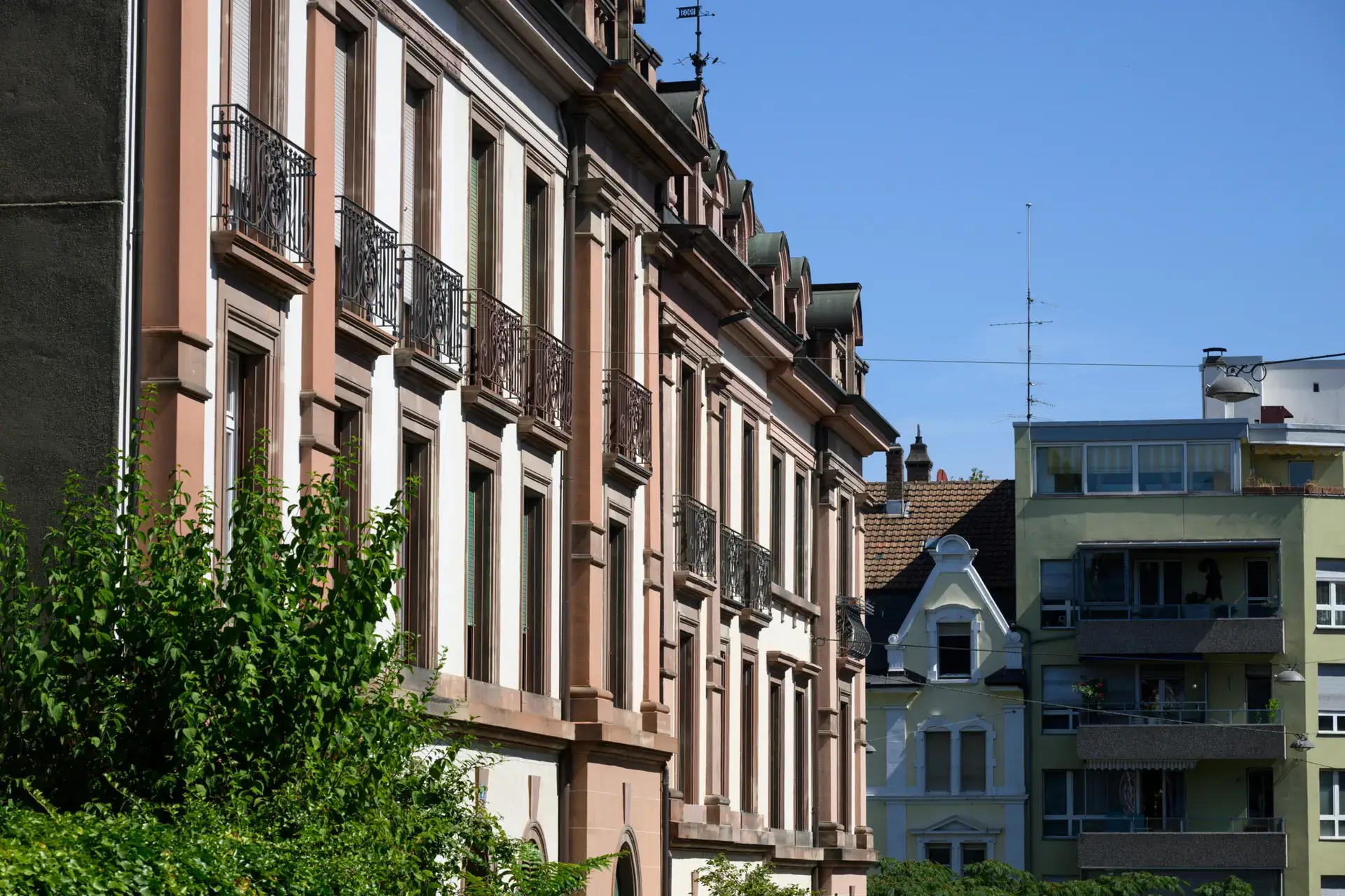
St. Johann, an old working-class neighbourhood in Basel West, has undergone significant changes in recent years. It now features numerous shops, cafés, restaurants, bars, and art hubs, and is also home to the University of Basel.
At Petersplatz, in front of the university, the Saturday flea market draws sellers and buyers from across the tri-national region. Nearby, Villa Renata—a space for contemporary exhibitions and projects—invites visitors to wander through its beautiful turn-of-the-century premises.
Hebel_121, one of Basel’s most established artist-run spaces, is located close to Galerie von Bartha and Tony Wüthrich Galerie. While in the neighbourhood, breakfast or lunch at the collectively owned Bäckerei Kult on Voltaplatz is well worth a stop.
One of Basel’s best-kept architectural secrets and one of the city’s most striking buildings is Antoniuskirche (1925–27) by Karl Moser, dedicated to St. Anthony of Padua. It was the first concrete church in Switzerland and features beautiful stained-glass windows.
Walking along Spalenring—or taking bus 50 back towards Basel SBB station—you reach this year’s venue of the fourth edition of Basel Social Club, titled Office, and the I Never Read, Art Book Fair. Both are housed in a former office building close to the Markthalle, a listed structure from 1929 crowned by a reinforced-concrete dome measuring sixty metres in diameter—the third largest in the world.
The Markthalle’s international culinary offerings, frequented by locals and visitors alike, are also worth a visit.
CAMPUS OF THE ARTS / GUNDELDINGEN
From Basel West, take the tram—or, even better, a bicycle—towards the Campus of the Arts at Dreispitz. On the way, stop by Annahme and Amore, two artist-run spaces located in the red metal office building near the main train station.
Over the past few years, Dreispitz, together with the adjacent residential district of Gundeldingen, has become one of Basel’s most dynamic up-and-coming neighbourhoods, gathered around the Campus of the Arts. The renowned FHNW Academy of Art and Design serves as an epicentre of new ideas within a vast former industrial zone, surrounded by art-supporting institutions and creative spaces including HEK (House of Electronic Arts), Kunsthaus Baselland, the international residency programme Atelier Mondial—with its Open Studios and Salon Mondial—and Schaulager.
The Dreispitz industrial area is also home to urban art projects by internationally renowned artists. Nearby lies the Auf dem Wolf district, filled with artist-initiated spaces and ateliers such as InfoSpace.
AROUND BASEL
Basel’s location at the tri-national border of Switzerland, France, and Germany means that its cultural influence extends far beyond the city centre. In nearby Birsfelden, Kunstverein Salts offers discoveries of emerging artists.
From the main fair, a visit to Riehen and Fondation Beyeler—one of the world’s outstanding museums and collections—is well worthwhile. Here, Basel gradually fades into the German countryside dominated by rolling hills and vineyards.
Rather than rushing through Weil am Rhein on the way to the Vitra Campus and Museum, it is worth spending a little time in older Weil, the old part of the town: a quaint old wine-making neighbourhood with the Museum am Lindenplatz and the Stapflehus, both currently showing contemporary art practices.
Altweil is gradually giving way to a busy multicultural city centre with shops, cafés, restaurants, and a long tradition of textile production and labour history. The Fotostudio Frei—one of the first buildings by renowned Basel architectural firm Herzog & de Meuron (1981–82)—Kesselhaus and the Colab Gallery provide a refreshing contrast to Basel’s rather busy art scene.
Before returning to Basel, a hop across the border into France and a visit to Saint-Louis should be scheduled in. The Fondation Fernet-Branca, housed in a former herbal liquor factory, not only offers a fantastic setting for contemporary art but also features an impressive sculptural façade with the company’s signature eagle logo.
This year’s major summer exhibition, Tempesta, brings together seven international artists working across sculpture and installation.
At the end of the week—or if you decide to stay a little longer and savour the city—spend an evening at one of the many buvettes and food caravans along the Rhine. There, after a swim in the river, you can relax with a drink and something to eat while enjoying one of the very best parts of summer in Basel.
