

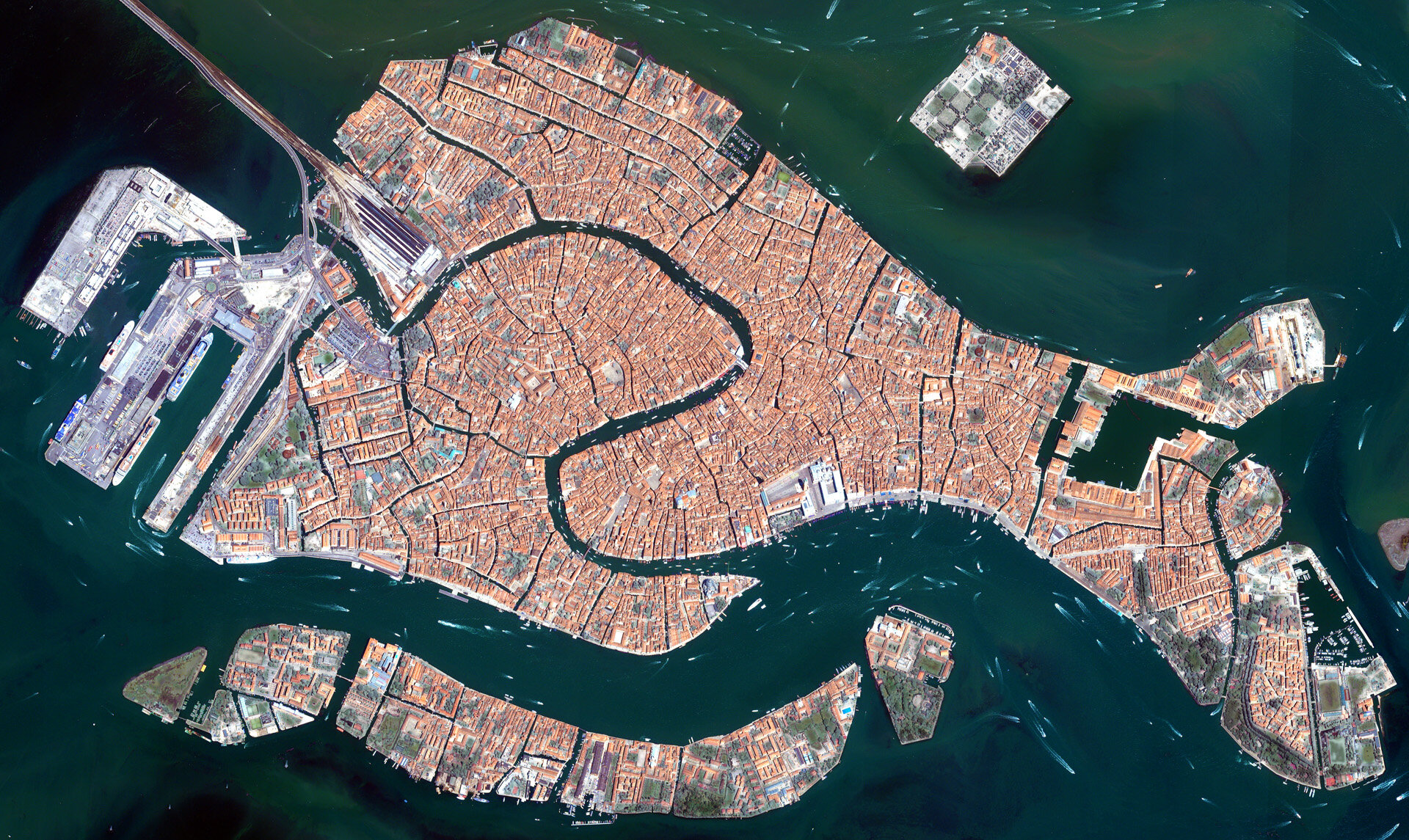
Your Compass in Venice 2026


Every two years, for seven months, Venice becomes the global centre of contemporary art. The most recent Biennale Arte recorded over 700,000 tickets sold, with 27,966 visitors during the opening days. Beyond the Giardini and Arsenale, the entire city turns into an open-air stage for art, while national pavilions and collateral events have sparked debate – particularly over the limited presence of Italian artists. Moreover, the current instability of the global geopolitical landscape has renewed attention on the return of national participations from Russia and Israel. Decisions concerning the United States pavilion have also become a subject of debate. In recent years, the lagoon has also attracted growing interest from foundations and art spaces led by prominent international figures, many of whom have chosen Venice not only as the headquarters for their foundations but also as a place to live – contributing to the vitality of both the art scene and the wider local community. To navigate this landscape, this guide offers an itinerary through the main sites, themes and key events of the 61st International Art Exhibition.
IN MINOR KEYS – 61st INTERNATIONAL ART EXHIBITION
LA BIENNALE DI VENEZIA
Titled “In Minor Keys” and curated by Koyo Kouoh, the exhibition runs from 9 May to 22 November 2026, with previews from 6–8 May. Following Kouoh’s passing in May 2025, La Biennale chose to realise the project as she conceived it. Appointed Artistic Director in November 2024, she had already defined the curatorial framework, artists, works, catalogue and exhibition design, working closely with her team – Gabe Beckhurst Feijoo, Marie Hélène Pereira, Rasha Salti, Siddhartha Mitter and Rory Tsapayi. The project stems from a collaborative process, marked by a key meeting in Dakar in April 2025 at RAW Material Company, under the shadow of a mango tree. Developed across continents through both remote work and in-person seminars, the exhibition brings together 110 participants from diverse contexts, selected for affinities and resonances across practices. Rather than fixed sections, the exhibition unfolds through recurring motifs: Shrines, Processions, Schools, Rest, and Performances. The exhibition design, developed by Wolff Architects, centres on the idea of the threshold as a transformative experience, creating a fluid, sensory environment marked by large indigo banners that guide visitors through the space.
GIARDINI / CASTELLO (SANT’ELENA)
Castello is the largest – and one of the most authentically “Venetian” – districts in the city. It retains a strong local character, yet comes alive during the Biennale, when international art and architecture enthusiasts mingle with residents. Visitors to the Giardini are welcomed by the newly renovated Central Pavilion, whose restoration began in December 2024 and was completed in March 2026. In addition, the Qatar Pavilion has secured a permanent site within the Giardini presenting a temporary installation, a tent, on the site where the future permanent pavilion designed by Lina Ghotmeh will be built. The exhibition “Untitled (a gathering of remarkable people)” featuring Rirkrit Tiravanija, Sophia Al Maria, Tarek Atoui, Alia Farid, Fadi Kattan. Among the national pavilions at the Giardini, highlights include the French Pavilion, featuring Yto Barrada’s “Comme Saturne”, and the Japanese Pavilion with Ei Arakawa-Nash’s project “Grass Babies Moon Babies”. This edition is also marked by several controversies, including the return of Russia, which risks jeopardising European funding for the Biennale. The United States Pavilion has also sparked controversy: the appointment of artist Alma Allen has drawn criticism over the selection process, shaped by new political guidelines, as well as over the subsequent tensions within the artistic and curatorial system involved. It is also overshadowed by moments of loss, notably the passing of Henrike Naumann, who was set to represent Germany alongside Sung Tieu with the project “Ruin”. To represent Canada in this edition, Abbas Akhavan, born in Tehran and based between Montreal and Berlin, presents a multidisciplinary practice that reflects on the relationship between place and history, attending to the geopolitical forces that define spaces. Upon leaving the Giardini along Via Garibaldi, make a stop at the Holy See Pavilion, “The Ear is the Eye of the Soul”, curated by Hans Ulrich Obrist and Ben Vickers in collaboration with Soundwalk Collective. The project unfolds across two venues: the Giardino Mistico dei frati Carmelitani Scalzi in Cannaregio and the Complesso di Santa Maria Ausiliatrice situated not far from the Giardini on the Fondamenta San Gioacchino.
At the junction of Via Garibaldi and Riva dei Sette Martiri, at Palazzo Caboto, you will find the first-ever pavilion of the Federal Republic of Somalia, titled “Saddexleey”. Rooted in Somalia’s tradition of poetry as a living cultural form, the exhibition unfolds through scent, sound, and image, forming a sensory experience across three movements. Along the Riva degli Schiavoni, at the Arsenale’s Institute for the Politics of Representation, make sure not to miss “D is for Duchamp: the Deep-Dyed Deceiver”. Still along the same fondamenta, the show “Bracha. The Room Is Shared” transforms the Metropole hotel room where Sigmund Freud stayed between 1895 and 1989 into a dreamlike pictorial space.
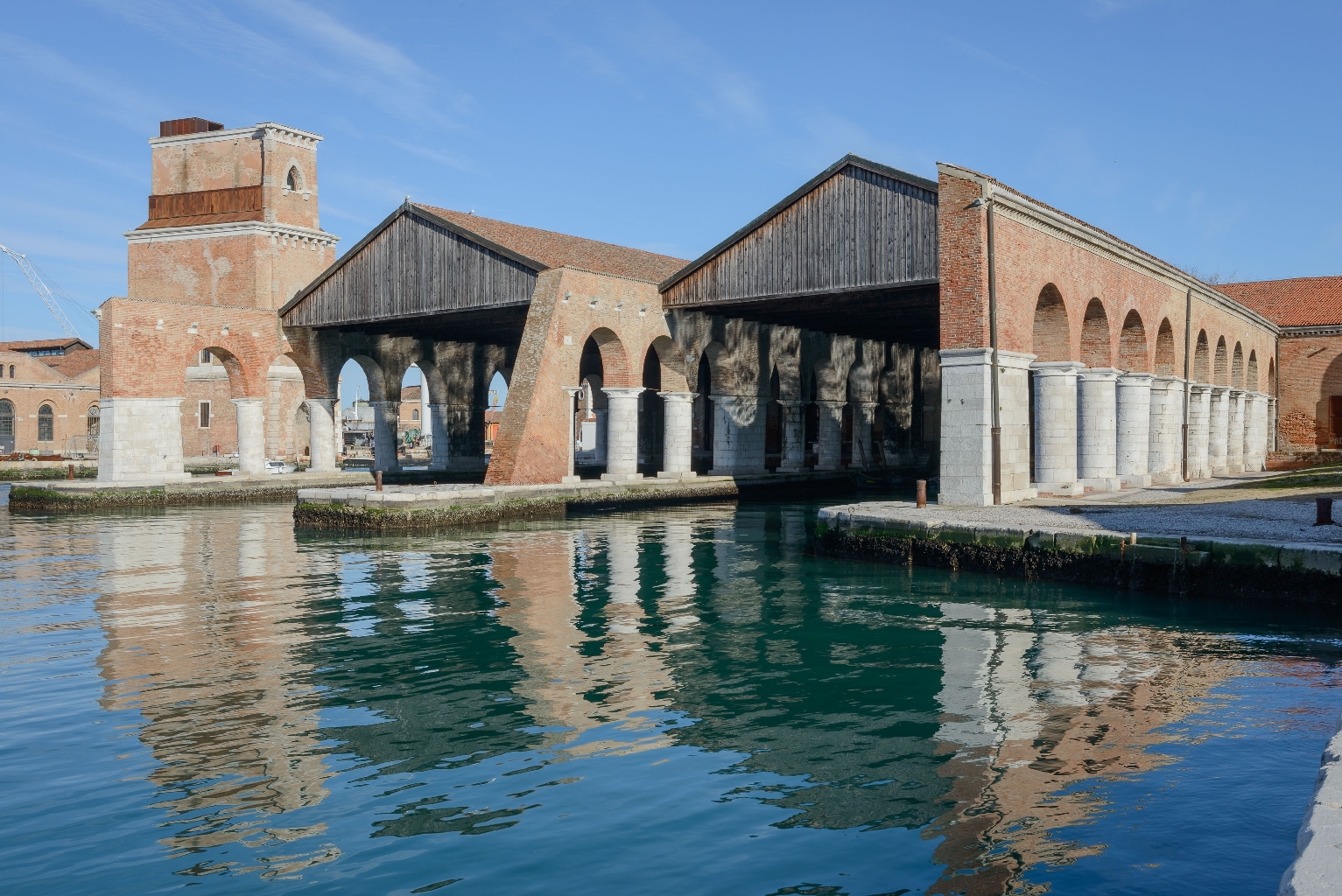
ARSENALE / CASTELLO
The artist Gala Porras-Kim, selected by Koyo Kouoh for the Applied Arts Pavilion at the Arsenale – realised in collaboration with the Victoria and Albert Museum – explores the complex relationship between cultural artefacts, museum practices and the institutional conventions that classify and narrate their role in history. The Italian Pavilion, located at the end of the Corderie at the Tese delle Vergini in the Arsenale, is promoted by the Direzione Generale Creatività Contemporanea (DGCC) del Ministero della Cultura and curated by Cecilia Canziani. The project “Con te con tutto” by Chiara Camoni takes the form of a collective call – an invitation to imagine new ways of inhabiting the world through encounter and shared experience with other forms of life. The artist’s reflections on this work and beyond can be found in the interview featured a few pages ahead in this guide. The 2026 edition of the Biennale is also shaped by an intense debate over the Israeli Pavilion’s participation, relocated from the Giardini to the Arsenale. Among the Arsenale pavilions not to be missed are Uzbekistan’s “The Aural Sea”, Chile’s “Inter-Reality”, and Slovenia’s “Soundtrack for an Invisible House”. This year, Mexico presents “Invisible Acts to Sustain the Universe” by the collective RojoNegro made up of María Sosa and Noé Martínez. Also within the Arsenale walls, the Pavilion of Malta presents “No Need to Sparkle” by Adrian MM Abela, Charlie Cauchi and Raphael Vella, curated by Margherita Pulè, featuring newly commissioned works by each artist.
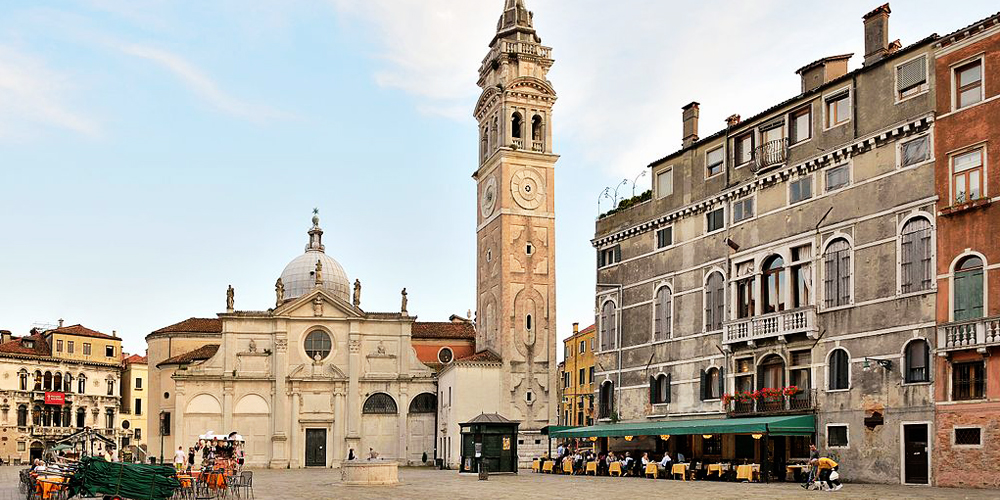
CASTELLO / SAN MARCO
Just outside the Arsenale, in Campo della Tana, you will find a cluster of exhibitions, including the Azerbaijan Pavilion and the collateral event “Fermata: Hong Kong in Venice”. Heading towards San Marco through the narrow calli of Castello, stop by Fondamenta dei Penini to visit the duo exhibition “No Go Elevator (Not Without No Keycard)” by Thom Yorke and Stanley Donwood. Beginning your journey towards the other side of Castello, pause at the Church of Sant’Antonin, where Gabrielle Goliath will present her performance “Elegy”, despite the withdrawal of the South African Pavilion following political controversy surrounding the work’s content. Keep walking and reach the Church of San Lorenzo, now home to Ocean Space, which has reintegrated the historic building into Venice’s cultural fabric. Here, the exhibition “Tide of Returns” – developed through the artistic research of the Repatriates Collective. Nearby, at the Complesso dell’Ospedaletto, “Canicula” marks the third and final chapter of the Fondazione In Between’s Venice programme, which since 2022 has presented a biennial exhibition dedicated to video art. Continue to the Museo di Palazzo Grimani, where the first solo exhibition in Italy by Ghanaian artist Amoako Boafo is on view. A short walk away, the Fondazione Querini Stampalia, under the direction of Cristiana Collu, presents “The Dreamer”, a project that unfolds throughout the building alongside the exhibitions “Cosmotechnics: Ding Yi as a Planetary Code” and “Nigel Cooke: Bad Habits”. Finally, the Riva degli Schiavoni offers a more iconic Venetian setting. Along the waterfront stands the Palazzo delle Prigioni, hosting the Taipei Fine Arts Museum’s collateral event, “Screen Melancholy” by Li Yi-Fan.
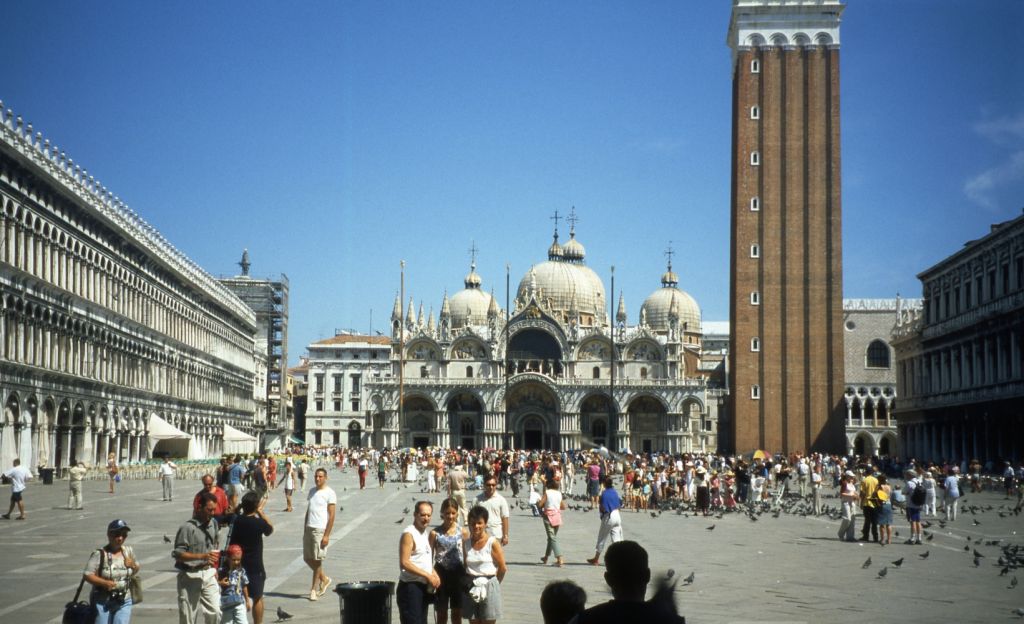
SAN MARCO / DORSODURO
Piazza San Marco is one of those places that captivates anyone who passes through, whether it’s their first visit or their hundredth. There is always something that draws the eye: the shifting light across the square, the constant movement of people, and above all the Basilica, which dominates the space with its striking presence. Its façade is a true mosaic of details – gold, marbles from across the Mediterranean, and richly layered decorations that reflect Venice’s history as a crossroads of cultures. Once you have taken in the remarkable beauty of the square, you can begin to explore its buildings, moving from one side to the other or strolling beneath the arcades. You can begin your visit with Negozio Olivetti, which hosts the collateral event “Hybrids” by Leandro Erlich. Beyond the exhibition, the space itself is a jewel of modern architecture and one of the finest examples of Carlo Scarpa’s work in the city. On the same side of the square, the upper floors once occupied by the Venetian Procuratie have in recent years been restored by David Chipperfield Architects. Here, SMAC Venice presents an exhibition on Alighiero Boetti alongside a collateral event by Lee Ufan. A short walk from Piazza San Marco, in Calle del Ridotto, Espace Louis Vuitton Venice presents “DOKU The Illusion” by Lu Yang featuring original sculptures and a video work centered on his new film. On the opposite side of the Basilica, just a few steps away, you will find “Spiral Economy”, a dialogue between the Franco-Swiss artist Julian Charrière and Antonio Canova, revealing the poetry of materiality. Before leaving Piazza San Marco, visit the Biblioteca Nazionale Marciana, one of the oldest public libraries, renowned for its exceptional collection of manuscripts and classical texts. During the Biennale, the Fondazione Bvlgari presents a collateral event featuring “Momentary Monument – The Library” by Lara Favaretto and “Fragments of Fire Worship” by Monia Ben Hamouda, two works that engage in dialogue with the library as a symbol of knowledge preservation. San Marco, beyond hosting some of the world’s most visited landmarks, is also one of Venice’s largest districts – alongside Castello – stretching almost to Rialto. Heading towards Teatro La Fenice, you will encounter influential galleries such as Victoria Miro Venice, and Caterina Tognon nearby. Not far away, in Campo Manin, the collateral event “If All Time Is Eternally Present”, featuring Kandis Williams, Meriem Bennani and Tai Shani, stages a nocturnal encounter between moving image, architecture and public space on the façade of Palazzo Nervi Scattolin. Continuing towards Campo Sant’Angelo, take a short detour to reach the Museo Fortuny, where you will find the monographic exhibition “Dreamers” by Erwin Wurm. The show places the artist’s surreal and pop-inflected figures in dialogue with the former home and studio of Mariano and Henriette Fortuny. From Campo Santo Stefano towards the Accademia, make a stop at Palazzo Franchetti, which hosts several exhibitions, including the collateral event “Vyacheslav Akhunov: Instruments of the Mind”. At Palazzo Polignac’s Magazzino Gallery, do not miss the collateral event “Still Joy – from Ukraine into the World”. Finally, the highlight of this area is Palazzo Grassi – Pinault Collection, which presents a major exhibition by Michael Armitage, titled “The Promise of Change”. The venue also hosts “Co-travellers” by Amar Kanwar. Just around the corner from Palazzo Grassi, you will find Giorgio Mastinu, a compact 9-square-metre gallery with a focus on drawing and visual culture.
DORSODURO / GIUDECCA / SAN GIORGIO
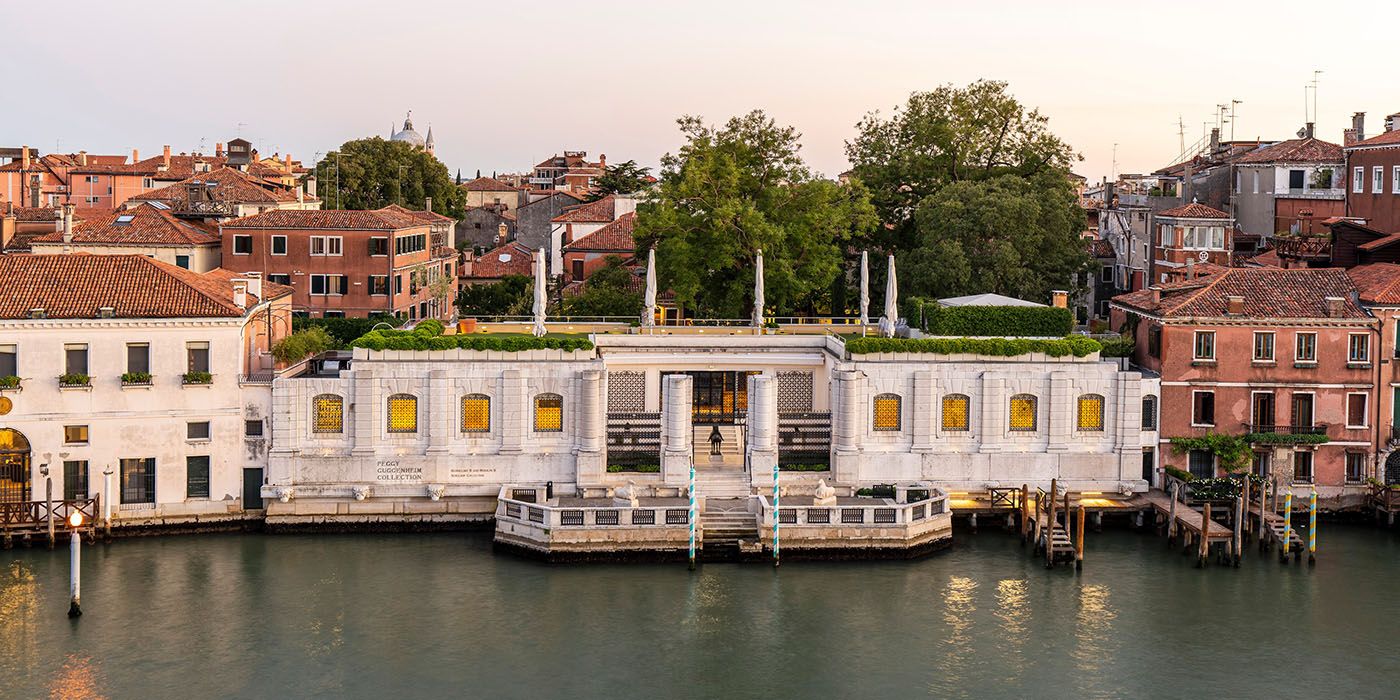
The abundance of museums, galleries and art spaces in Dorsoduro means that, alongside well-known landmarks, you will encounter a wealth of hidden gems, temporary exhibitions, pavilions and collateral events – so keep your eyes open along the way. Cross the Ponte dell’Accademia. At its foot, the Gallerie dell’Accademia houses an extraordinary collection of Venetian masters, such as Bellini and Tiepolo. This year, the museum presents “Transforming Energy”, making Marina Abramović the first living woman to be honoured with a major exhibition there. After this essential visit, head towards the Church of Santa Maria della Salute. Near Campo San Vio, Palazzo Cini presents David Salle’s “Painting in the Present Tense”. Just beyond, on the left, the Peggy Guggenheim Collection hosts “Peggy Guggenheim in London: Birth of a Collector”. While enjoying your visit to this contemporary art landmark, take a break on the terrace overlooking the Grand Canal and use the moment to look across to the opposite bank. In particular, focus on the garden of Palazzo Corner della Ca’ Granda, where Charlotte Colbert presents her latest installation “Possible Landscapes”. Continuing on, you will reach the imposing Basilica of Santa Maria della Salute. At the far end of the district lies Punta della Dogana, one of the two Venetian venues of the Pinault Collection. Here, exhibitions by Lorna Simpson’s “Third Person” and Paulo Nazareth’s “Algebra” are a must. Walking along the waterfront towards San Basilio, overlooking the Giudecca Canal, you will pass the Magazzini del Sale, hosting “XIV Steps”, a display of a new chapter in the practice of Pedro Cabrita Reis. At this point, you will not be far from Scuola Piccola Zattere, a non-profit space dedicated to continuing education and research within the expanded field of contemporary arts. From here, the islands of Giudecca and San Giorgio can be reached with a short vaporetto ride. Giudecca, facing Venice across the canal, has retained much of its local character while gradually embracing a contemporary identity, with a growing number of cultural spaces and initiatives. Among them is Spazio Punch, which presents “Darkness Visible: The Long Shadow of Dictatorship”. At the far end of the island, near the Zitelle stop, Casa dei Tre Oci now serves as the European headquarters of the Berggruen Institute. It currently hosts a solo exhibition by Joseph Kosuth, titled “The Exchange Value of Language Has Fallen to Zero”, curated by Mario Codognato and Adriana Rispoli. A short vaporetto ride will take you to the island of San Giorgio, home to Le Stanze del Vetro and Le Stanze della Fotografia. While there, do not miss the exhibition by Barry X Ball at the Abbey of San Giorgio Maggiore, as well as “Eroi d’Oro” by Georg Baselitz at Fondazione Giorgio Cini. Back in Dorsoduro, near the Zattere, the Fondazione Bevilacqua La Masa presents “The Dead” by Giangiacomo Rossetti at Palazzetto Tito. Along the same fondamenta, just a couple of doors down, step into the Venetian space of the Nicoletta Fiorucci Foundation – one of the city’s most recent additions – currently presenting “5 Works” by Lydia Ourahmane. Nearby, heading towards Santa Lucia station, Galleria Alberta Pane hosts “The Materiality of Judy Chicago”.
SANTA CROCE / SAN POLO / RIALTO
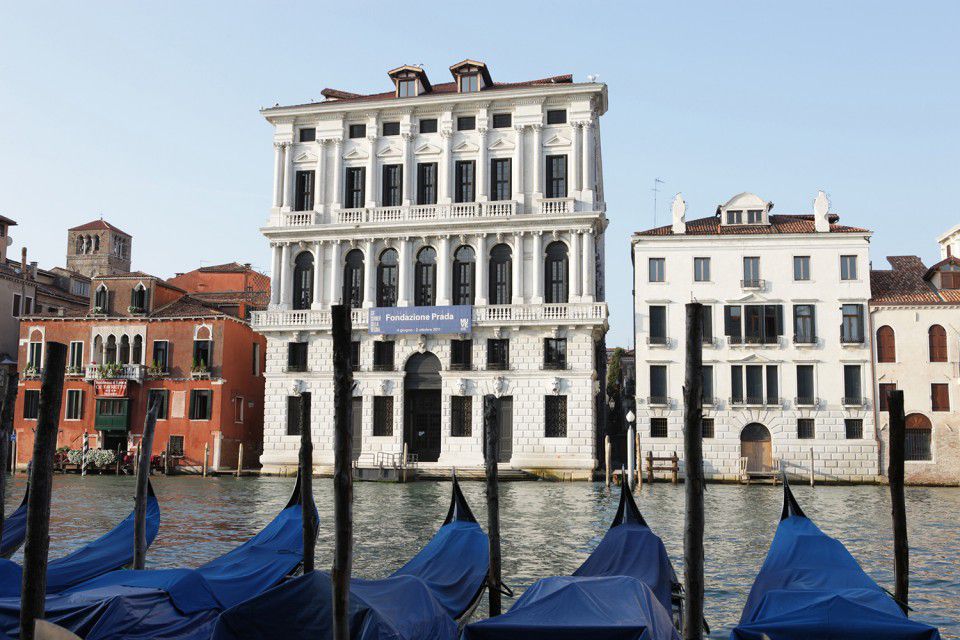
In the sestiere of Santa Croce, Piazzale Roma is one of only two land entry points to Venice. This makes the area particularly convenient for shorter visits, especially if arriving from the mainland or planning a same-day return. Nearby, where Piazzale Roma and the Rio Novo meet the Grand Canal, the district opens onto a quieter yet well-connected part of the city. The San Stae vaporetto stop provides easy access to Ca’ Pesaro, which this year presents two exhibitions dedicated to key figures in contemporary painting. A major show traces the development of Jenny Saville’s practice from the 1990s to the present, while “The Visitors” by Hernan Bas reflects on themes particularly resonant with the city. Just a short walk away, the Venetian venue of Fondazione Prada, housed in the historic Ca’ Corner della Regina, presents “Helter Skelter” by Arthur Jafa and Richard Prince. After visiting these two institutions, continue towards Joystick, an independent space dedicated to emerging artists, located away from the bustle of the city’s busiest streets. Following this route, you will reach Campo San Polo, where Tommaso Calabro Gallery presents “See You”, marking the gallery’s final exhibition. Just a few steps away, do not miss Beatrice Burati Anderson Gallery, housed in a typically Venetian setting split by a canal, where Giovanni Ozzola’s exhibition “Albedo – You See Me in the Twilight” is in close dialogue with the architecture of the historic 14th-century warehouses. Nearby, the Fondazione Albero d’Oro is worth a visit not only for the beauty of the palazzo itself, but also for “Le pli et le temps / La piega e il tempo” by Patrick Saytour. An important new addition to the city this year is the opening of the Fondazione by Belgian designer Dries Van Noten. Dedicated to craftsmanship, it inaugurates with “The Only True Protest Is Beauty”. Continue to reach the Archivio di stato, where “Archivio” by the Indian photographer Dayanita Singh is on view. You can now begin heading towards the Ponte degli Scalzi and stop at Palazzo Tiepolo Passi to see “Interiors”, an exhibition by the late self-taught painter Matthew Wong. On your way to Cannaregio, you will have the opportunity to visit one of Venice’s most majestic buildings, the Scuola Grande di San Rocco hosting “The Quiet Source” by Jan Fabre.
CANNAREGIO
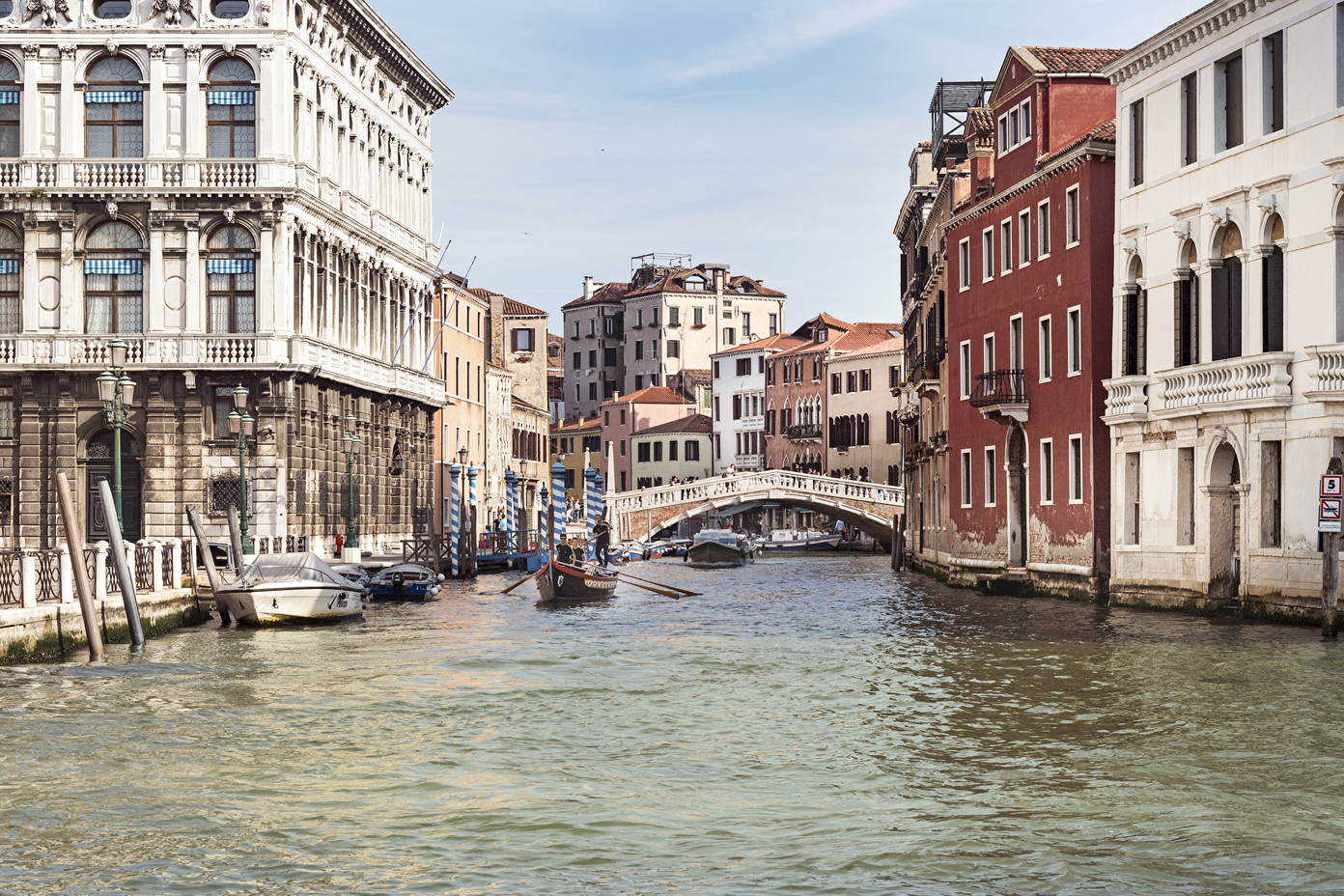
The constant flow of tourists and commuters makes Cannaregio one of Venice’s busiest and most chaotic sestieri. Moving along Strada Nova often means navigating dense crowds, weaving through passers-by and pausing to catch your breath. In this context, near Santa Lucia railway station, the second venue of the Holy See Pavilion is located at the Giardino Mistico dei Carmelitani Scalzi, a 5,000-square-metre oasis of peace. Just a five-minute walk from there, Anish Kapoor acquired the historic Palazzo Manfrin several years ago, which now houses his foundation. For the first time since 2022, it presents a selection of architectural models documenting both realised and unrealised projects from over fifty years of Kapoor’s practice. Berggruen Arts & Culture Palazzo Diedo, a dynamic venue for contemporary art, this year presents two exhibitions, including “Strange Rules”, conceived by Mat Dryhurst, Holly Herndon and Hans Ulrich Obrist. A short walk – and a few bridges – away, with a recommended stop at Vino Vero for a glass of natural wine and the showcase Daria Dmytrenko’s “Intrico”, curated by Mara Sartore. Also curated by Sartore, the exhibition “Nowruz: Images, Sounds and Voices from Contemporary Iran” arises from an encounter with Yasra Pouyeshman and is hosted at the Listening Bistrot Bea Vita. Just behind the Scuola Grande della Misericordia, Etnia Eyewear Culture presents the newly opened Etnia House of Arts, a cultural platform and international artist residency located in the restored Chiesetta della Misericordia. Along the Fondamenta dell’Abbazia, the Wilmotte Foundation presents the collateral event “Isole del Silenzio” by the Japanese sculptor Kan Yasuda. The Venice Venice Hotel is also hosting an ongoing exhibition, “Il Gesto: A Contemporary Reinterpretation of The Wedding at Cana”, by JR. Heading back towards Strada Nova, it is worth pausing for a moment of reflection at Palazzo Mora, where, among other exhibitions, the collateral event “Gaza – No Words – See the Exhibit” is on view.
