

A Guide to London with Aaron Cezar
On the occasion of Frieze London, Aaron Cezar, Founder and Director of Delfina Foundation, engages in a conversation with Mara Sartore, offering his personal take on the city’s art scene and sharing recommendations for making the most of Art Week. From independent spaces and emerging initiatives to exhibitions, neighbourhoods and places to meet, Cezar maps out a London that extends beyond the fairgrounds, inviting readers to discover the people, places and ideas shaping its cultural life today.
Aaron Cezar
Mara Sartore – From your perspective at Delfina Foundation, and after many years of working closely with artists, curators and institutions in London, how would you describe the city’s art scene today? What do you think still makes London distinctive within the international art world?
Aaron Cezar – Every three months at Delfina, I have the honour of welcoming a new group of resident artists and curators to London. I fall in love with this city again and again through their eyes and experiences. They remind me of the multi-layered arts ecosystem that rivels any city – the cultural riches, world-class collections, and renowned art institutions. We have an art scene that rivals any city, but what makes us truly stand out is our abundance of emerging artists and the support system for them, from art schools to residencies to smaller, risk-taking non-profits. London is a pipeline of creative talent for the world.
MS – London Art Week is now in full swing. Among everything happening across the city, what do you think is genuinely worth seeing or experiencing this year? Are there exhibitions, projects, performances or perhaps less obvious events that you feel shouldn’t be missed?
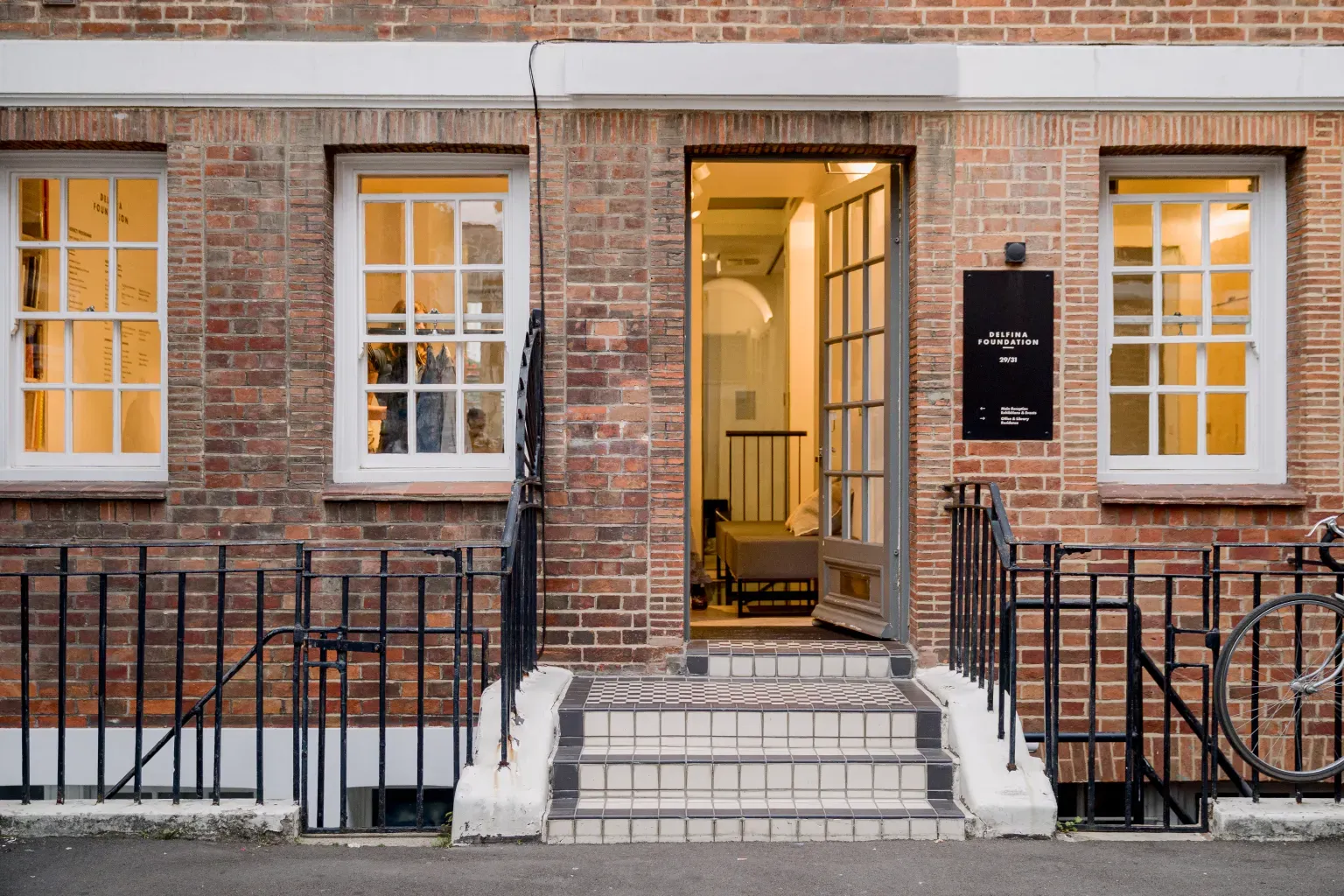
AC – Frieze week can be overwhelming – it’s unfair to suggest performances and events; however, in and amongst the fairs and big institutions, I would recommend visiting our small but mighty spaces, such as our colleagues at Gasworks, The Showroom, Chisenhale Gallery, Auto Italia, Matt’s Gallery, Cell Project Space, and Peer Gallery. And I would be remiss if I didn’t mention a few of Delfina Foundation’s alumni-artists who are exhibiting in London such as Begüm Yamanlar at Apsara Studio, Musquiqui Chihying at Hayward Gallery Project Space, Maxwell Alexandre at Carlos/Ishikawa, and Mohammad Alfaraj at Delfina Foundation.
MS – Beyond the major museums, galleries and fairs, London has always had an extraordinary ecosystem of artist-led spaces, independent initiatives and organisations supporting experimentation and research. Which places or initiatives do you find particularly interesting right now? Where do you feel new energy is emerging in the city?
AC – London’s internationalism is reflected not only in the more than 300 languages spoken across the city, but also in its cultural spaces. Beyond the major institutions, we have a rich ecosystem of largely privately funded initiatives that bring different regional perspectives and diasporic communities into the conversation. From YDP, which focuses on Asian art, and Ibraaz, with its focus on the Global South, to The Mosaic Rooms, centred on the Arab world, and the recently opened ANTESALA, dedicated to Latin America, these organisations bring distinct perspectives and real energy to London’s cultural life.
MS – Art Week is also about encounters: the conversations, dinners and unexpected meetings that happen around exhibitions and fairs. Where do you feel London’s art community comes together today? Are there particular neighbourhoods, places or informal meeting points that you associate with this side of the city?
AC – It’s important to remember that London is a series of villages that grew together. Each neighbourhood has a different spirit, energy and vibe. We are spoiled in that there are so many art clusters depending on what you’re into! Art Week attempts to take visitors into different parts of the city from the established commercial galleries in Mayfair to the edgier spaces in East London to sass of South London. Go explore and find your tribe!
MS – After a long day of exhibitions and art appointments, where would you send a friend for dinner or a drink? Are there restaurants, pubs, wine bars or other places you personally return to?
AC – I’m constantly hosting at Delfina Foundation, especially during Frieze! But even throughout the year, I’d actually be more likely to invite friends to join me there for one of our Family Meals with a mix of our resident artists, curators and collectors. It’s the hottest seat in town.
MS – Finally, if you were creating your own very personal London itinerary for someone visiting during Art Week, what are the places you would insist they experience – whether a museum, a park, a bookshop, a piece of architecture, a neighbourhood or simply a corner of London you love?
AC – I’d start in Mayfair, where you can visit several commercial galleries within walking distance, before heading to Hyde Park for a walk and a view of Henry Moore’s The Arch through to Kensington Palace. It’s one of my favourite views in London and conveniently near the Serpentine North, where you can visit Amar Kanwar’s current exhibition.
I’d also make time to visit Fitzrovia to browse Ibraaz’s bookshop Maktaba and its library where Earshot is currently in residence.
London is vast so if you have a half-day free, a trip out to Stratford to the new V&A Storehouse and V&A East would be well worth the trip.


