

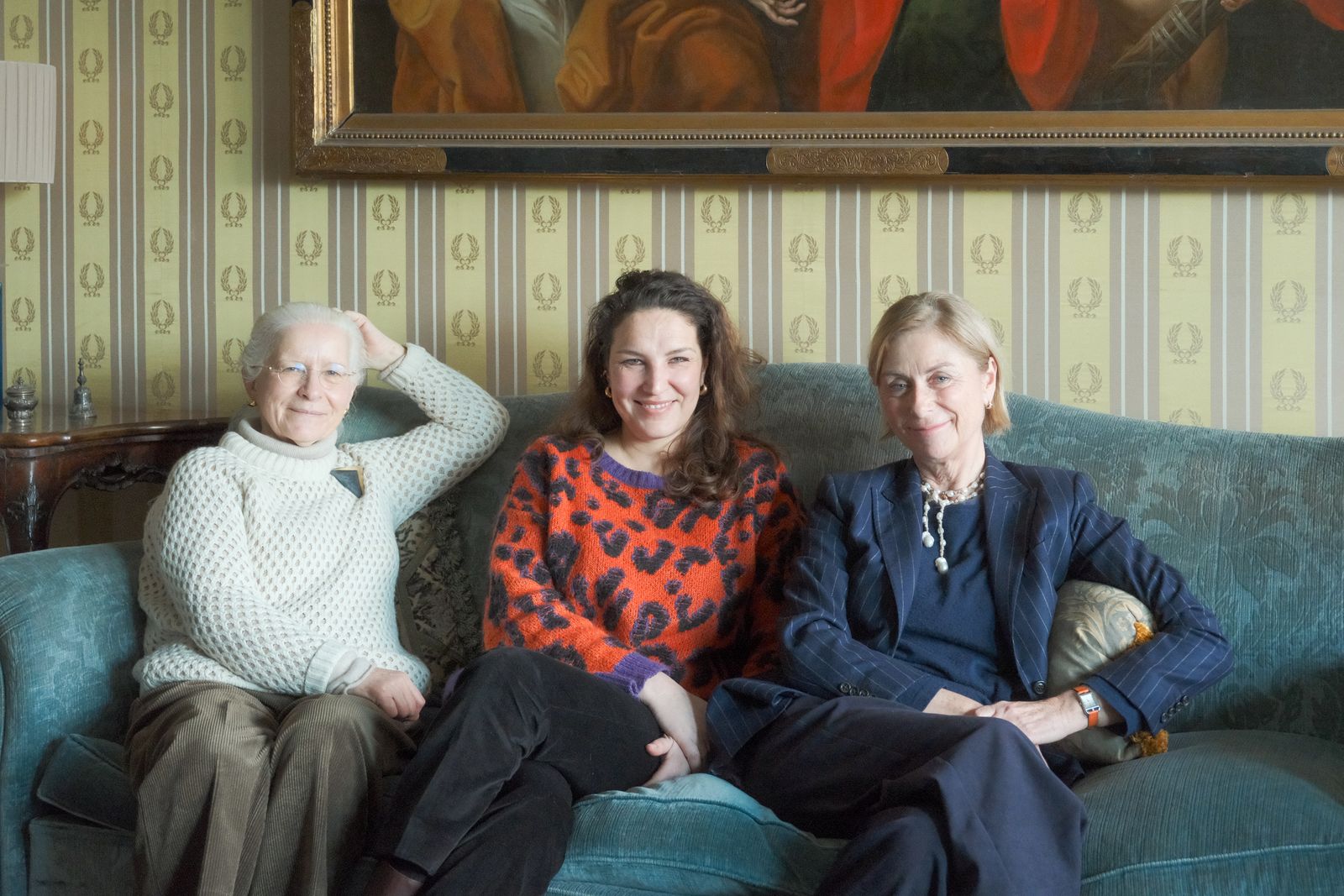
Béatrice de Reyniès and Daniela Ferretti
Béatrice de Reyniès and Daniela Ferretti
“Venice Biennale Portrait” is a series of interviews conceived and conducted by Mara Sartore, introducing some of the most anticipated figures in the contemporary art scene on the occasion of the 61st International Art Exhibition – La Biennale di Venezia. The series began before the inauguration of “In Minor Keys” under the title “Awaiting Venice Biennale 2026”. In both its phases, collectors, curators, artists, and directors engage in conversations exploring their roles, upcoming projects, and their relationship with Venice.
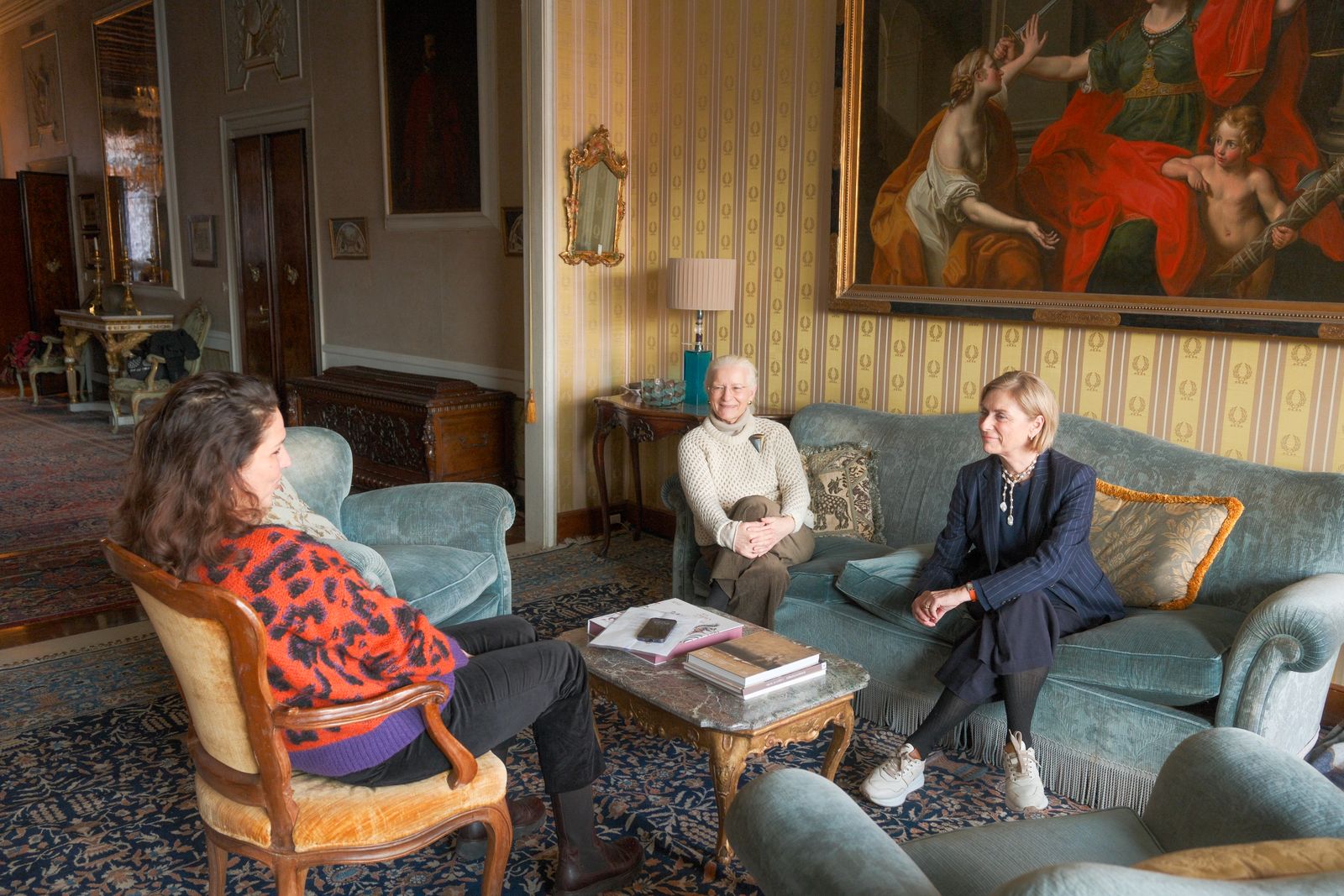
In this conversation, Mara Sartore meets Béatrice de Reyniès and Daniela Ferretti, from Fondazione dell’Albero D’Oro. Together they discuss the Foundation’s genesis, its guiding principles, and its approach to activating Palazzo Vendramin Grimani through restoration, research and contemporary art. The dialogue explores Venice art system, as both context and responsibility, and anticipates the exhibition programme presented during the next Biennale.
MS – Béatrice and Daniela, good morning, and thank you for receiving me in this beautiful palace. I would like to begin by asking Béatrice how Fondazione Albero D’Oro came into being.
BR – Fondazione Albero D’Oro was established in 2019 following the discovery of Palazzo Vendramin Grimani. We were a group of friends who wanted to do something in Venice and to find a place through which to express and share our love of art and beauty. Discovering this palace led to the creation of the Foundation in 2019: a non-profit organisation whose true aim is to bring this Palazzo back to life.
MS – Why Venice?
BR – Venice, because all French people love Venice. Among this group of friends there were some French people and Daniela Ferretti, our Italian and Venetian friend, and we wanted to do something here because it is a city that has always inspired us. It is also a form of gratitude towards a place and towards the people who agree to embark on such an adventure: restoring a palace, giving it a new life – something rather rare in Venice.
MS – Daniela, how did your collaboration with the Foundation begin? How did you meet and what is the story behind this friendship?
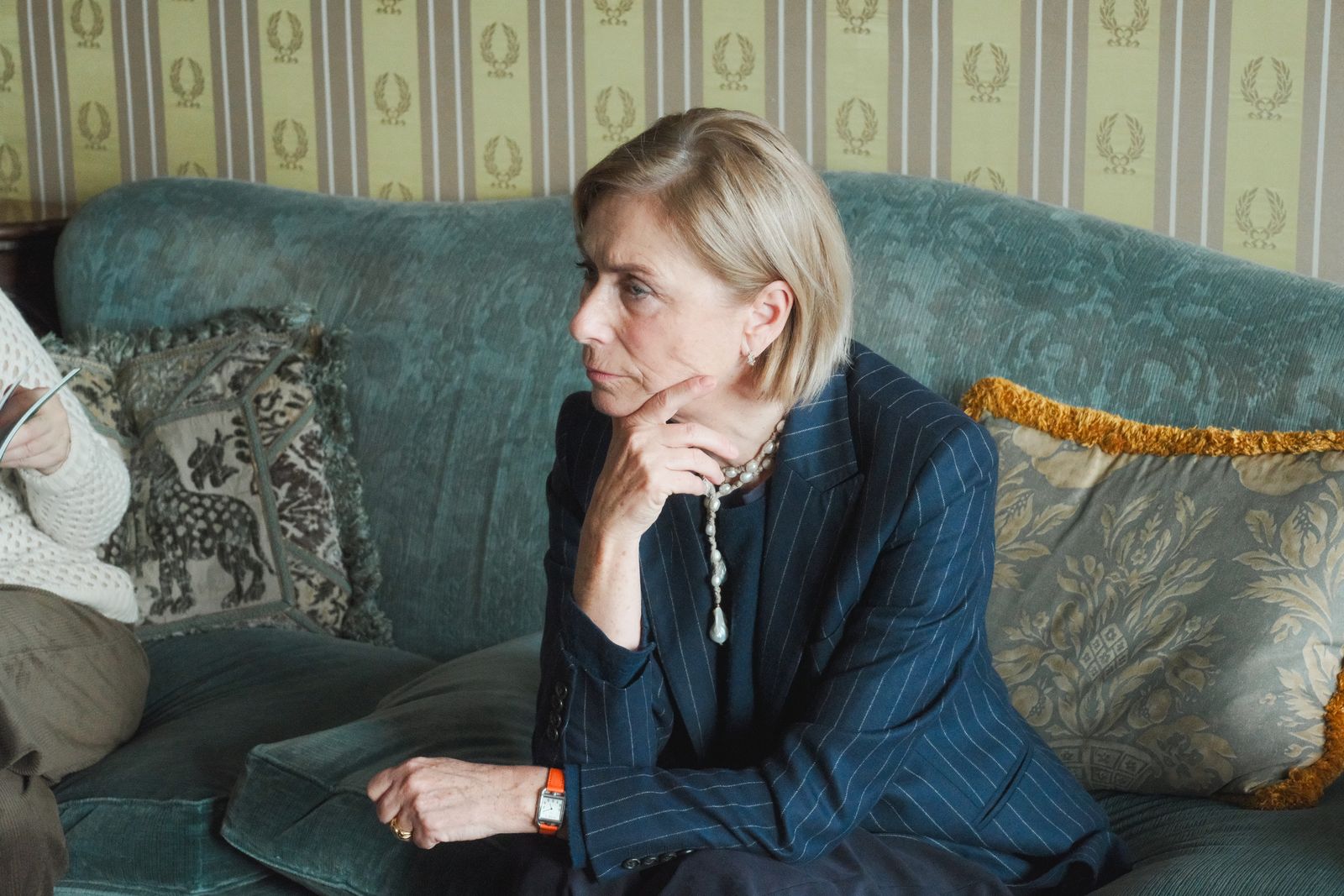
DF – The story of this friendship goes back a long way. It began by chance, through those thin threads that in fact make up our lives, which are made of encounters. Many years ago Béatrice and I met and very simply began to think that one day we might work together. We had different professions. Art became the meeting point, because it is truly what brought this adventure together: the sharing of a great love, and this city, which is the ideal stage. But not a stage where one performs and then moves on: a stage that allows the expression of daily presence and work, so that this city may be – I use a slightly strong term – “saved”. We realise it every day: it is a city at risk and it needs a great deal of love.
MS – What are the Foundation’s main objectives? You took on this palace, restored it with a significant and lengthy intervention, refurnished this floor and dedicated others to exhibition spaces. But you also set yourselves clear goals. Could you tell us about them?
BR – It is true that the Palazzo required a rather demanding restoration, both inside and on the façade.
The Foundation found a place that allows it to express itself and to develop a programme of activities; yet its primary aim remains, once again, to “give life”. Daniela spoke about love for beauty and art: for us it also means sharing what Venice allows us to see every day. Continuing to be part of this long succession of people who for centuries have brought their own “stones” to Venice seemed essential.
So: to transmit beauty and, at the same time, to promote rigorous research and study. Last year we completed an extraordinary project: a 500-page book, the result of four years of research, edited by two historians, Massimo Favilla and Ruggero Rugolo, who reconstructed the history of Palazzo Vendramin Grimani and the families who owned it. The aim is to pass on everything this Palazzo has experienced and ensure its continuity over time.
MS – Daniela, as Artistic Director, how do you interpret the Foundation’s objectives, and what does your role mean to you?
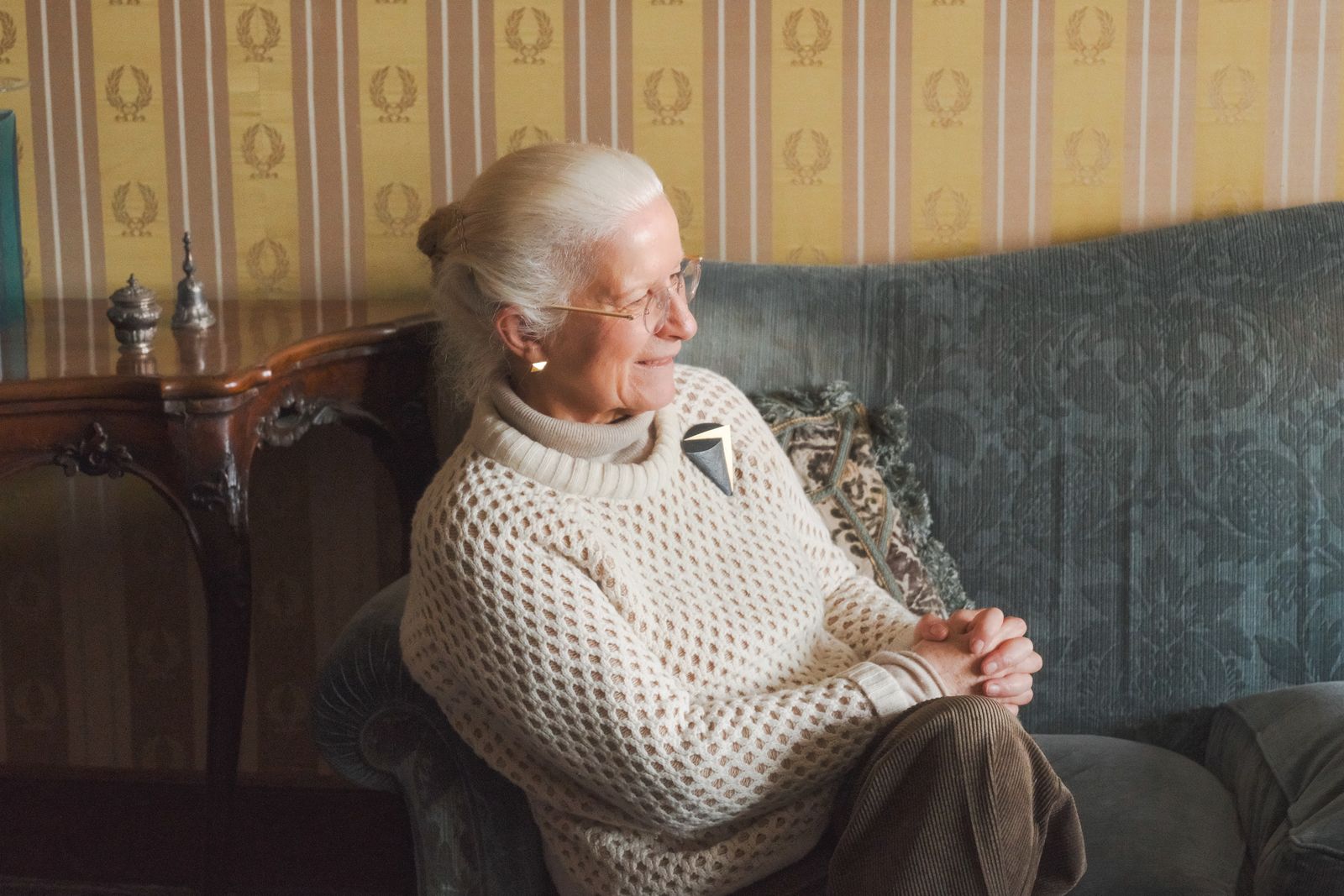
DF – I completely share Béatrice’s vision, not least because I am also a member of the Foundation’s Board of Directors. Our objective is precisely this: to look to the past and investigate it. An important mission we have set ourselves is to delve into a thousand-year history that remains rich – a reservoir of potential discoveries.
We work along two lines: looking to the past and deepening our understanding, then translating those insights into the present and opening up a potential future for this space. We are also interested in recovering what I might call a domestic dimension: we want those who visit our projects to feel at home. It is a place for sharing a way of thinking that is already shared among us, and which we offer to others.
MS – What is the relationship between the ancient and the contemporary, and how are the artists who engage in dialogue with the Palazzo – such as Bosco Sodi, or Karine Nguyen Van Damme and Parul Thacker – selected? Through personal acquaintance, friendships, or proposals you receive?
DF – Friendship and knowledge are certainly key in shaping the exhibition programme. Working in the art world has allowed us to meet and know many people. Our commitment to the Foundation is a kind of long journey which we undertake with people invited to share a philosophy.
As for the contemporary, the centrality of place and space is always fundamental. I had known Bosco Sodi since inviting him to Museo Fortuny, and his research into pigments – particularly cochineal – seemed especially relevant. Cochineal red partially revolutionised Venetian Renaissance painting: originating in Mexico, arriving via Spain, transforming the art of dye-makers, and then passing to painters, including Titian. It was an extremely costly pigment, and there is also a link with the Vendramin family, at the very beginning of this place’s history.
Contemporary projects are always challenges, for us and for the artists. Bosco was among the first to inaugurate the residency programme and created work for this space while living here, engaging with the water, the city and the palace. Venice always remains central. The same applies to Parul Thacker and Karin Nguyen Van Damme: two women, two different generations, largely unknown in the European context – Parul Indian, Karin a young French artist of Vietnamese origin. For Karin it was even her first time in Venice. There is always a foundation of research and shared reflection, a thread that also emerges from discussion.
BR – Our reflection concerns how the artist can integrate, work within the palace and be presented here. It is a path we undertake together, through dialogue. For me it is very precious, because we come from different backgrounds and aim together towards a vision we hope to make accessible to the public. The Foundation’s goal is that as many people as possible understand what we wish to convey: communicating our idea is important, but so too is making the project comprehensible. It is work that involves many people and requires a great deal of trust.
MS – And regarding the artists’ residencies? How do your programmes function?
BR – There are currently two residency projects. One is for artists who exhibit here: Bosco Sodi was in residence and created works for the palace. Karin Nguyen Van Damme, in 2024, came several times and produced a work in different stages throughout the year, presenting the final version inspired by the place, the water and Venice.
We have also created an award for a young author, the Premio Albero d’Oro, dedicated to an under-40 author, in partnership with Incroci di Civiltà.
MS – Let us speak about the exhibition you will present during the next Biennale: Patrick Saytour. How did this choice come about, and how does it differ from your previous exhibitions?
DF – In this case there was a shift in direction, because for the first time we are presenting an artist who sadly passed away three years ago and who is virtually unknown in Italy. We realised he had never been shown here, yet he was a significant figure: one of the protagonists of the Support/Surface movement, the radical French avant-garde of the 1970s.
The choice arose quite simply. Béatrice and I were at Art Basel Paris and stopped at the stand of a gallery we know, recommended by a collector friend. We paused before one of Saytour’s pliés. I was immediately struck, because among my unrealised projects there had been one on the theme of the fold, and I felt a resonance there.
Reflecting on what to present during the Biennale year, we wanted to experiment with another possibility: showing the work of an artist in a space unusual for his creations. On the theme of the fold, the connection with Piero Manzoni was immediate for me: a radical research emerging in different contexts yet intercepting similar energies.
For me Manzoni is a counterpoint to Saytour’s materiality: on one side an act of zeroing, on the other a more visceral physicality. Yet both work to move beyond the sacredness of painting – stretcher, canvas, brush – to open, to fracture, to go further.
The theoretical reference is also Gilles Deleuze and “The Fold”: a vision of time that is not linear but circular, generating movement, doubt and tension. Venice is the city of the fold: continuous turns, bending and unfolding in succession.
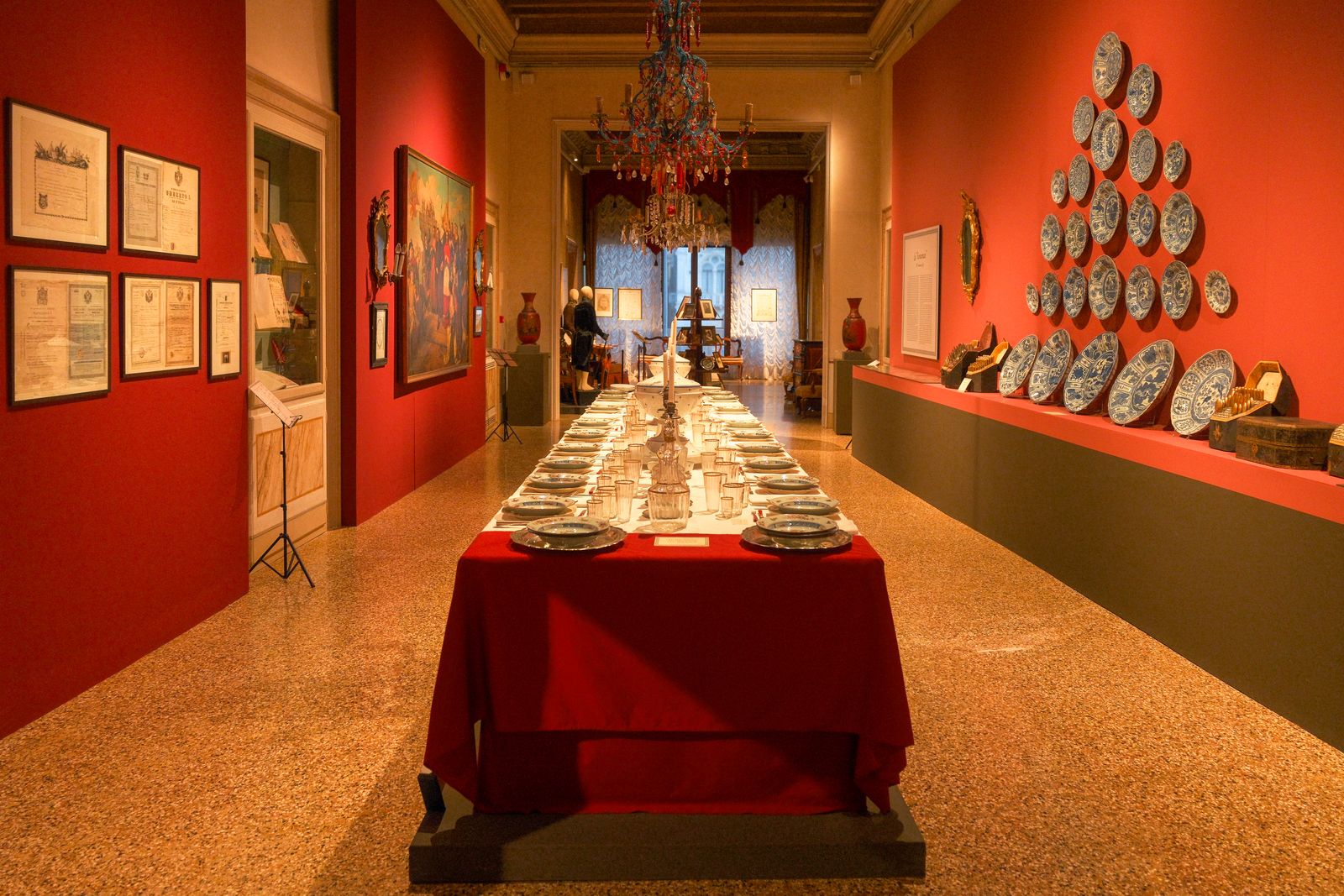
The works are not chosen with an anthological intention; this is not a retrospective. They are conceived for these spaces, because space is always central. Venice and Palazzo Vendramin Grimani form the framework within which the artistic gesture unfolds.
MS – So Patrick Saytour’s works will enter into dialogue not only with Venice and the Palazzo but also with Piero Manzoni’s works?
DF – Yes. We chose not to include Piero Manzoni in the title, because it should also be a discovery. Two worlds are presented that probe the same necessity, yet with different solutions. There is also a major question mark: Manzoni died in 1963 at just 29, yet in five years he left an extraordinarily powerful mark on contemporary art. I have always wondered: what would he have done afterwards?
I transpose this question to Saytour: he had time to develop his research within the idea of return, revisiting and re-presenting works differently. It is an infinite movement – metamorphosis, time at work, matter transforming. In Manzoni there is extreme rationality; in Saytour, more pleasure in playing with material. Yet in both there is also great irony and self-irony.
MS – What is it like to be in Venice representing a foundation? Is there a network, a dialogue among different institutions, or little exchange? Béatrice, as a foreigner who has made Venice her home, how do you perceive the Venetian art landscape?
BR – It is a complex question. I would say our aim is not to be an isolated foundation in Venice; on the contrary, from the beginning we wanted to be in relationship with other institutions. We are partners of Ca’ Foscari University and undertake many projects together. We host events linked to both Italian and French culture: a weaving together of hospitality and opportunities, with international and Venetian openness.
It is a place open all year round, which seems important to me, because we do not wish to be “only” a museum or strictly a contemporary art foundation. We want to welcome people and make them feel at home – that, to me, is the particularity of the Foundation and the Palazzo. I find the emergence of foundations and spaces enabling the restoration of important Venetian buildings extraordinary: for me that is the first condition. But it is not enough for Venice to “live” through exhibitions; it must live through people who reside here. I am an optimist by nature: Venice has existed for more than 1,400 years and we are merely passing through, trying to contribute as much as possible. Some see it as a dead city, but that is not true: it lives continuously and will always renew itself.
DF – In my view you raise an important issue. What I perceive – and it is a historical problem – is the difficulty of “creating a system”. Attempts are made. For example, we willingly collaborate with Fondazione Valmont and with nearby galleries to reconstruct an urban fabric made of people: natives and newcomers alike. Venice is a city of exchange and was great when it was open and exchanges were constant and constructive.
The mass arrival of foundations, in general, should on one hand be welcomed: it may mark a shift in the quality of visitors and in respect for the city. Much more could be done, but there is a lack of governance: there is no real overarching project for Venice, no clear vision of where we are heading and what we want it to become.
Foundations, especially artistic ones, create work and opportunities for our important university hubs. Those resources must not be dispersed: people must be given the opportunity, even temporarily, to live here. Because when one is a resident, needs change and the city takes shape. If we are merely passing through, we squander a heritage.
MS – When will the Patrick Saytour exhibition open?
DF – We will inaugurate in mid-April, on 16 April, slightly outside the main circuit yet already present when the Biennale opens, as it remains the great binding force. It is also one of the reasons that prompted the arrival of realities such as Pinault, which shook an extremely conservative Venice by embracing the contemporary. Previously contemporary art was perceived almost as “the mad people arrive, do things, then we return to our comforts and our eighteenth century”. When Pinault chose truly to commit to the contemporary, it became a driving force. Many foundations that have arrived recently are dedicated to contemporary art. We are an exception, as we have a dual soul – but not arbitrarily: Venice itself is like that.
