

David Landau
David Landau
In this conversation, Mara Sartore meets David Landau, founder of Le Stanze del Vetro. Landau discusses his relationship with Venice and his work in art history, publishing, and cultural initiatives. He recalls his first arrival in the city and his later decision to settle there after a career in London. His engagement with Murano glass led to the creation of Le Stanze del Vetro, the Centro Studi del Vetro, and The Venice Glass Week, initiatives aimed at reassessing glass within contemporary cultural discourse. The interview also explores the future of Murano, craftsmanship in Venice, and the role of cultural institutions in the city’s development.
Mara Sartore: What brought you to Venice? And can you recall the very first time you arrived here?
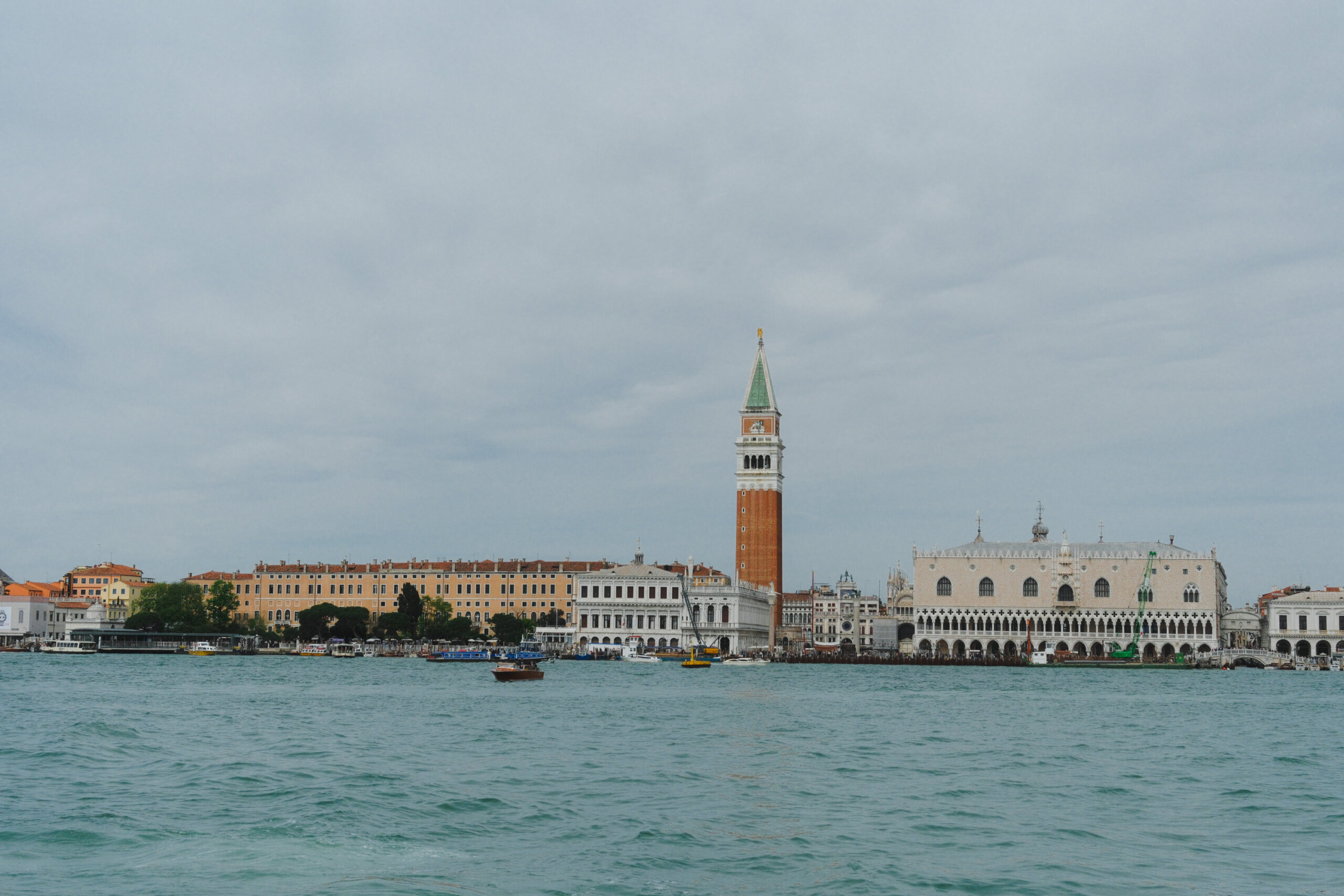
David Landau: I was born in Israel, and I arrived by ship – the Messapia – from Haifa, together with my mother and my two sisters. They were terribly ill throughout the entire journey, while I was perfectly fine – I ate for everyone. We reached Venice in December 1954. My mother took us around the city, wanting to show it to us, but I have absolutely no memory of Venice itself. The only thing that has stayed with me from that day – because we were continuing on to Trieste, where my grandmother lived – is the steam train. We arrived at the station, and in Israel at that time trains did not exist.
MS: When did you actually decide to come and live in Venice?
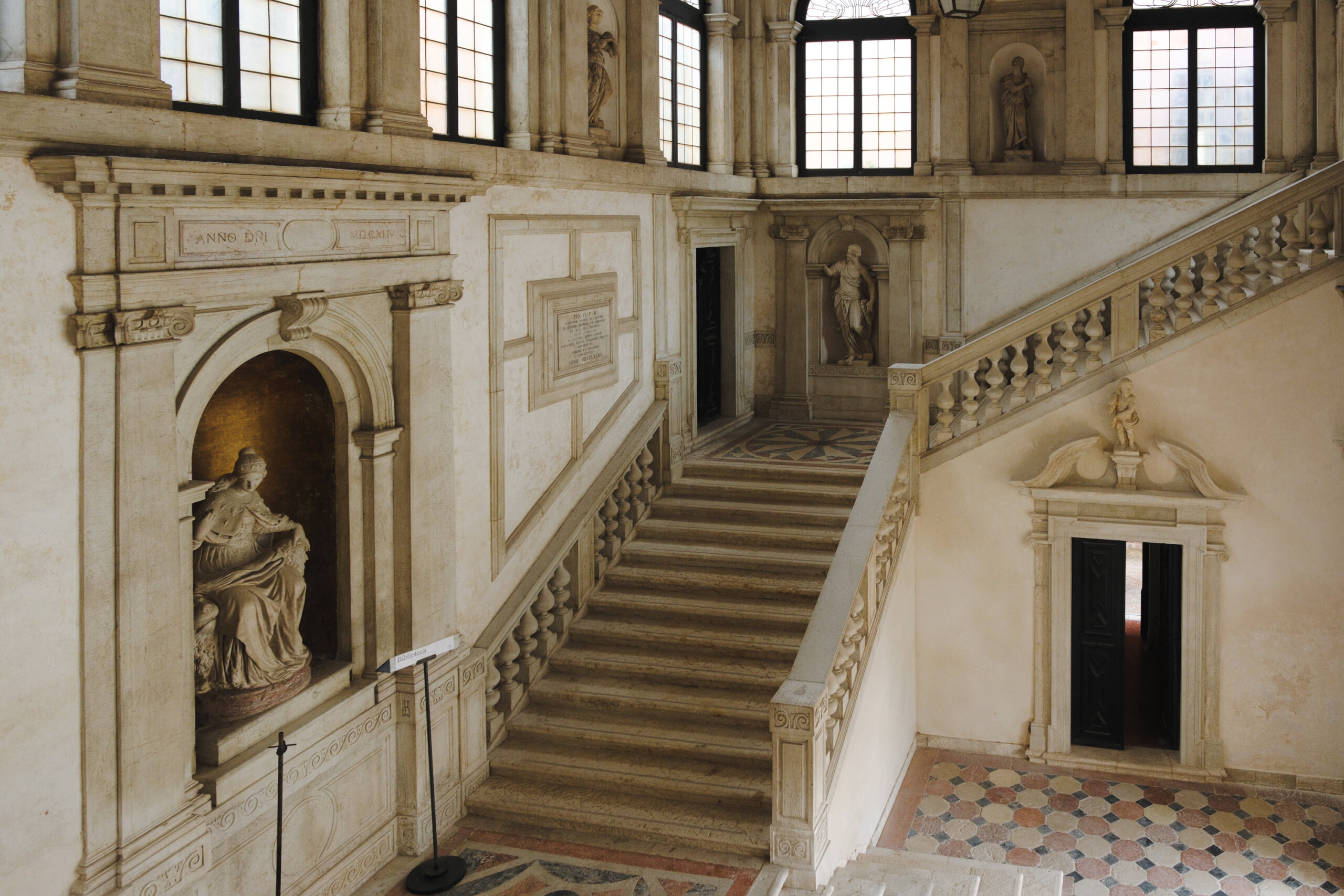
DL: My wife and I wanted to leave London; we had decided we would move to Paris. For a whole year we searched for a house. With five children, we needed something very large – many bedrooms, many bathrooms – but in Paris we never managed to find it. In the meantime, I had bought a house in Venice, the one I still live in today, so while we continued looking in Paris, we thought we might come here for a while. But once you arrive in Venice, it is very difficult to leave. It was truly like falling in love. And yet, I already knew this would happen: when I was a student, a dear friend – who is no longer with us – reminded me that in high school I used to say: “I will die in Venice, surrounded by my books, and I will have a palace on the Grand Canal.
MS: Your journey into glass begins with Pentagram Stiftung, which led to the creation of Le Stanze del Vetro, the Study Centre, The Glass Week, and Murano Illumina il Mondo. Could you walk us through how these projects came into being?
DL: When I fell in love with the woman who would later become my wife, she had a small collection – about thirty pieces, but extremely refined: all important works by Venini. She didn’t really know whether they were historically significant or not; she had chosen them simply because they were beautiful. I am an art historian, and when I began seeing her, my friends would come over, and I felt I had to understand what she had. There were these twenty, thirty extraordinary glass pieces, and so I began studying the history of Murano glass, and especially Venini. Then I started adding to the collection myself – buying pieces at fairs, from dealers – and I simply couldn’t stop. We began with thirty; now we have two thousand five hundred.
As I studied glass, I realised that in Venice there were no serious books on the subject, no serious exhibitions, no real sources – nothing at all. I went to the State Archives and asked what they held regarding twentieth-century Murano glassworks, and they told me they didn’t keep those materials, because they were considered “industrial”.
MS: Glass has rarely been regarded as something of great cultural value, except in a few isolated cases. And it was precisely in response to this that you founded Le Stanze del Vetro…
DL: Exactly, everything begins there. I had proposed donating our Venini collection to the Murano Glass Museum. It seemed obvious to me that this could fill a major gap: they had no twentieth-century Venini works, and we were offering 2,500 pieces, which would have made it the most important Venini collection in the world. Venini, after all, was the most important Murano glass company of the twentieth century.
They considered it for a long time, but eventually Giandomenico Romanelli, who was then director of the Civic Museums, decided not to accept it. He said: “We don’t have the funds, we don’t have display cases, we don’t have the space, we don’t have the staff – we have nothing”. I replied that they shouldn’t worry, that I would find the funds myself – for the vitrines, for the staff – but even then, they refused. At that point, Pasquale Gagliardi, who was Secretary General of the Fondazione Cini, contacted me through a mutual friend in London, Norman Rosenthal of the Royal Academy, and suggested I come and see the spaces on the island. That is how Le Stanze del Vetro were born – from the refusal of a donation. We decided instead to create a kunsthalle for glass: a place where we could show not only Venini, but the entire world of twentieth-century glass – Italy, France, Finland, the United States, and beyond. We began with an exhibition on Scarpa, which caused quite a stir: it went straight to the Metropolitan Museum and attracted one hundred thousand visitors. We truly began with a bang. That success encouraged us to continue: in thirteen years we have organised thirty-seven exhibitions, with more than one million six hundred thousand visitors. Before our exhibition, the Met had never hosted a show dedicated to glass.
MS: After Le Stanze del Vetro, the Study Centre also came into being, is that right?
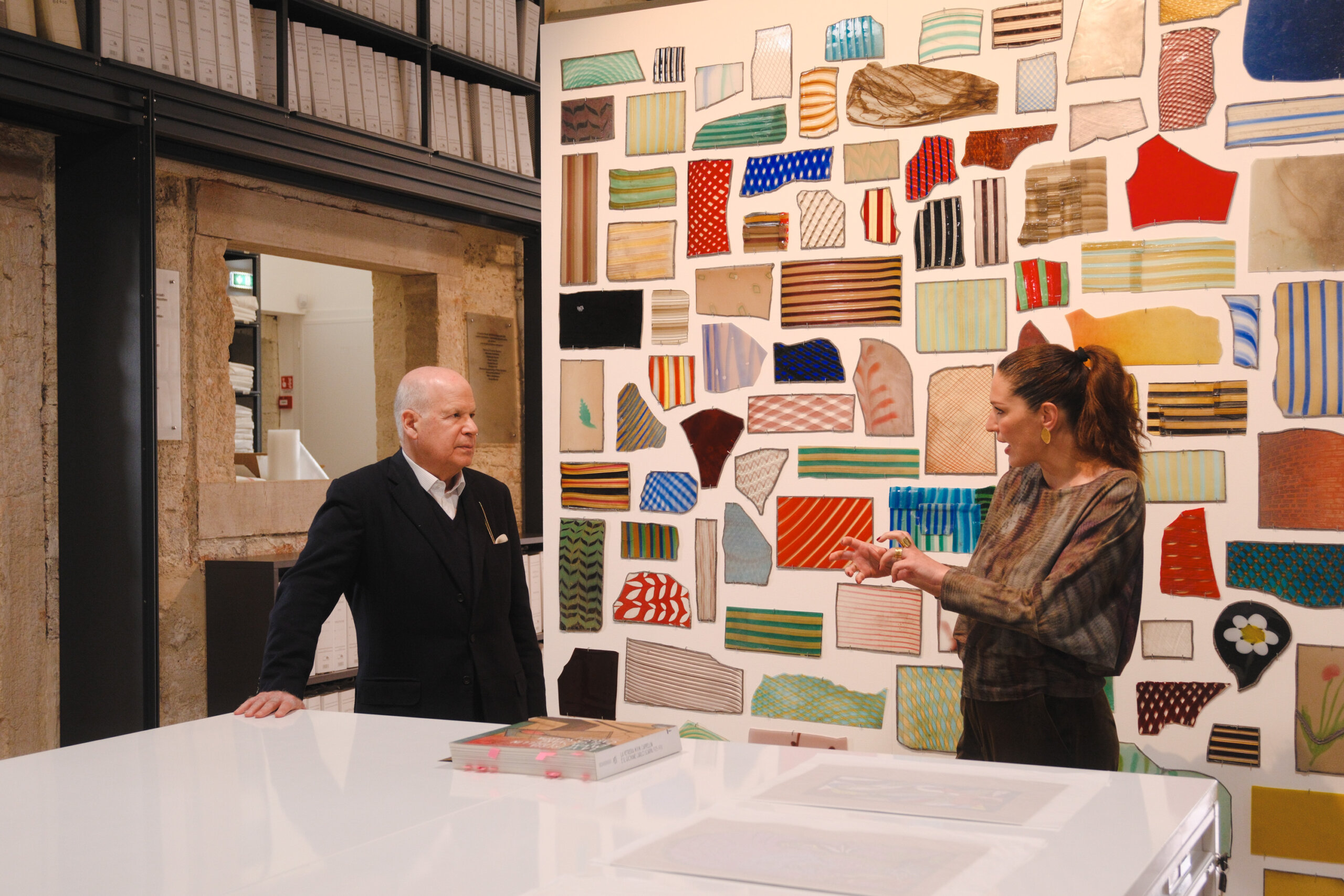
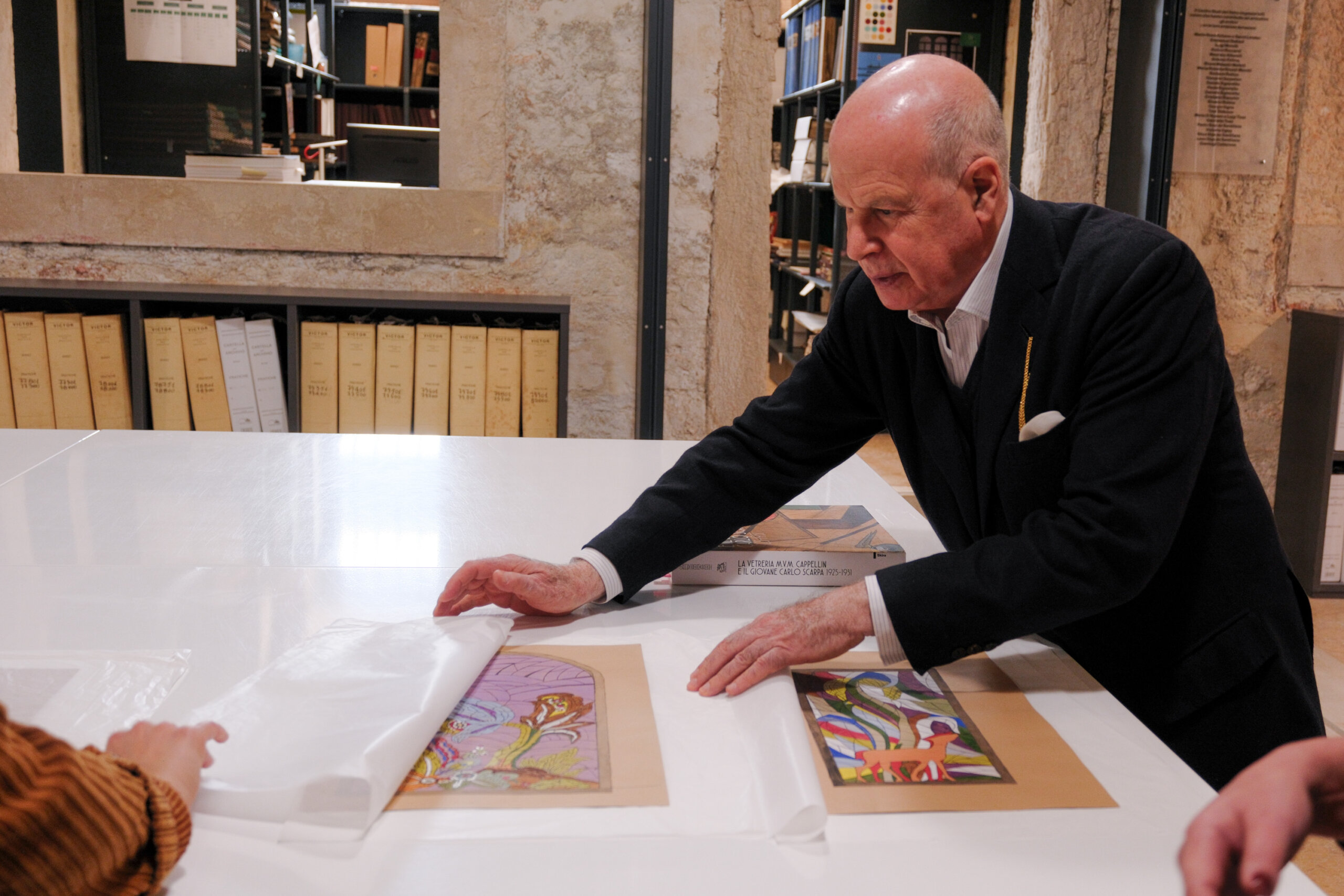
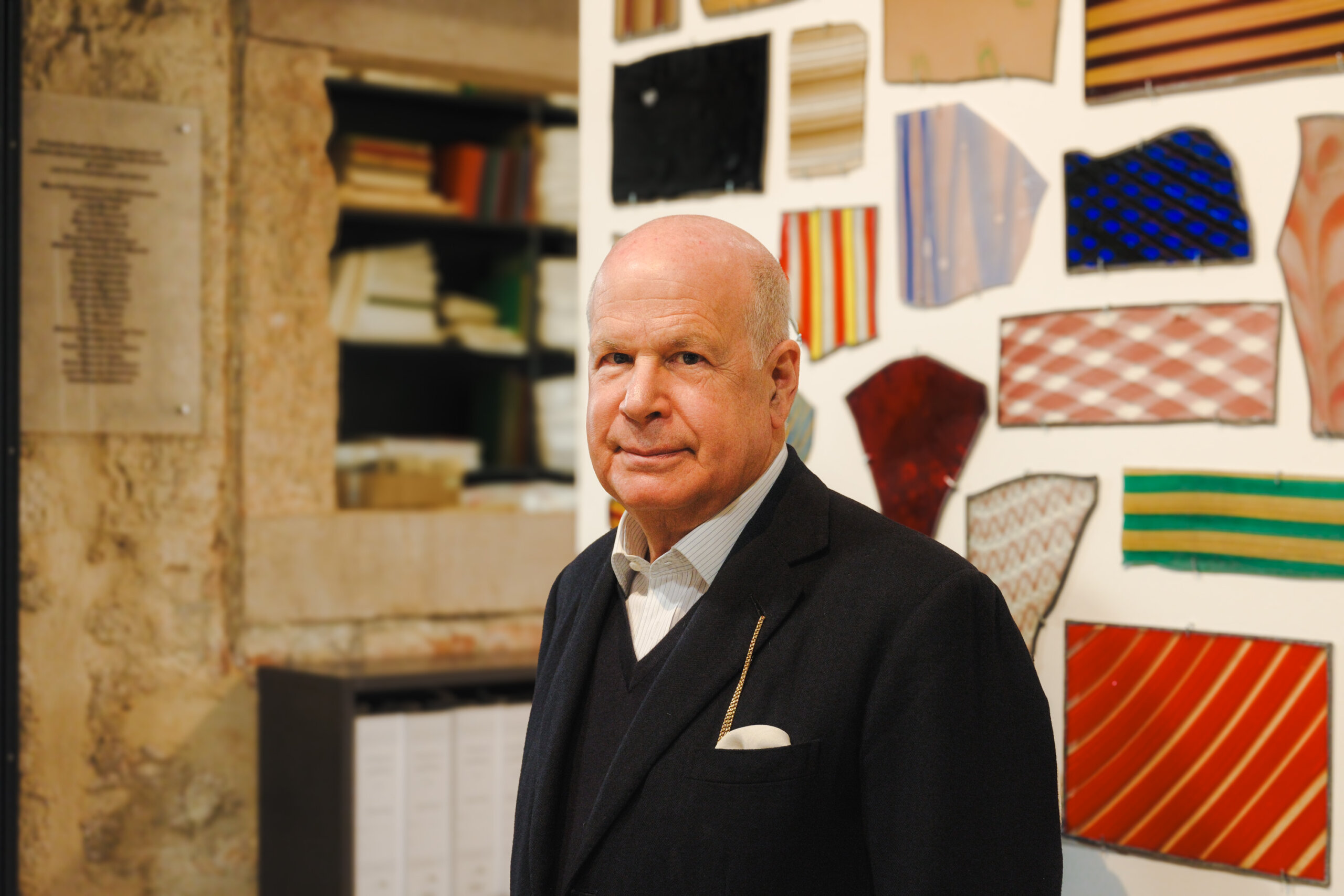
DL: Exactly. In order to organise the exhibitions, we created a team of four people devoted entirely to research, and we soon realised that the sources were missing. There was no place one could go in order to study the history of Murano glass. And so the Study Centre was born, here, in the very place where we are now. We began acquiring archives from Murano families, from factories that had closed under various circumstances; we also began receiving many donations, and in time we created this extraordinary space in which we are sitting today, which holds more than 250,000 documents, period photographs, marvellous drawings. The only glass objects here are the Cappellin sample pieces. We absolutely do not buy glass objects, because that is not our mission – ours is a paper archive, a documentary mission. But that Cappellin sample collection was irresistible, because it was created by Carlo Scarpa.
MS: What is Murano like today, and what is your relationship with the island? I mean, beyond your ties with the families who are naturally grateful to you for having created Le Stanze del Vetro. Since the relationship did not begin in the best possible way, given the refusal of the Glass Museum to accept your collection, what happened afterwards?
DL: My relationship with Murano is, of course, very close, because I have come to know a great many families there. But the strength of this bond also comes from another, more recent initiative: “Murano illumina il mondo” (Murano Lights Up the World), an initiative in which we install, beneath the Procuratie Vecchie in Piazza San Marco, chandeliers designed by contemporary artists from all over the world and made in Murano. That represents a major leap for Murano. Adriano Berengo was the first to invite contemporary artists to work with his furnace. I thought of extending that initiative, because Murano’s future lies in art. There will always be a Murano that continues to produce glasses and cups, and that is perfectly fine, because those are beautiful objects. But working with and for art is more important, more interesting, and it offers greater economic margins for the furnaces.
MS: In the twentieth century Murano glass production was regarded as an industrial activity; today, then, does the future lie in high craftsmanship and in works of art?
DL: Yes. It is becoming more and more difficult for Murano furnaces to maintain the right level of design in order to interest an international market. The only truly great alternative – and it represents an enormous potential for Murano – is to do what is already being done in America: to make works of art in glass, to invite contemporary artists to create their works in Murano. Which is precisely what Berengo does.
MS: There has always been a strong rivalry among the furnaces in Murano, and this has prevented knowledge from being passed on and the development of a true “school.” What do you think of this fragility within the Murano system?
DL: Murano is changing very quickly in that respect, because people have realised that this way of proceeding no longer works. Let me give you an example. Fifteen hundred members of the American glass society wanted to come to Murano, and they asked to see how the different glassworks functioned. At first, the answer was no. But when the Americans replied that in that case they would cancel the trip to Murano, they changed their minds. They have realised that, in truth, the secrets of glassmaking do not really exist, because everything they do can be done elsewhere. In some sense, once Lino Tagliapietra had thrown the stone into the pond, they understood that there was no longer any point in guarding these secrets.
MS: So in Murano they have finally understood how important it is to teach, to pass something on from generation to generation – because otherwise everything dies?
DL: Of course. Glass is no longer something that is dying; it is something fully alive, something growing. Just like craftsmanship in all its forms. People have grown tired of things made in factories. It is no coincidence that important international events devoted to craftsmanship, such as Homo Faber, have emerged.
MS: In your view, will there be a renaissance of craftsmanship in Venice’s future?
DL: Certainly. Events such as Homo Faber help enormously; the work of Le Stanze del Vetro helps enormously; and now Dries Van Noten may perhaps offer yet another contribution. I went to see him the other day, and he showed me a kind of preview of the exhibition he is preparing—it will be very, very interesting.
MS: There is also glass in the Dries Van Noten exhibition…
DL: Yes, there will be glass, there will be a bit of everything. And it shows that, with craftsmanship, one can create things that cannot be made in any other way. And Venice, after all, is the ideal place for artisans’ workshops, because here one walks, one gets lost, and so it is easy to come upon things one would never otherwise see. In the cities of the world now, we are always in cars, and we see nothing – not even our friends. I lived in London for thirty-one years, and all my London friends I see in Venice. The great quality of this extraordinary city is that we move through it on foot.
MS: Let us talk about the exhibition opening on 19 April: “1948–1958. Murano Glass and the Venice Biennale” (19 April – 22 November 2026). Curated by Marino Barovier, it is the third chapter in a long-term project. The first was in 2024 and covered the period from 1912 to 1930; with this third chapter we arrive at 1948–58, a historical period that also includes your own arrival in Venice. Could you tell us about it?
DL: In truth, there are only three rooms devoted to my arrival in Venice. (laughs)
This morning I was there, finishing the installation; tomorrow we close the vitrines. The thing that impressed me most of all was the first room dedicated to Vinicio Vianello. We acquired Vianello’s entire archive, and over time he has revealed himself to be an immense innovator. He won the Compasso d’Oro at the 1957 Triennale, so at the end of the 1950s he was famous; and yet later he was completely forgotten. When I took the curator from the Corning Museum of Glass in New York to see the exhibition in preview, she had never seen a glass work by Vinicio Vianello. They do not have any at Corning; in the greatest glass museum in the world, they had never even heard his name. So we open this exhibition with a room dedicated to Vinicio Vianello – a forgotten genius of design – with truly revolutionary pieces.
This third chapter, 1948–1958, shows Italy rising again in the aftermath of the war. At the entrance to the exhibition there is a very delightful film in which one sees Lambrettas, Carosello, Modugno, the new steel industries, Fiat, the Cinquecento… In other words, it was a moment of immense invention, creativity, progress, development. Vianello’s first room begins with atomic bombs: he made glass pieces that are atomic bombs, because at that time there were the explosions in Nevada, the American atomic bombs, the explosions in the Pacific, and he, like all of Italy, was deeply struck by them. What emerges from this exhibition is the desire of that era to make new things, the desire to enjoy life, to change, to make things larger, bolder. There are truly extraordinary glass pieces – so extraordinary that they were chosen by the jury, because naturally these are only the works that were shown at the Biennale between 1948 and 1958. There was in fact a jury that selected who could participate; the furnaces would submit their works, and one sees a continuous effort, a constant striving to be selected – a competition to make works ever newer, ever more different from all the others. And that was an enormously important stimulus for Murano, one that no longer exists today.
MS: The exhibition is curated by Marino Barovier. What is the role of the curator in a historical exhibition of this kind? And what is your relationship with Marino? Also, what role does the Study Centre play?
DL: Let me begin with your last question. The role of the Study Centre is fundamental, because everything is here; here, and naturally in the Biennale Archive as well. All the selected vases are here; there are photographs of all the vitrines. So its role is absolutely essential, not least because people do not know, for example, that all the glass objects shown at the Biennale were for sale.
MS: Of course. At one time the Biennale also had a “market,” and everything that was purchased passed through the Biennale.
DL: Absolutely. And the glass pieces in the vitrines – as one sees from the photographs – would change, because when they were sold they were replaced. If a furnace was lucky and sold many pieces, they might be replaced every week. Venini, for instance, in one year sold seventy versions of a vase – not the same vase, but variations on a similar one – and so they went on replacing them. All of this documentation is either in the Biennale Archive or in these rooms, and so the role of the Study Centre is fundamental.
The role of Marino Barovier is even more fundamental, because Marino is the person in the world who knows the most about this period, these glass works, these histories. It was his idea to create these Biennale glass exhibitions. And Marino has one further gift: he is, in his own words, “a magnificent window-dresser”. He takes great pleasure – as I do, I must admit – in arranging things, and so this morning we walked through the exhibition two or three times, and every so often I would say, “Marino, perhaps that vase needs to move one centimetre to the right”, and he would say, “Let’s see, no, yes, no, perhaps like this…”. He has a very precise sense of how glass should be placed, how one piece should stand beside another, how colours should be arranged. Marino is therefore the central figure of these exhibitions. He knows all the collectors in the world, and so he knows where the works are – and if one does not know where the glass pieces are, especially since most of them are so rare, then it would be impossible to make exhibitions at all. And as for my relationship with Marino: I bow before his knowledge. We are very good friends, and we are happy together.
MS: And how are your own relations with the Biennale? How does the Biennale regard the historical work you are doing?
DL: Marino and I have tried for many years to persuade the Biennale to allow glass to participate once again, perhaps in a dedicated section, but at the moment this does not seem possible. We remain hopeful that glass might one day be readmitted to the Biennale, perhaps in the Venice Pavilion, as it once was.
MS: Do you think this resistance is due to a certain prejudice that still surrounds glass?
DL: Certainly. Of course, partly thanks to the work we have done in promoting it, the number of people who no longer see glass as a mere object of design or craftsmanship is growing. But the majority still think of glass as something one simply uses on the table, and nothing more.
MS: Returning to the Biennale, I am curious: given that you were born in Israel, what do you make of all the controversies surrounding the participation of countries such as Russia, Israel, and the United States?
DL: It is a very difficult question, truly a very difficult one. I do not envy those who must make such decisions. If I were president of the Biennale, I would not know what to do. There is, of course, great merit in the idea that there should be freedom to show any artist whatsoever, and on that point I agree, not least because artists are almost never expressions of the power of the country in which they operate. Artists are much freer than politicians to think and do as they wish. Otherwise, by the same logic, perhaps one would have to exclude artists who behaved badly in their lives. But in my view one must always separate the person from the artist. I would prefer never to know anything about artists’ private lives, even though I am an art historian and therefore must know everything about artists – fortunately not contemporary artists, since I work on the Renaissance. But I often read the diaries of Renaissance artists and find testimonies of terrible men who nevertheless were extraordinary artists, indispensable to the history of art.
MS: I would like to close this interview with a question about The Glass Week, another very important event that was born thanks to you. I would like you to say a few words about this initiative, and about how it has grown and transformed over time.
DL: The Glass Week was born in my house, in my living room, during a friendly conversation with Sandro Franchini, who was then Chancellor of the Istituto Veneto. I said to him: “Do you know what Venice lacks? It lacks a glass festival; it lacks a moment when we can all celebrate glass together”. And so we decided to gather all the main Venetian institutions around one table and create something together. That shared approach proved very successful. Today we are at the tenth edition, and this year it will be truly extraordinary. Already last year there were glassmakers from fifty-four countries, more than two hundred exhibitions, and over two hundred thousand visitors in a single week. In short, it has become a global event.
MS: Through the interviews I am conducting, I am meeting people who all share one thing in common: they chose Venice, and they began an activity here, most often an art foundation. In your view, what role can foundations play in the future of the city?
DL: In my view, foundations – and the people who created them – play a fundamental role. I myself was president of the Civic Museums for a time, though only briefly, because I later quarrelled with the mayor. But one of my plans was precisely to create a kind of citadel of foundations, and I had chosen Ca’ Corner della Regina – which was later bought by Miuccia Prada – as the seat of an association of the foundations active in Venice, so that they might have a place in which to meet and work together.
MS: For years now people have spoken about the depopulation of Venice. Do you not think the time has come to put pressure on the city government so that policies concerning residency finally begin to change?
DL: Yes, certainly. But I do not wish to concern myself with politics, because I do not understand it and it does not interest me. Still, politicians obviously have a fundamental function, and whoever is elected as the next mayor will have to do something about this. With Mayor Luigi Brugnaro there is no hope. At the moment Venice does not even have a Councillor for Culture. I only had two meetings with Luigi Brugnaro, and I still remember them, but only to tell them to friends, not to speak of them seriously, because they were ridiculous. Let us hope that the next mayor, whoever that may be, will be someone with greater sensitivity toward culture, someone who understands that culture is fundamental if Venice is to be saved. I hope the time has come for a new mayor to truly care about Venice, to think of it as a living city – a city with bakers and butchers, not only souvenir stalls… As for the stalls, I would abolish them all.


