

Dries Van Noten
Dries Van Noten
“Venice Biennale Portrait” is a series of interviews conceived and conducted by Mara Sartore, introducing some of the most anticipated figures in the contemporary art scene on the occasion of the 61st International Art Exhibition – La Biennale di Venezia. The series began before the inauguration of “In Minor Keys” under the title “Awaiting Venice Biennale 2026”. In both its phases, collectors, curators, artists, and directors engage in conversations exploring their roles, upcoming projects, and their relationship with Venice.
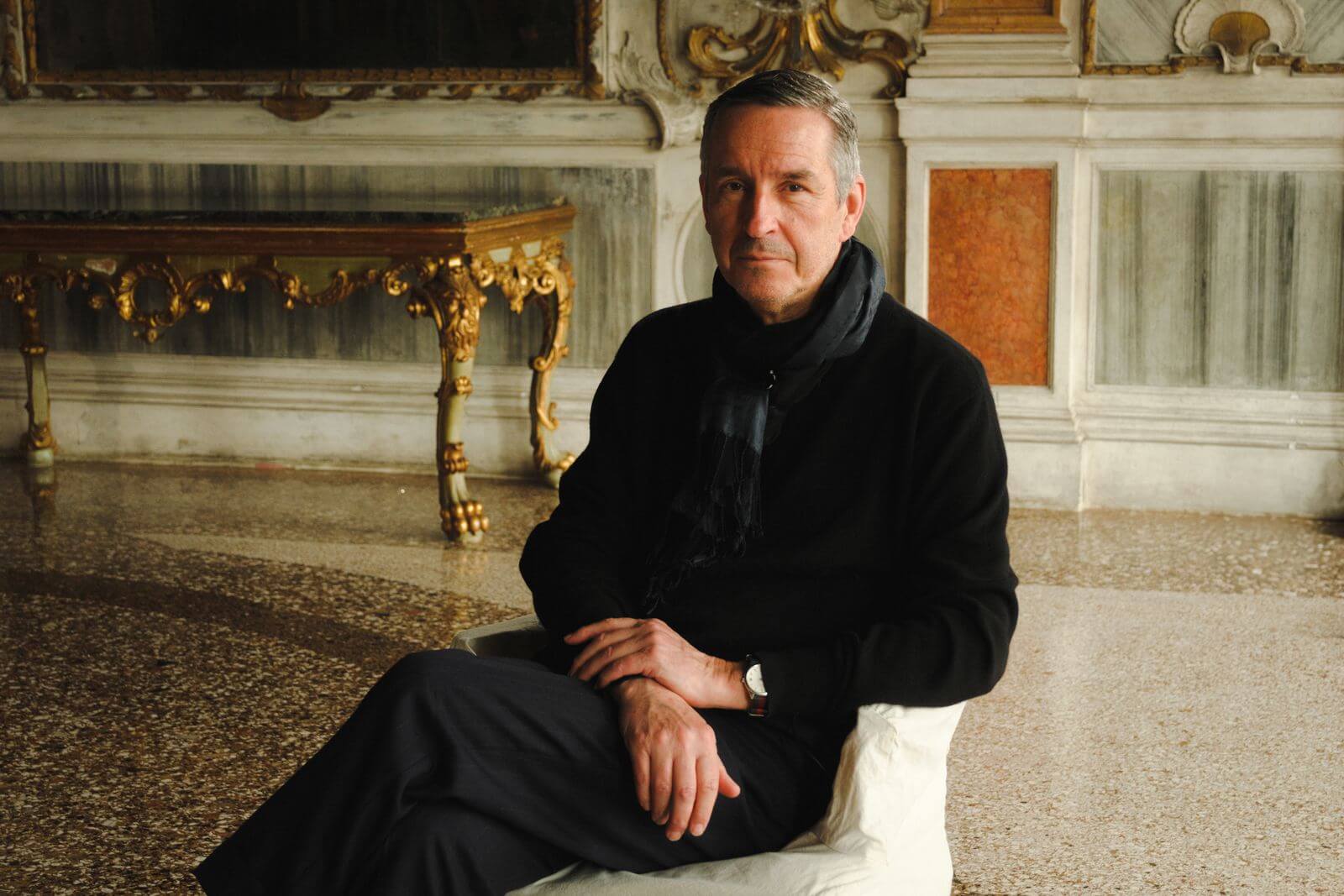
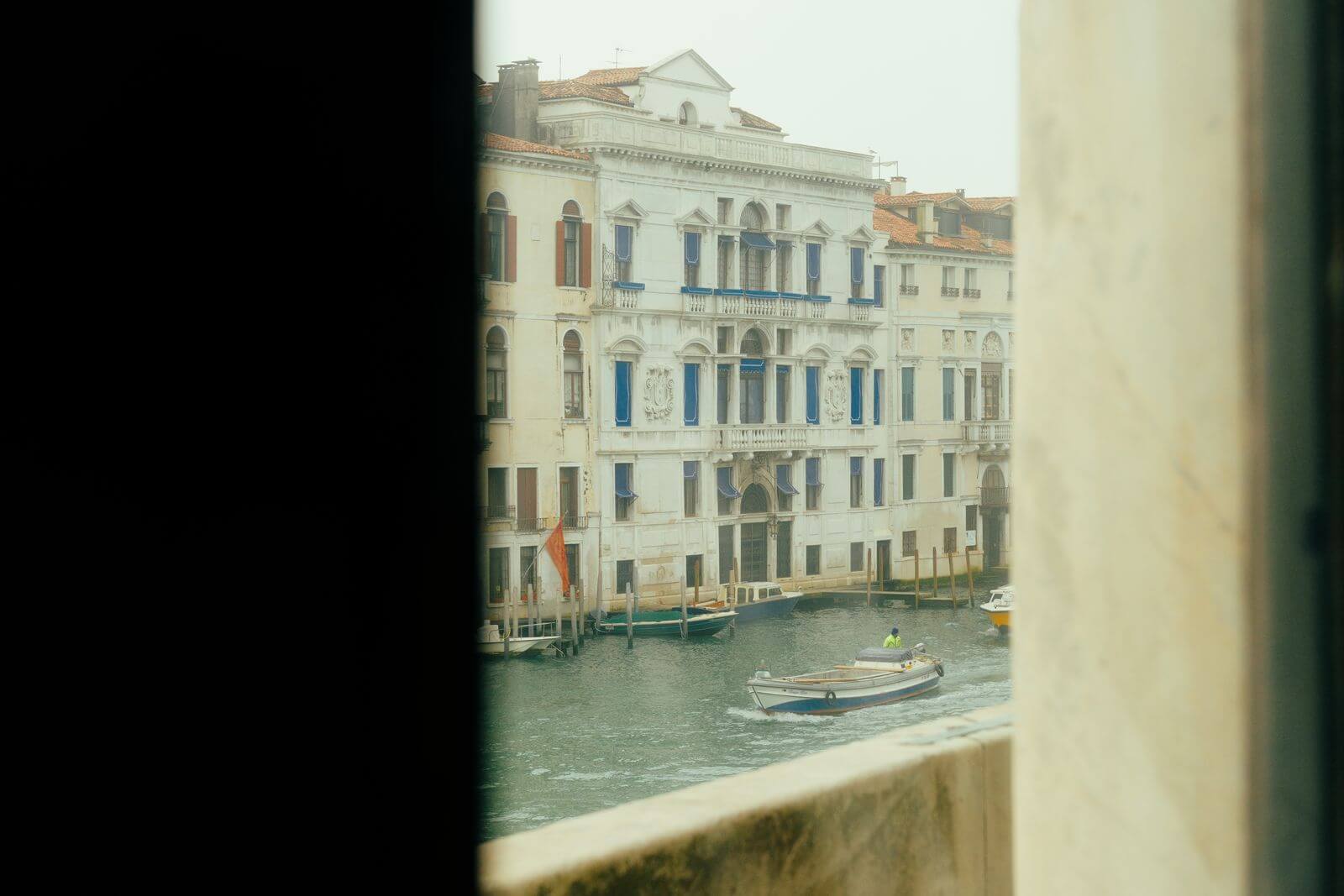
In this conversation Mara Sartore meets Dries Van Noten to explore the vision behind Fondazione Dries Van Noten. Founded by the Belgian designer and Patrick Vangheluwe and housed within the historic Palazzo Pisani Moretta overlooking the Grand Canal, the foundation celebrates craftsmanship as a vital language of cultural identity.
MS – In the last few years, Venice has been undergoing a significant transformation. I have lived here for the most part of my life, and I remember Venice at the end of the 1970s and the beginning of the 1980s as quite a different place.
One of the most notable changes is that many creative people are choosing to come and live in Venice. This is particularly significant because for many years we have heard mostly stories of people leaving the city and deciding not to live here anymore.
As a Venetian, I am curious to understand what truly made you decide to move and live here – not simply to invest in the city, which is quite common, but to make Venice your home.
DVN – The real reason why Patrick Vangheluwe and I decided to move to Venice comes from several factors. When we decided to step down as designers of our own brand, we felt the need to begin a new chapter. We did not want to retire; rather, we wanted to continue doing something meaningful in our lives. Craftsmanship has always been a very important part of how we approach fashion and creativity, so we began to think about creating a foundation dedicated to craftsmanship.
We looked at several places around the world. At first we considered Belgium, then we thought about Italy, a country we love for the food, the people, the sun, and everything else.
We considered different cities, including Rome and Florence, but then we arrived in Venice.
Venice is, of course, a very special city. The absence of cars and traffic, and the fact that people move mostly on foot, creates a completely different rhythm of life. This slower pace affects not only daily life but also the way you think. It gives you more space in your mind.
In Belgium we live in the countryside, about eighteen kilometres from our office in Antwerp, and it takes more than an hour to get there. Here everything is within fifteen minutes’ walking distance. That alone already changes the way you experience the city.
What surprised me most is that Venice offers this mental space while still being very alive. It is not a museum. Many things are happening here. There are excellent schools, there is the university campus around Santa Margherita, and you see students walking up and down.
There is real life. I immediately felt there was something bubbling here. You see not only the large institutions and foundations, but also many small projects. We met young creative people, visited co-working spaces and places like this.
So, for us, it was the ideal mix: a beautiful life in a beautiful city, but also something grounded in a place where things are happening.
I am very optimistic about the future of Venice. The city has everything that can appeal to people who want to work in a creative way. It is central, it is easy to move around, and well connected with an airport. It has so many advantages, maybe they sound a bit cliché to mention, but it’s the combination of all these elements that makes it so unique. And then, of course, we found Palazzo Pisani Moretta, which was like a love affair. In the end, this was not a decision made with our heads, but with our hearts.
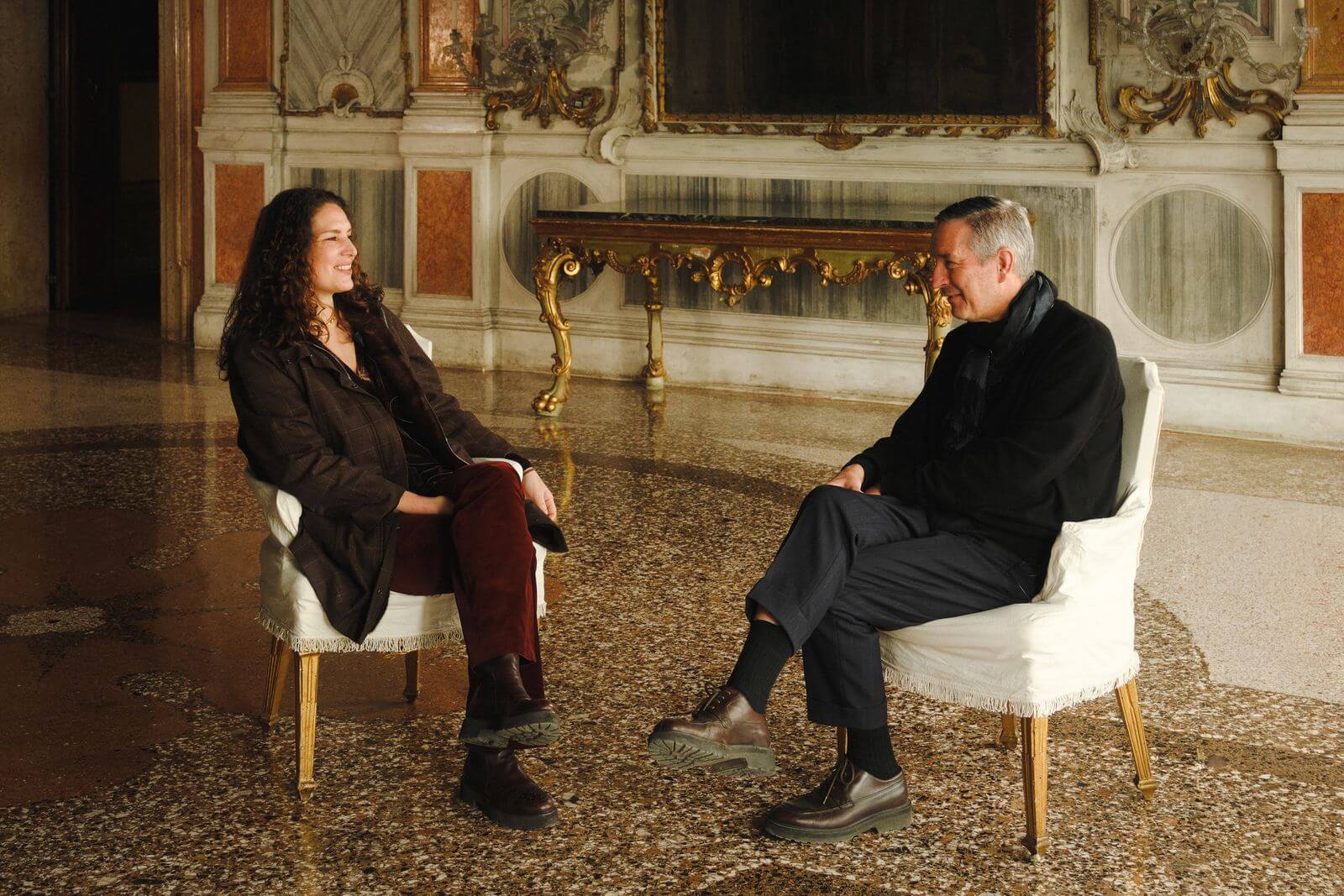
MS – Many Venetians have memories connected to this palazzo, because for years it hosted some of the most important parties in the city – weddings, celebrations and many memorable evenings. It was really a special place.
What you say resonates very much with my own experience. When I came back after my studies and decided to live in Venice again, I felt something very similar. It was really the reason why I wanted to be here.
We are very lucky to be able to live here, and we also have a responsibility to preserve the everyday life of the city. For this reason, I imagine that when you decided to come here and create a foundation in the city, you also asked yourselves how you would interact with Venice itself. How do you imagine the foundation interacting with the city?
DVN – Of course the foundation will try to create a connection with Venice. I think there are quite a lot of foundations here that do not really work with Venetians and are not really based in Venice. They use Venice as a beautiful place to be – they have the space and the city offers a beautiful setting. For us, it is very important to really be part of Venice.
At the same time, Venice has always been a kind of hub, a centre where people from all over the world come together. So I do not want to look at it in a narrow way and focus only on Venice – on Venetian schools or Venetian craftsmanship. I would like to keep it open, as it has always been in the past, with people constantly coming and going.
The influence of Venice on art, culture, and music has always been important. So, why not look at the city this way? We don’t want to be narrow-minded, we want to work with people who live here, while also bringing in people from all over the world and creating connections between them. Because I think that’s what will be the most exciting part.
I think one of the main roles of the foundation will be to connect people. There is already so much happening here. There is the Biennale, which is a huge organisation, but there are also many smaller initiatives. You have Homo Faber – which is not exactly small – you have Glass Week, and many other projects. Why not connect these things together? We would like to work with music, with the conservatory, with young musicians, with chefs, with winemakers from the Veneto, and try to combine all these elements. Because I think today the big evolution in how we think about beauty, aesthetics and art is that the distinction between art and craftsmanship is no longer so relevant. For me that discussion is over.So we’re going to do something in between, and we’ll see where it leads. The difference for me is that now we have AI, 3D printing, tools like ChatGPT, and so many other technologies.
But what reason is there for people not to create with their heads, their hearts, and their hands? We need to show that this is still really important in modern times – that it’s the human side that matters. I think this is very important. That’s what I want to focus on.
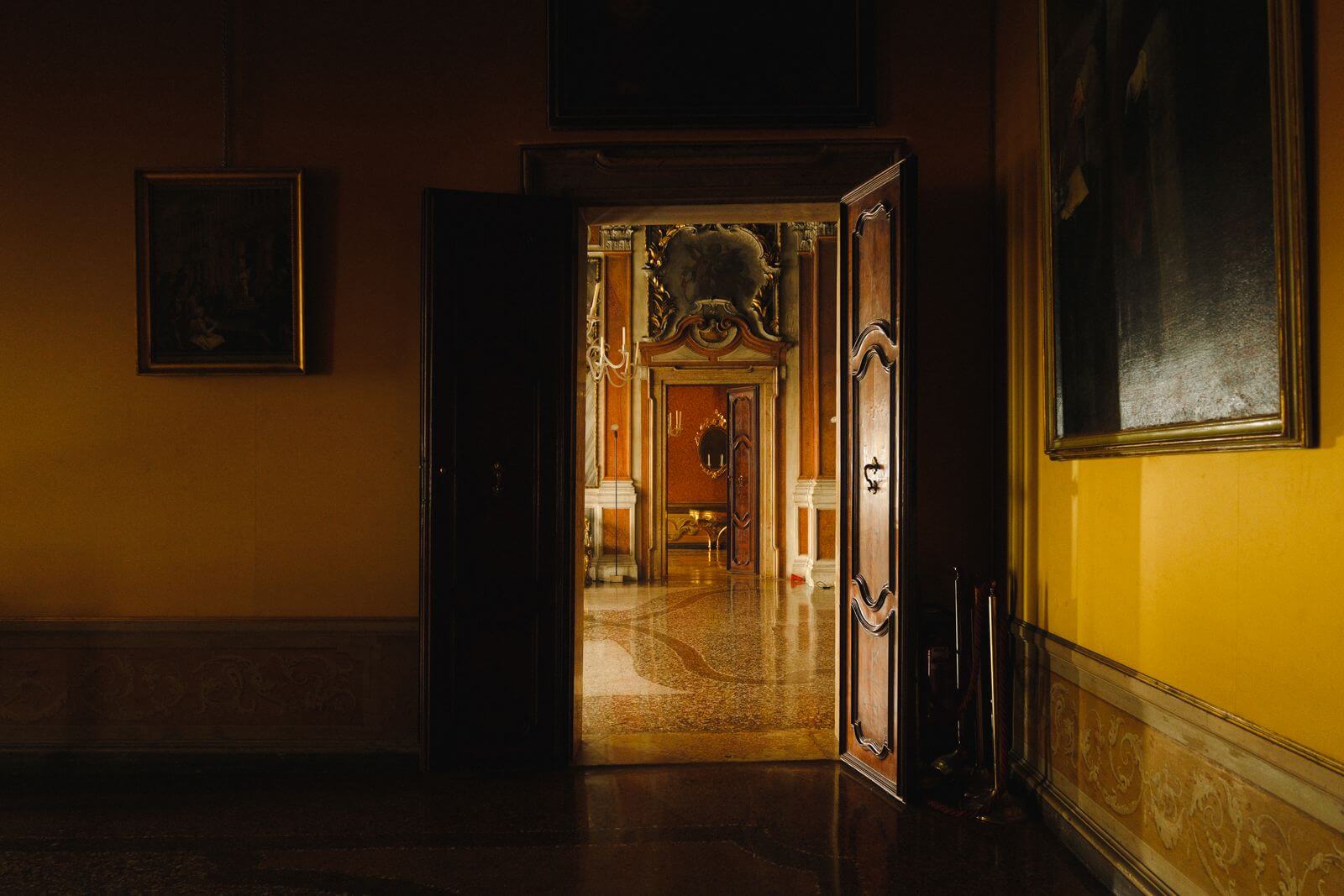
MS – What are you presenting for the opening of the Foundation and how do you imagine the interaction with people living in Venice?
DVN – We will start with a presentation that introduces all the different elements of what the foundation is about. It will take the form of an exhibition, but it is more a presentation, because we also want to develop satellite projects around it.
We would like to organise evening conversations with some of the people whose work we present. We want to bring established designers together with young designers, so that they can exchange ideas. The established designers can also learn from younger ones. That has always been the way I worked: I always had young people around me who inspired me and showed me new ways of looking at things.
MS – Do you imagine that the foundation might also produce something concrete out of these connections?
DVN – We only started working on the project in September, so preparing this presentation for April has already been very intense. At the same time, we are using this presentation as a way to learn, to understand what the needs are, to build our network, and to speak with schools and young people in Belgium, France, Italy, England, Korea, Japan. We already have many contacts, and we are also being contacted by many people. There are already several foundations working around craftsmanship.
But I want to understand where the real needs are. Of course we have funds, but they are not unlimited, so I want to use them in the best possible way. What is really needed? How can we also address the mercantile side of craftsmanship? Because it makes no sense to tell young people that working with their hands is something beautiful and meaningful if they cannot actually earn a living from it. So we need to think about all these connections: do you work only with galleries, or are there other ways? These are the kinds of questions we are asking.
MS – So there is also a marketing aspect strictly connected to craftsmanship, are you considering it?
DVN – Yes, I think we have to be open about that. If we want to convince people that there is a real future in craftsmanship, we also need to understand how that future can exist. For example, there is a project in Belgium called Collectible, which I find very interesting. It started as a small initiative and has grown significantly. Seeing the impact of something that began on a small scale but gradually became much more important is very inspiring. Initiatives like that can really move things forward.
MS – In the research you have been doing across Europe, have you also tried to map the situation in Venice? Have you started identifying artisans and designers who are living here?
DVN – Yes, we are also working in that direction. But at the moment many people are contacting us, and we are meeting them gradually. We have already visited some galleries in Giudecca, and we are trying to understand the local scene better. But I think this will mostly be work for the coming months, because until now we have been very focused on preparing the presentation. At the same time, we are also starting building works in our second venue, where we will move once the palazzo closes in October.
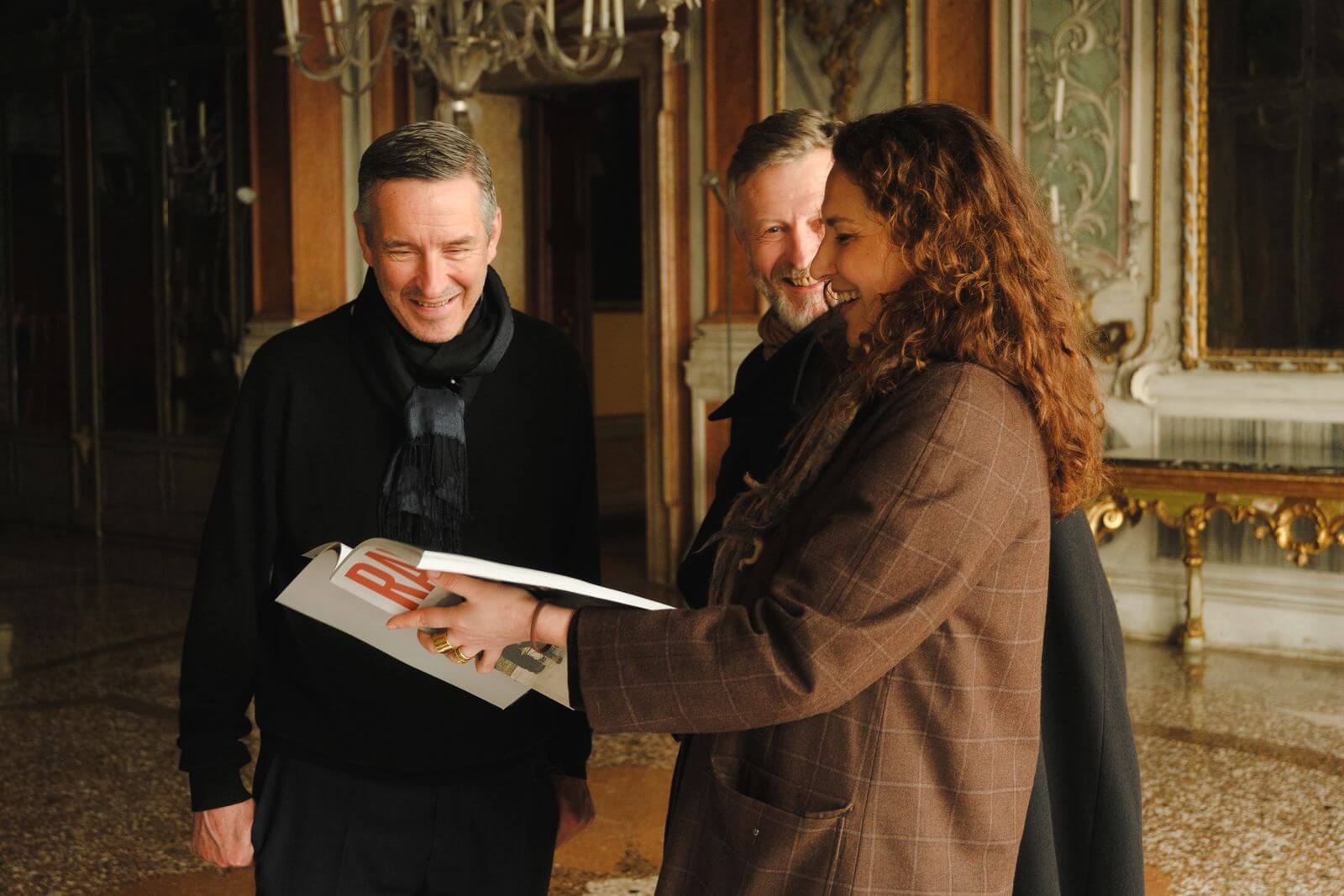
MS – In October you will close the palazzo for the second phase of the restoration, right?
DVN – Yes. For the moment we are doing small interventions, but in October we will begin a sixteen-month renovation. The work will mainly concern technical aspects – heating, air conditioning, a new lift, things like that.
MS – So it is more about infrastructure. The appearance of the palazzo will not change, right?
DVN – No, the appearance of the palazzo will not change at all. We want to preserve it. I think many Venetians will be happy to hear that, because people are very attached to this building, they think of it as their party venue. But no, we do not want to change its character. We simply want to make it ready to be used in many different ways in the future.
MS – I would like to ask you to speak a little more about the presentation that will open on 25 April. Can you reveal something more about its structure and what visitors can expect?
DVN – It will include many different elements. In total we will present more than two hundred pieces by fifty-six designers and artists. It is really a combination of many things. I tried to create a narrative. I curated it myself, with the help of some friends, as always. For me, it is about telling a story about the palazzo – about what we feel today, about what is happening in the world.
The title is “The Only True Protest is Beauty”. The concept of beauty, for me, is something extremely important, and beauty can mean much more than just prettiness. This idea guided the selection of the pieces. There will be photography, quite a lot of fashion – because fashion is still in my blood – jewellery, works from Venice, and works made internationally.
There are established designers and also young designers who have just finished school. It is really a mixture of many different things. In a way, it also reflects how I imagine the future of the foundation: I do not want to focus only on young designers or only on established ones. I like the dialogue between different elements.
MS – How important will fashion remain within the foundation?
DVN – In this first presentation fashion will be very present: there are thirty-five silhouettes. But in the future I think it will be treated in the same way as ceramics, glass or other crafts. I do not want to neglect fashion completely. For me it remains an extraordinary way of expressing craftsmanship in a sophisticated way, and also a powerful form of communication. But right now, this is the kind of transition I want to go through.
MS – The exhibition revolves around the challenging concept of beauty, which is quite complex. Today we are no longer within the traditional canons, and sometimes it feels as if we have lost a shared sense of what beauty is. Sometimes I see that there is a lot of bad taste around us. What does beauty mean to you today?
DVN – Yes, it is challenging, and I don’t think I have the answer. For me, it is more a search for beauty than beauty itself. When I was working on my fashion collections, I always tried to push the concept of beauty forward, to surprise the audience. Because I think that something beautiful can also be something unexpected. Otherwise traditional beauty can become quite boring.
The concept of beauty must evolve. You have to get used to it gradually. It’s like learning to eat olives: the first time you taste an olive as a child you hate it, the second time it tastes better, the third time you are addicted. It is the same with beauty: you have to be challenged and exposed to new things. You have to question what beauty is for you, and it can be something very personal – what is beautiful for one person may be ugly for another. Good taste, bad taste, kitsch, all these ideas are constantly shifting. What is the norm of kitsch? Is something kitsch or is something kind of a different beauty? For me this exhibition is an exercise, a question mark. I hope that each visitor will find their own answer.
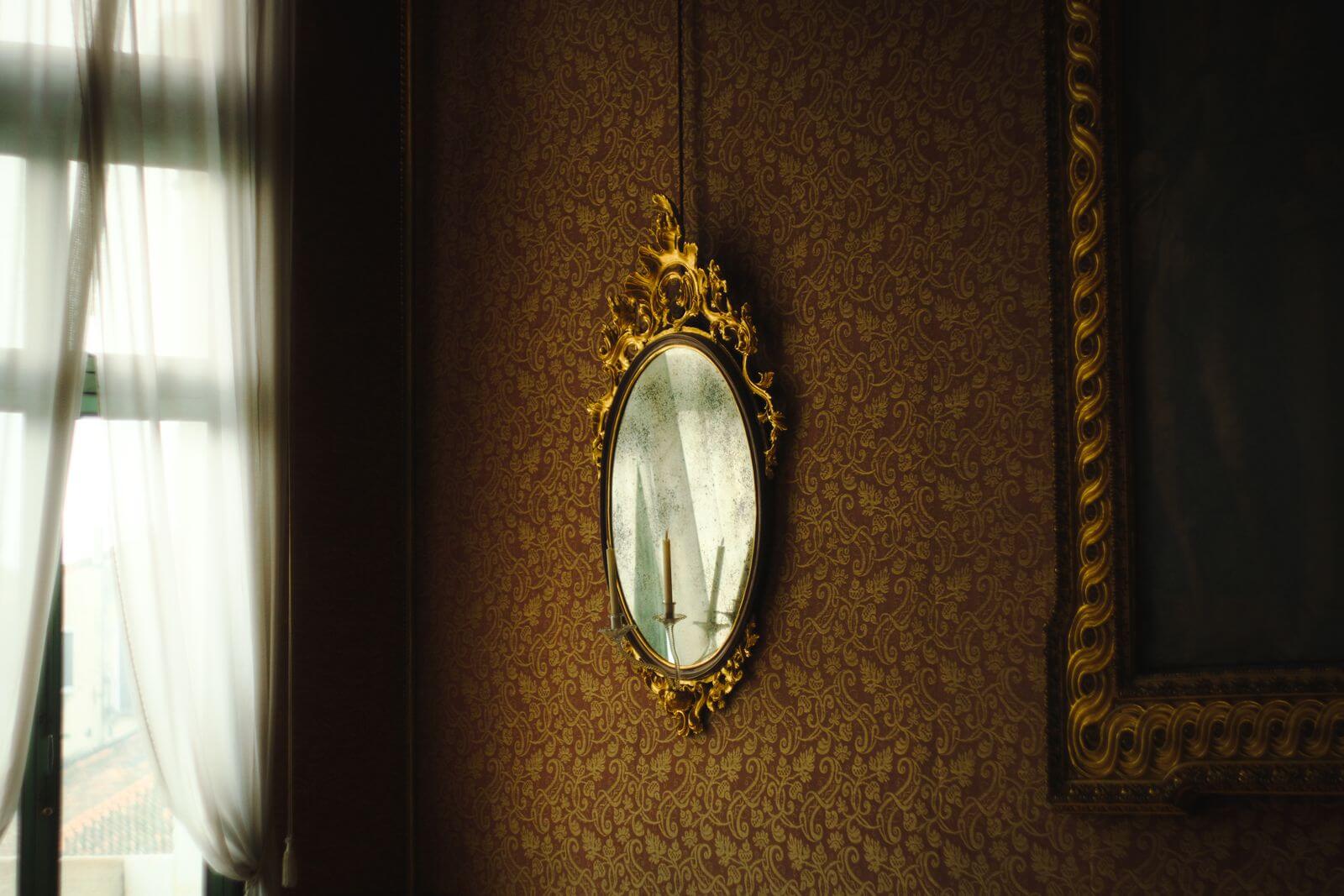
MS – Do you think beauty can be learned, or perhaps that people’s sense of beauty can be educated?
DVN – I think you have to show people things. But you cannot dictate what people should see. Often when you see something it depends on the circumstances. Are you having a good day or a bad day? Are you in a good mood or a bad mood? Is the weather nice or terrible? All these things influence how you perceive beauty. At Christmas time people lose all their sense of reason and think everything is beautiful because it is Christmas. Beauty is often very related to the situation you are in. And I think it will also be interesting here in the Palazzo, because it is not a neutral space. It will really become a conversation, sometimes even a harsh conversation, with the Palazzo itself. We are going to disrupt a few things here in order to surprise people and challenge that concept.
MS – You have made me very curious now to come and see the show. You said that when curating the exhibition you had to combine many different crafts. How did you build the dialogue between the different elements you will present?
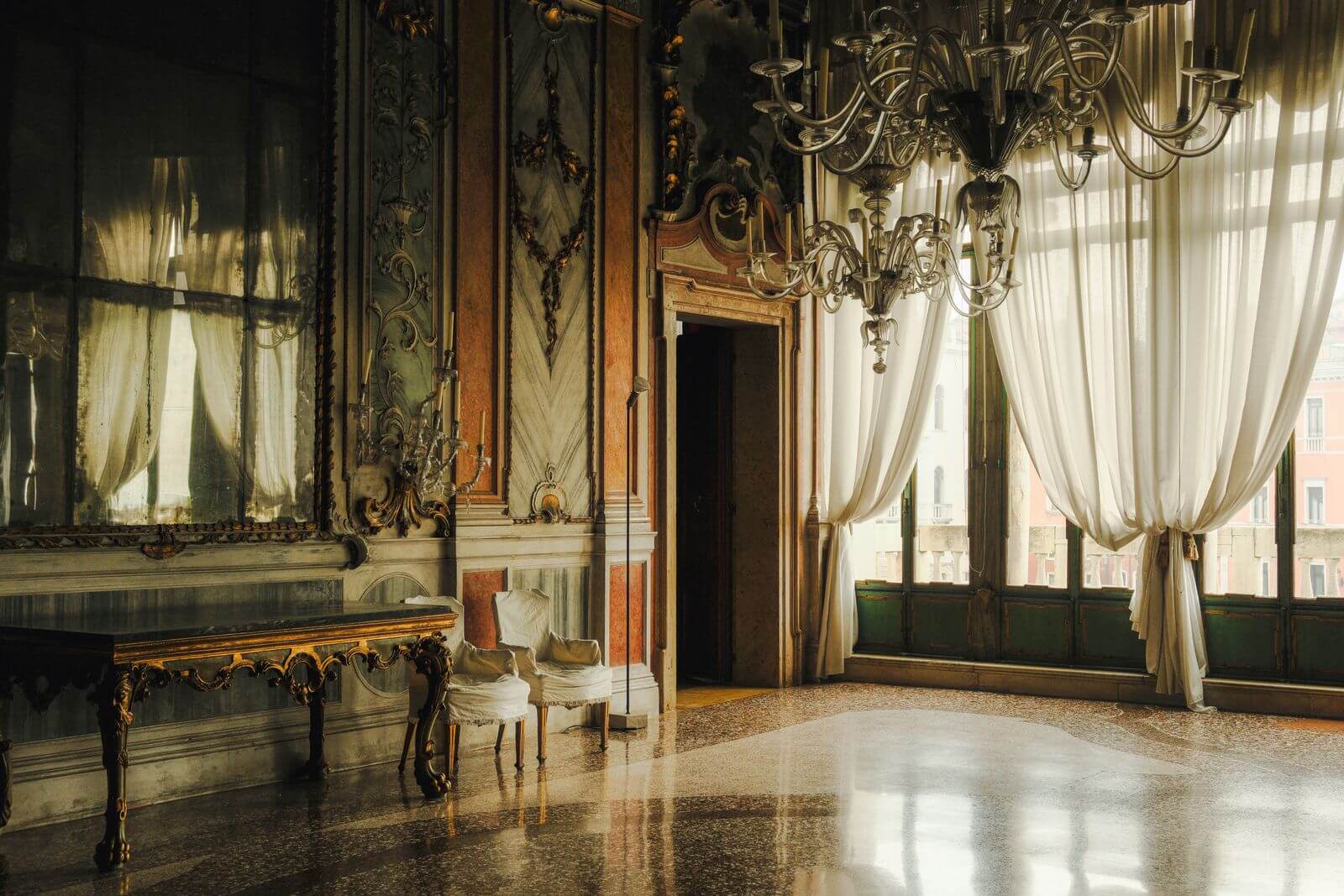
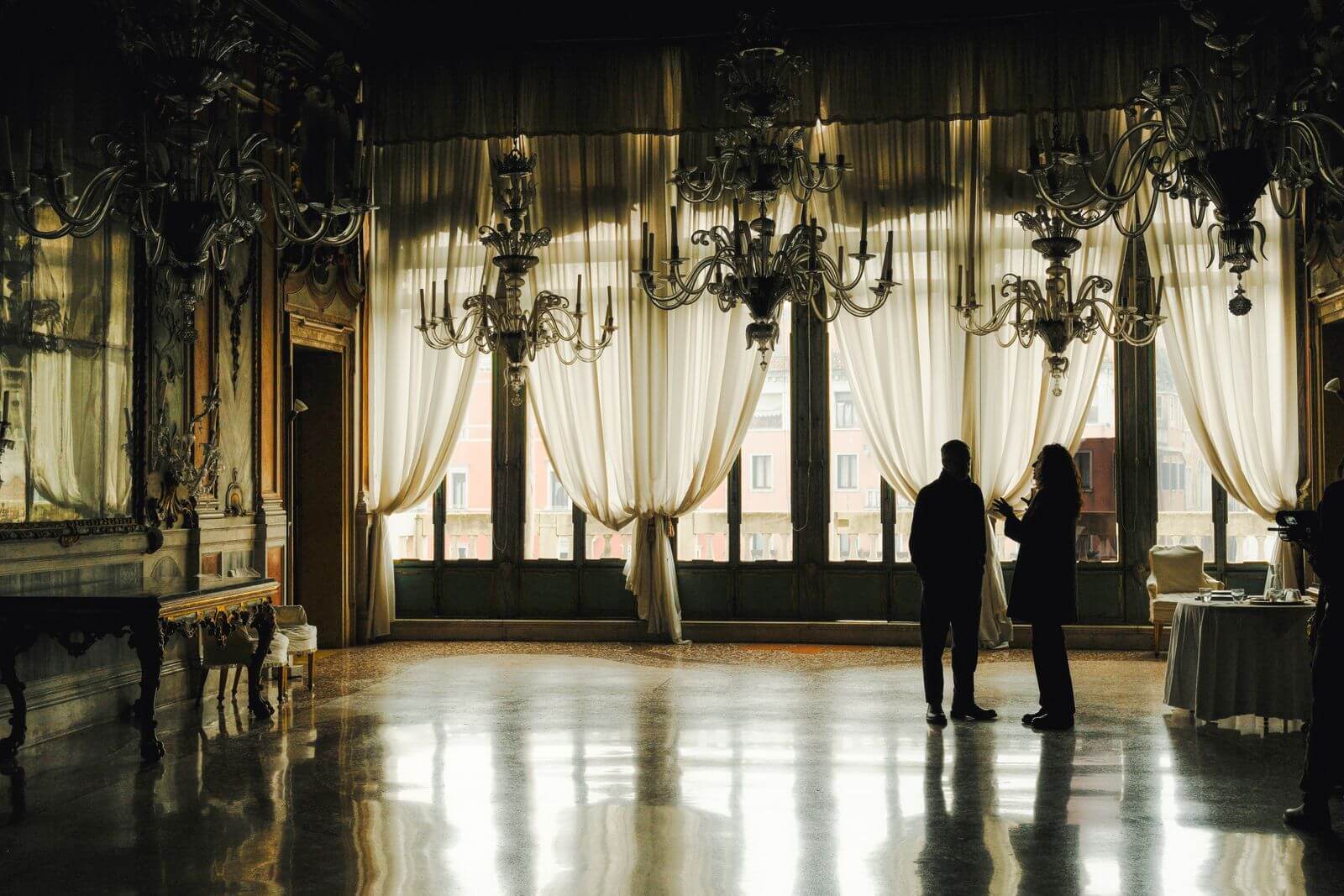
DVN – The Palazzo has a strong voice. It is not a neutral space. So in that sense it dictates a little what belongs where.For example, the room we are in now is about the victory of light over darkness. That is what you have in the Jacopo Guarana fresco on the ceiling. That became a beautiful starting point: the victory of light over darkness, talking about beauty and all these things. So that guided the thinking about what pieces should be placed here and how they would interact with the space.
MS – One last question. If you close your eyes and imagine Venice in twenty years, what do you see?
DVN – I hope to see a healthy hub of creativity, with many young people, and perhaps the end of Airbnb.


