

Daria Dmytrenko’s Intrico: Creatures from the Subconscious Forest
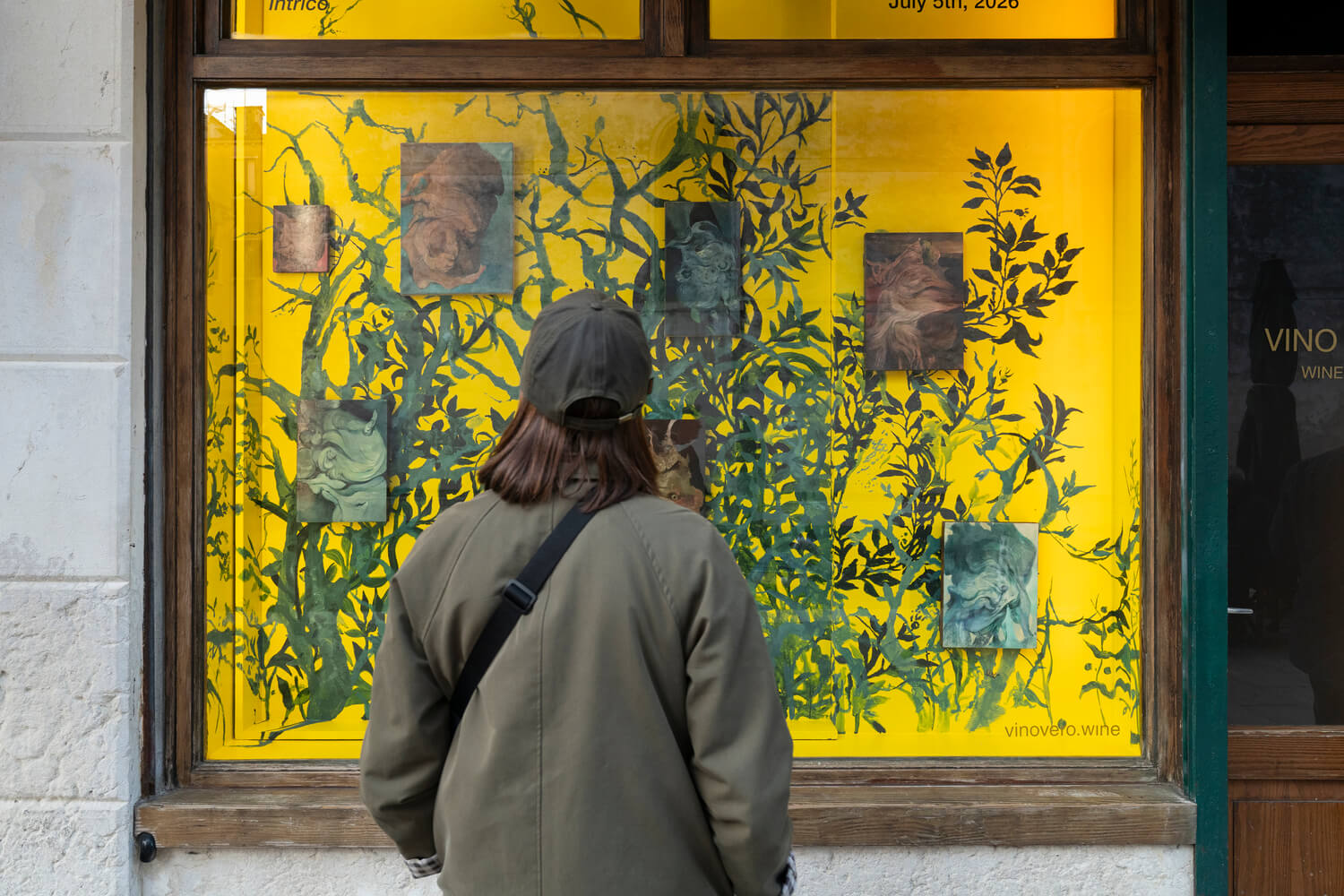
For Vetrina#16, Dmytrenko presented Intrico, a site-specific installation where the subconscious is compared to a dense forest. The thickness of the trees represents the complexity and depth of the human mind, while the creatures glancing from the bushes are incarnations of the emotional states, memories, and nightmares. They inhabit the space silently and steadily, existing in a parallel time and dimension, not wishing to be discovered. The viewer can only peek carefully, without invading that balanced and untouched world.
Daria Dmytrenko
MS – Your works seem to emerge from the desire to give form to what normally remains invisible: fears, memories, intuitions, images that arise from a dimension that is difficult to control and even to define. When did you realize that the subconscious would become the main territory of your research?
DD – Back when I moved to Italy to study at the Academy of Fine Arts in Venice, I was feeling limited in developing my own artistic language by certain aspects of the artistic training I had received in Ukraine. It was very solid and strong, but also very strict and dogmatic, based on a Soviet and classical realist approach.
To unblock myself and step out from that framework, I started practising automatic painting as an exercise. I discovered that this way of working allowed my subconscious to flow freely, stimulating deepest memories and emotions to emerge, even those I never expected were inside me.
Over time, this exercise became my main working method, and it remains the approach I use today.
MS – You have often described your creative process as intuitive and partly removed from rational control. When you begin a work, do you already have a precise image in mind, or do you work by following associations and apparitions that emerge during the process?
DD – When I begin a painting, I never know where it will end up. Its stages are difficult to define because they are prone to change. I begin by finding the dominant colour of the work and revealing forms through multiple layers of glazing, washing the canvas with turpentine, sometimes turning it upside down, and other intuitive manipulations. This process is deeply meditative and requires a calm, distraction-free atmosphere in the studio.
As the piece develops, the paint creates forms that I continue to shape and transform until they resonate with me, evoking a sense of something familiar and deeply personal. This moment marks the foundation of the painting. From there, a more meticulous stage begins: refining the details, anatomy, and surroundings.
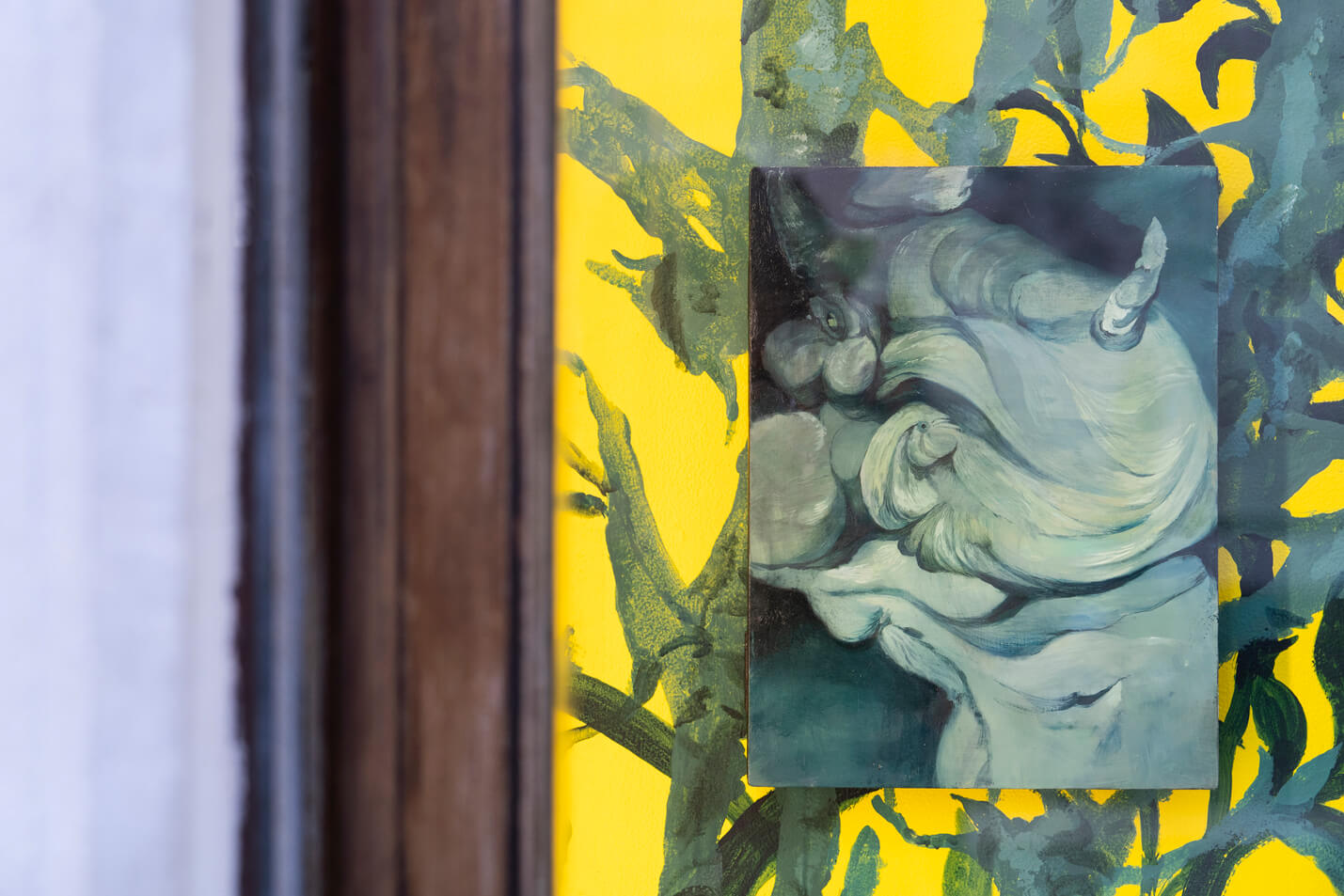
MS – For the project “Intrico”, you created an environment inhabited by presences that seem to emerge from dense and impenetrable vegetation. What were you interested in exploring through the image of the forest?
DD – It is not the first time I have used the forest as an allegory for the human mind. I see the density and depth of the forest as comparable to our psyche, which can be just as dark, mysterious, and infinitely deep. Both can be frightening and unpredictable. The deeper you go, the greater the risk of losing the familiar path and becoming lost in unexplored, obscure thickets.
MS – The creatures in “Intrico” seem to exist independently of the viewer, as if they belonged to an autonomous reality. What role do you attribute to the spectator? Are they a visitor, a witness, or an intruder?
DD – I wanted the viewer to feel as if they had found themselves looking into a different, parallel world where they do not belong, but where they have the chance to peek inside.
The creatures in the window are metaphors for our emotions, dreams, and fears. They live within us and are an integral part of who we are, yet they remain independent and beyond our control. They glance at us with the same expression as a wild animal—cautious, curious, and observant—as if trying to decide whether we are a friendly visitor or a threat.
However, I hope each viewer will develop a personal relationship with these creatures, just as each of us has a unique relationship with our own inner world. Some might develop an empathic and warm connection with them; others may be afraid to look them in the eye and avoid contact. Still others might see their fragility and tenderness behind their repulsive appearance.
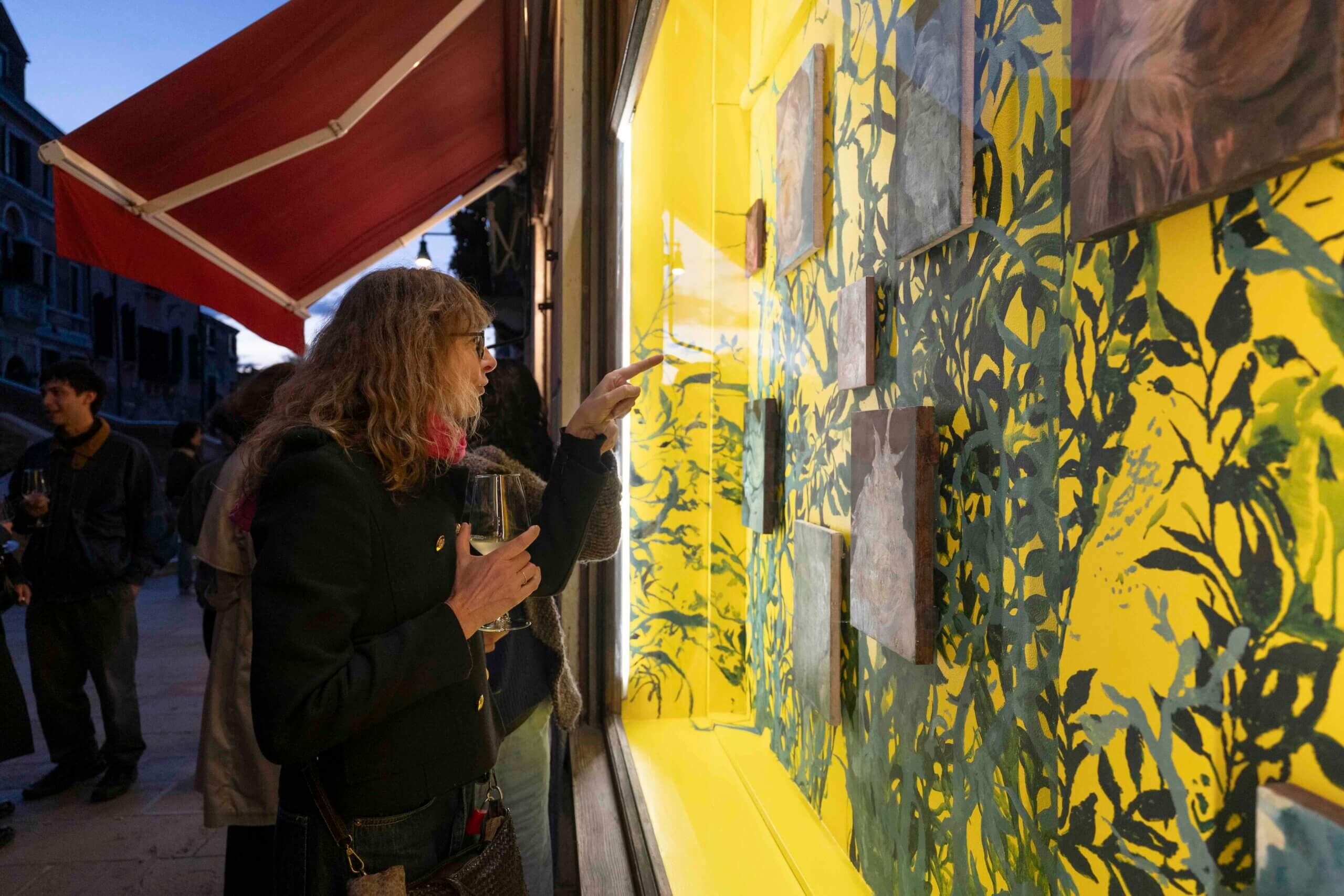
MS – Many of your works seem to inhabit a space between attraction and unease. Are you interested in using fear as a tool for knowledge rather than as a mere emotional response?
DD – When I paint I often experience the same feeling I had as a child when I imagined what kinds of creatures might inhabit a forest or the deep waters of a river: a combination of fear and curiosity.
The difference is that now this feeling comes from the desire to discover the inhabitants of my own subconscious instead of the monsters created by a child’s imagination.
Fear for me is deeply connected to the subconscious. It takes courage to look inside yourself, to face your own traumas and dark desires and to accept that not everything we feel or dream comes from our conscious will. Sometimes, what we find can be frightening.
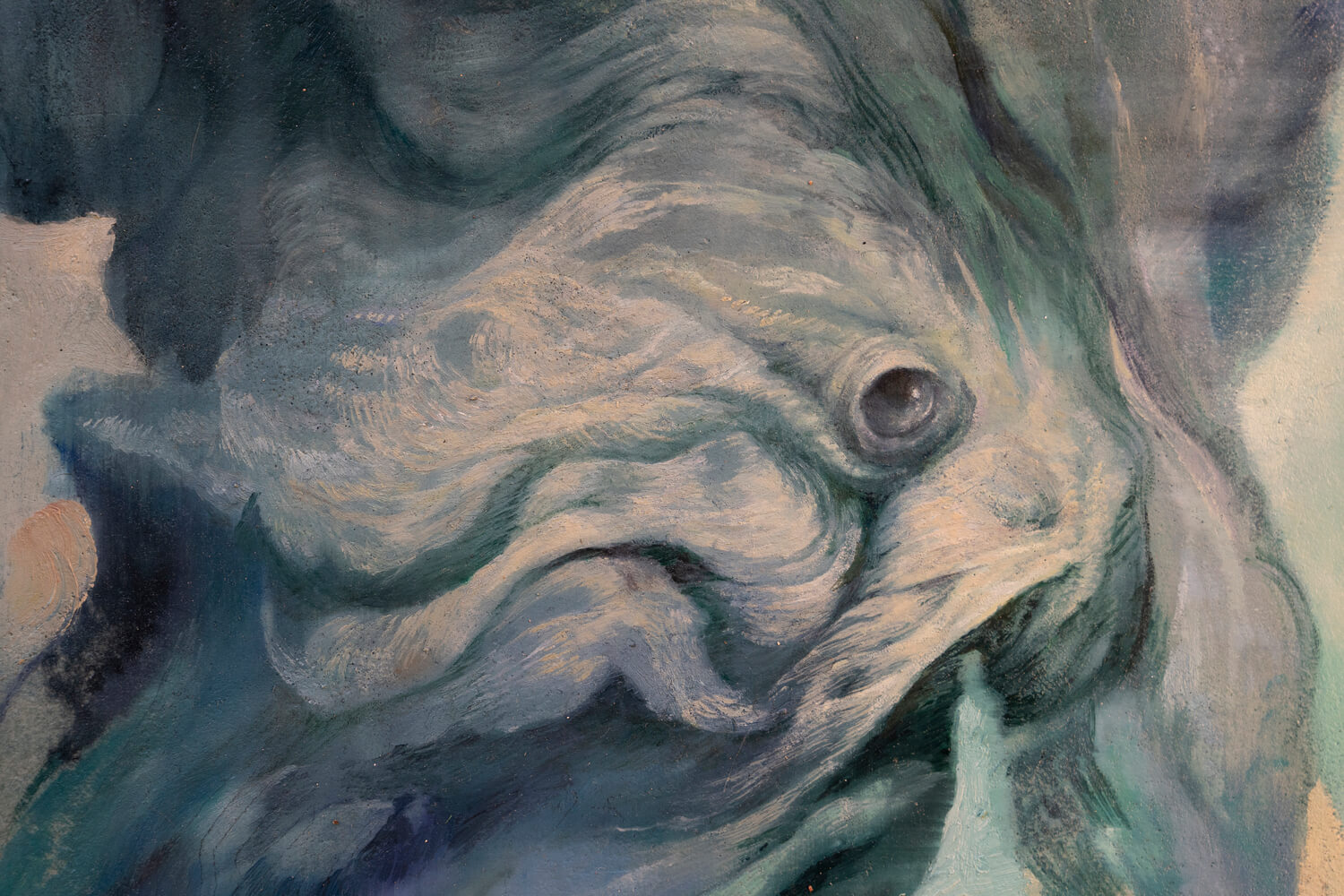
MS – Vetrina is a very particular space: it is neither a gallery nor a neutral space, but a threshold between the street and a place of everyday encounters. How did you approach the challenge of conceiving a work intended to be observed by passers-by who often encounter it by chance?
DD – I immediately liked the fact that it was a window because I could transform it into a portal to a different, immaterial dimension that people would unexpectedly come across. I wanted the viewer to perceive the Vetrina as a window into a world that is separate from and independent of our own, where they could catch a glimpse of creatures that are usually hidden from our view.
MS – You were born in Ukraine and have lived and worked in Venice for many years. How do these two landscapes, both geographical and cultural, continue to coexist within your imagination?
DD – Having grown up in Ukraine, I absorbed its nature beauty, culture, and traditions. Ukrainian folklore and mythology, which are deeply connected to the country’s geographical landscape – where many mythical creatures inhabit rivers, steppes, and forests – have significantly shaped my worldview. This influence is clearly visible in my work. Living there until my twenties naturally formed me as a person.
Moving to Venice, on the other hand, was a turning point in my development as an artist. Having the opportunity to get in touch with both the contemporary art scene and some of the world’s most important collections of classical art greatly broadened my perspective and encouraged me to experiment and explore new ways of working.


