

David Černý: Artocalypsa and the dead presidents
David Černý
Artocalypsa opens in Venice at Il Teatro dell’Arte (NuoveFondamenta) from 6 May to 6 November 2026, coinciding with the 61st Venice Art Biennale. Venice is a city deeply shaped by spectacle, tourism, and the global art market, and during the Biennale these dynamics are particularly amplified. What does it mean for you to present this exhibition in such a highly exposed context?
It is undoubtedly a more significant place to present my view of the chaotic world we live in — and perhaps are already merely surviving through. I’ve been coming to the Biennale quite regularly for the past thirty years. I think the tendency has been increasingly alarming, increasingly downward. I’m afraid a reversal is not going to happen anytime soon.
Your practice has long engaged with Europe’s political contradictions, from Entropa onward. Looking at today’s geopolitical climate, how has your perspective on Europe changed between 2009 and 2026?
In 2009, Europe was already clearly chaotic, but despite the skepticism and irony I used in Entropa, I still secretly hoped there might be a possibility of change. Today, I no longer hope. After Covid and another insane war, I feel a deep depression.
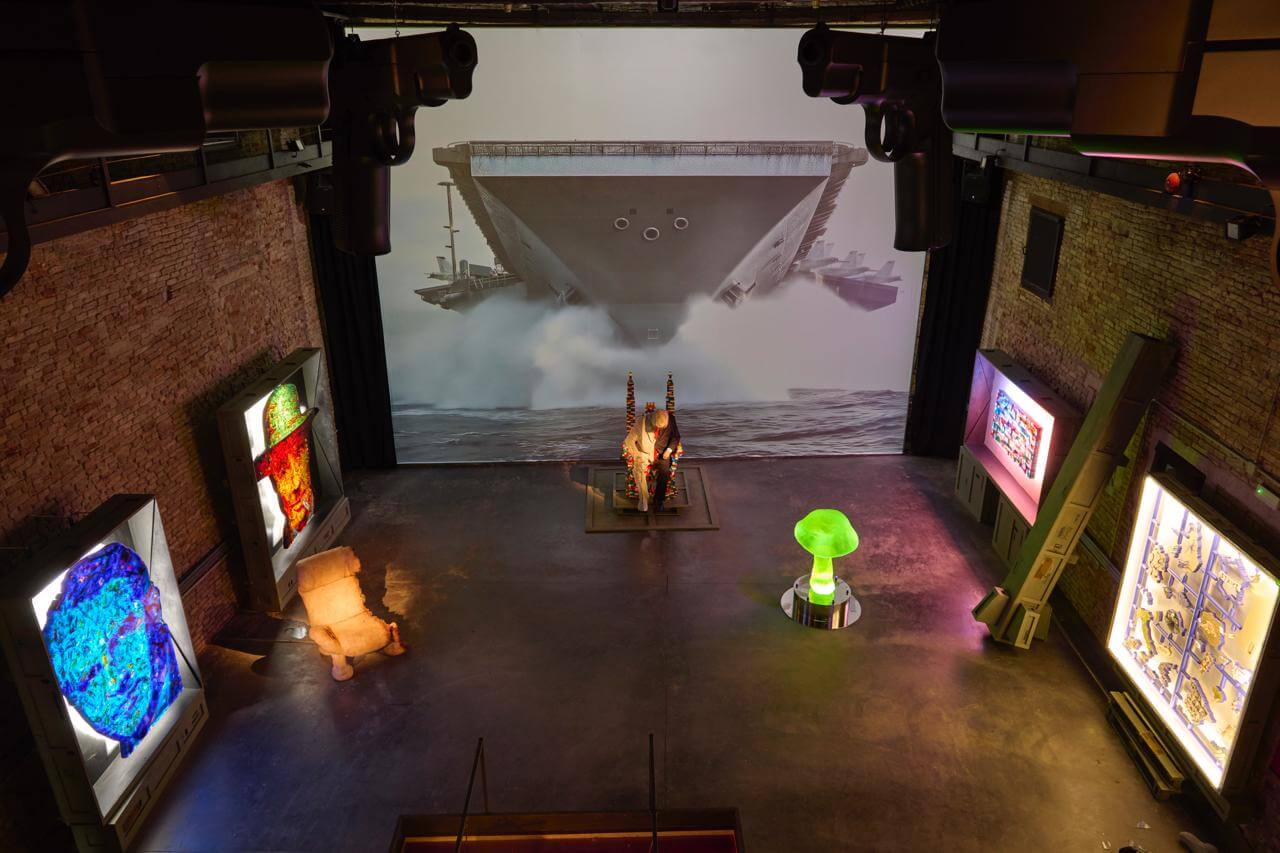
Within a Biennale often shaped by layered, open-ended narratives, your work stands out for its directness and explicit imagery. How do you negotiate the tension between immediacy and ambiguity?
Both are probably present in most of the things I do. Sometimes ambiguity can be concealed by immediacy, and sometimes the opposite.
Weapons and military technologies recur throughout your work, often presented with a striking formal appeal. How do you work through the contradiction between their aesthetic seduction and the violence they embody?
The question is what actually contains what. Is violence embedded in the weapon, or is violence merely presented through it? And isn’t war an essential part of our genotype? In every millimetre of our bodies, there is essentially a permanent conflict taking place between viruses, bacteria, and the immune system — and the immune system often fights against its own host.
I think the development of weapons and their technical execution can be admirable. Much less admirable are the people behind their misuse — those capable of destroying and killing, with a single decision, everything beautiful we as humans are able to create, including new life itself.
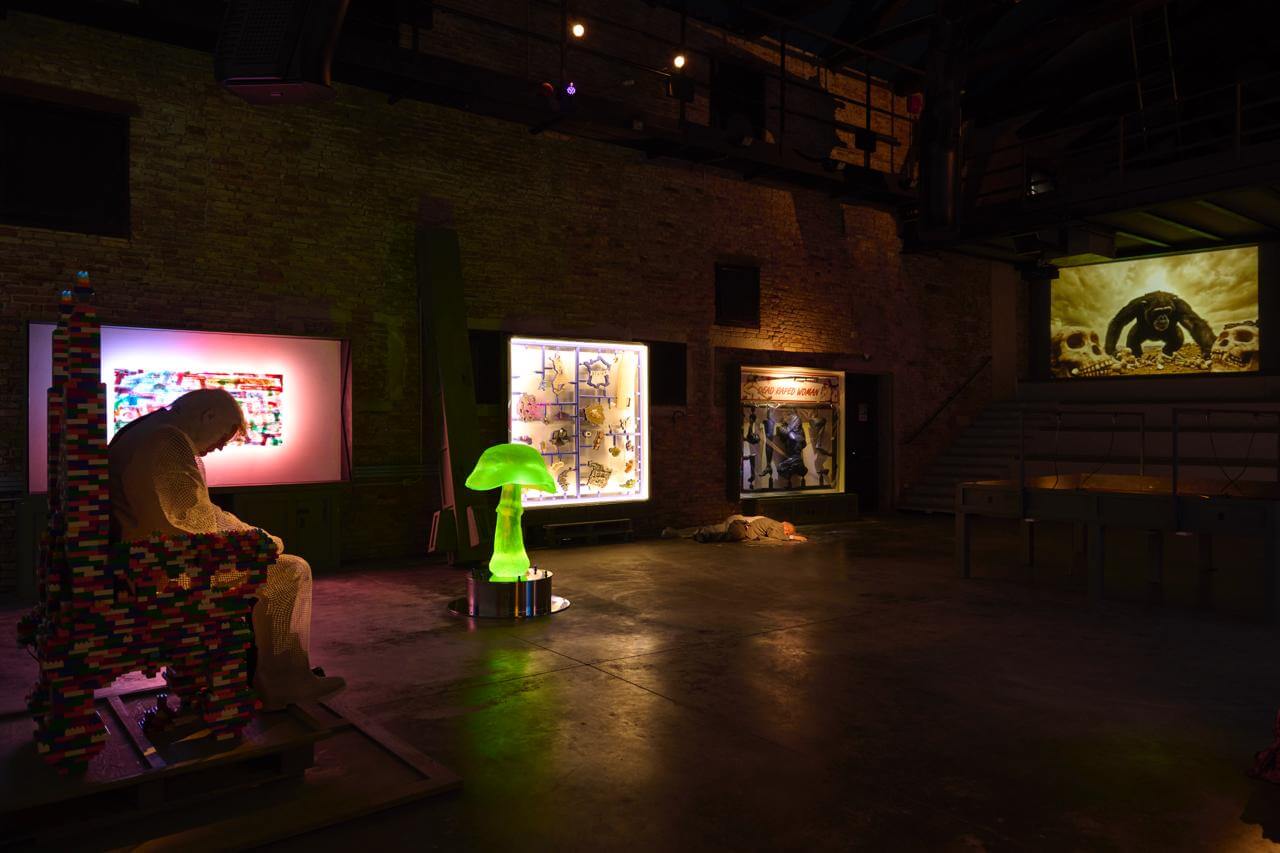
Provocation and satire have been central to your practice since your earliest interventions. After more than three decades, how do you keep them from becoming a formula or mere shock, and what do you see as the biggest failure of reception: indifference, misunderstanding, or agreement?
That cannot really be answered directly; it differs greatly from one work to another. In many cases there are also misinterpretations — and vice versa. My works require explanation, which is why in Venice we have QR codes next to every piece, so people can read about the connections to the world around us and the relationships between the works in Artocalypsa. For the first time in an exhibition, I tried to tell a story through them.
Many of the works in Artocalypsa resonate strongly with today’s political anxieties. Do you see your exhibition as responding to the present moment, or as revealing that these tensions have always been latent within society?
Yes, some of the objects are of course a direct reaction to the current situation, but others are twenty or thirty years old. It is depressing that they remain relevant and still reflect recurring war crimes and human filth. So in that sense, both interpretations apply.
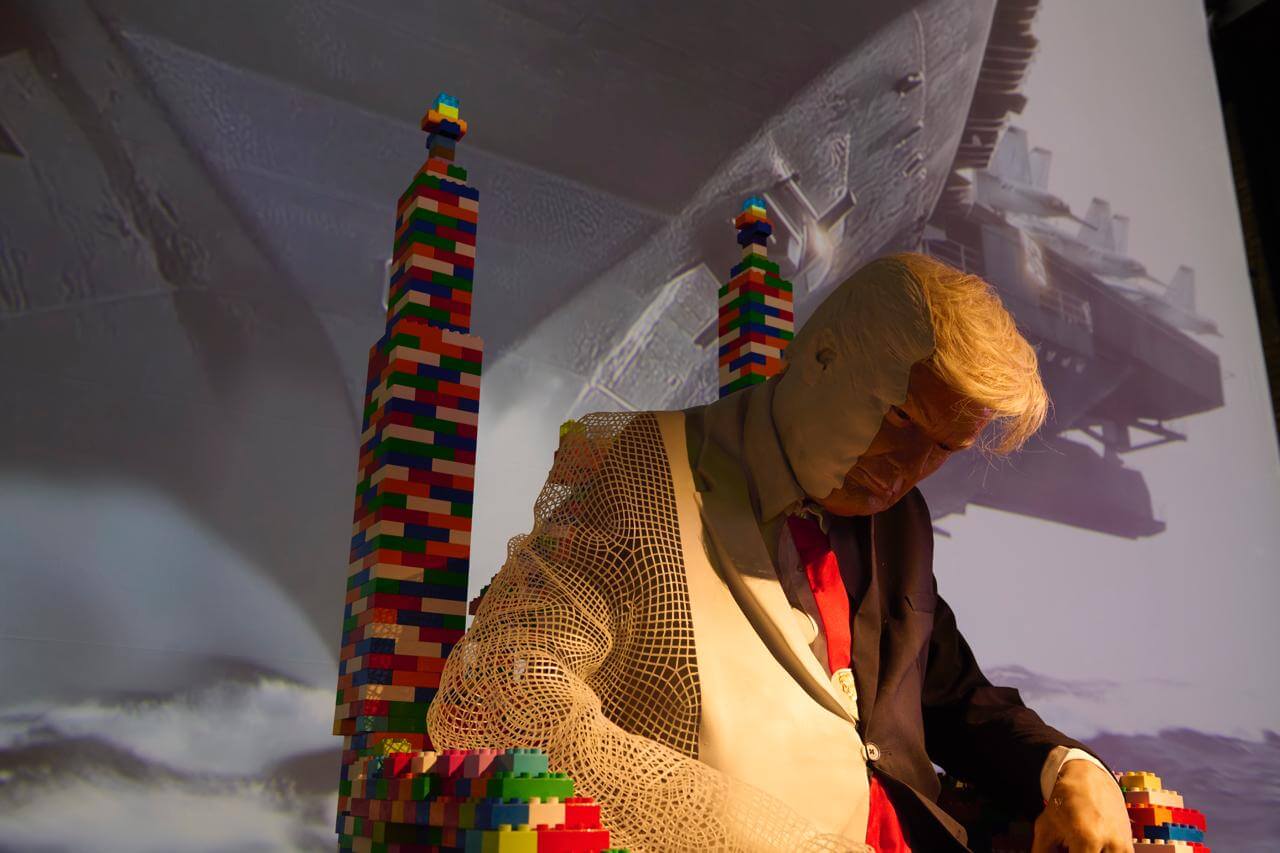
In the Inventors/Scientists series you focus on figures whose achievements are inseparable from their destructive applications. Do you think technological innovation inevitably carries a moral ambiguity, or does responsibility lie elsewhere?
No, it is about the ambiguity of the phenomenon itself. Was Leonardo da Vinci responsible for the massacre at 1989 Tiananmen Square protests and massacre, represented in this show by the work Tiank Square? Interestingly enough, when da Vinci wrote his letter of intent to the Medici family, he presented himself primarily as a weapons engineer and constructor, while barely mentioning — almost deliberately avoiding mention of — his artistic abilities?
Artocalypsa by David Černý is showing at Il Teatro dell’Arte (NuoveFondamenta) until November 2026.


