

Salone Verde: The Art of Belonging
In a former carpenter's workshop in Venice, Berlin-based architects Anna and Ralf Petersen have created Salone Verde, an Art and Social Club dedicated to cultural exchange, experimentation and community. In conversation with Mara Sartore, they reflect on the transformation of the space, their growing relationship with the city and the importance of imagining a future for Venice beyond tourism.
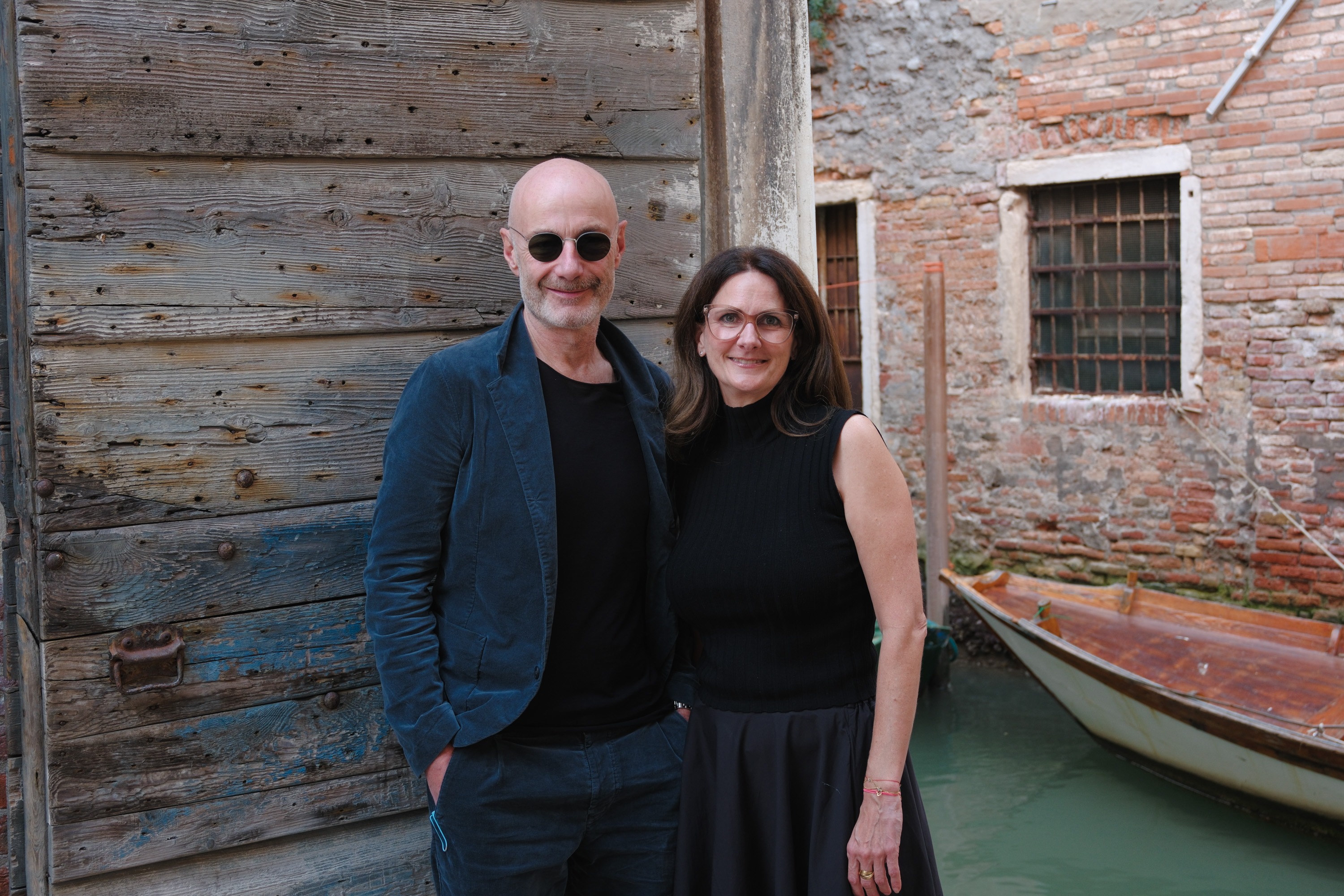
Anna and Ralf Patersen
Mara Sartore – I'd like to start with the story of Salone Verde, and particularly with how you first came across this extraordinary space. What drew you to it, and how did you begin to imagine what it could become?
Anna Petersen – The idea of creating a project in Venice first emerged in 2017. Some architect friends of ours came across a property for sale and invited us to see it. The moment we entered, we recognised its potential. It had an extraordinary atmosphere, beautiful surfaces and a strong character. Despite its condition, we could imagine doing almost anything here.
Mara Sartore – I'm curious about the history of the building before you took it over. What was its original function, and what did you find when you first entered the space?
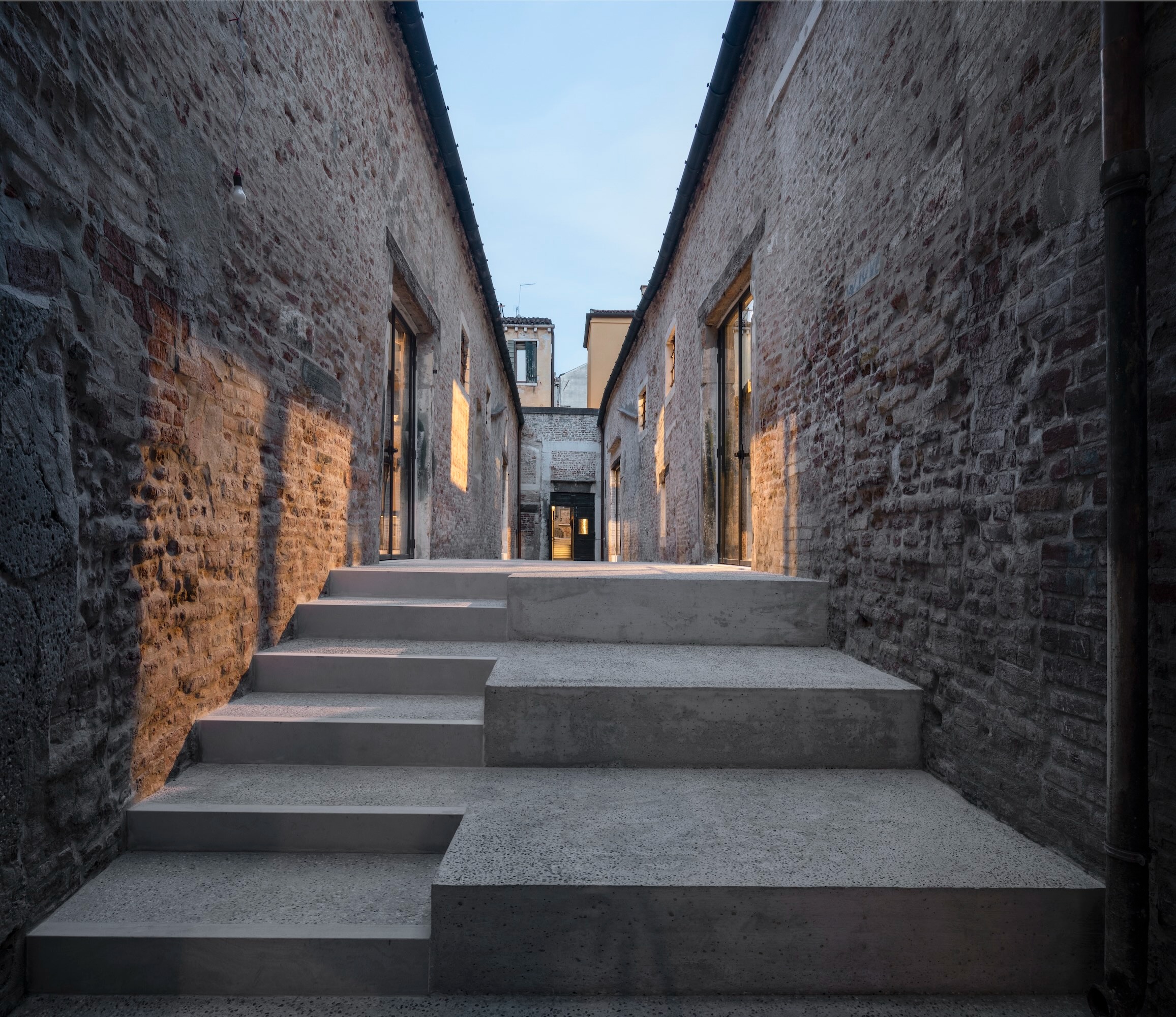
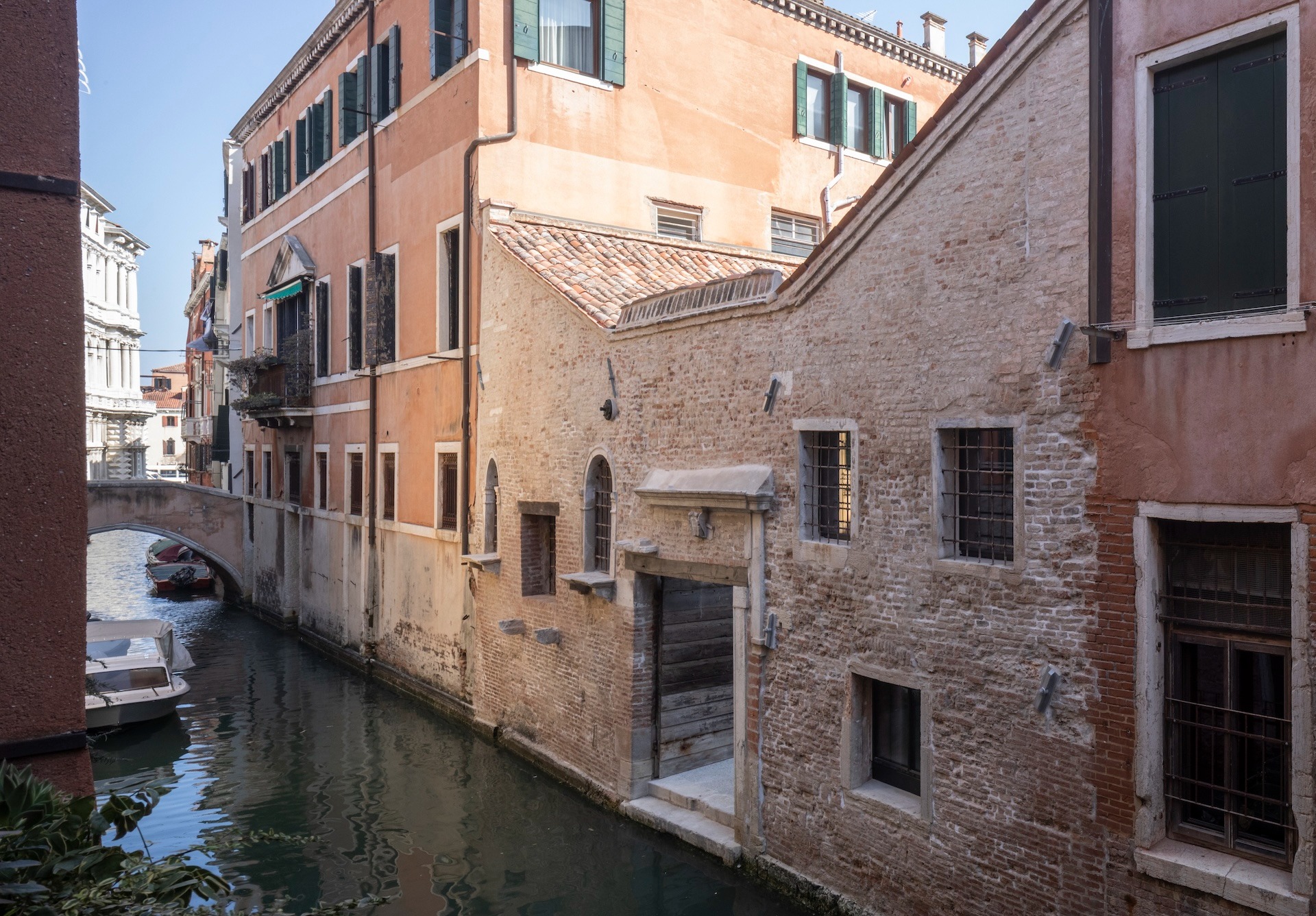
Ralf Petersen – It had been a carpenter's workshop, crowded with machinery, timber and structures built over the years. The ceilings were concealed, the courtyard was covered by a plastic roof, and even the staircase didn't exist. But we could see traces of the building's history, inscriptions on the walls and evidence of the many people who had lived and worked here over the centuries. At the time, the only entrance in use was the "porta d'acqua", facing the canal. The street entrance was permanently closed, and the neighbourhood had little idea of what was happening inside.Our first initiative was a workshop with students from Stuttgart. We opened the doors, invited the neighbours in and began discussing what the place might become.
Mara Sartore – What drew you to Venice? Were you already living here, or was Salone Verde the beginning of a deeper relationship with the city?
Anna Petersen – We had been in love with Venice for years. We first came as students and later returned with our children. Every visit revealed something new. We weren't looking for a holiday home, but for a place where we could develop a project of our own. We have an architecture practice in Berlin, where we work for clients. Once a project is completed, our involvement generally ends. We wanted to create something that would continue to evolve and remain part of our lives. That's how Salone Verde began.
Mara Sartore – Where does the name Salone Verde come from?
Ralf Petersen – It comes from the history of the building. This was once a Venetian palazzo belonging to the Loredan family. Their coat of arms is still visible above the “porta d’acqua". The earliest records date back to around 1344, when the building was known as Ca' Loredan. Over the centuries, the palazzo underwent significant transformations. Its upper floors disappeared, including the original salone, which occupied the central part of the building and was destroyed around 300 years ago.
Anna Petersen – We wanted to evoke that lost “salone”, while introducing the idea of a green space. The plants in the courtyard are only beginning to grow, but over time it will become greener. Green also represents life and growth. Salone Verde is not intended to be a finished exhibition space, but a living project, constantly evolving. In a way, we're reimagining the former “salone” as a green room.
Mara Sartore – You describe Salone Verde as an Art and Social Club, a definition I find particularly interesting because it suggests something that goes beyond a conventional exhibition space. How did this concept emerge, and what kind of community and cultural exchange are you hoping to foster here?
Anna Petersen – We want to create a place where people from different countries, backgrounds and disciplines can meet, exchange ideas and discuss how we want to live together. It's not exclusively about art. It's about cultural exchange and bringing people into conversation. Rather than architects speaking only to architects, or artists only to artists, we want to encourage encounters across disciplines. The local community is equally important. We want our neighbours to feel involved and to make Salone Verde a place that remains active beyond the Biennale.
Ralf Petersen – Interestingly, the definition “Art and Social Club” came later. Initially, we approached the building as architects. We imagined renovating it relatively quickly, drawing on our experience and working with German companies and craftspeople. But we soon realised that Venice requires a different approach. You need local craftspeople who understand the city's particular conditions, its materials, its spaces and the complex relationship between public and private life. Learning from Venice fundamentally changed our perspective. The social dimension of the project emerged through that process.
Mara Sartore – I've visited several exhibitions you've hosted during the Biennale. How does your programme relate to the Architecture Biennale, given your professional background?
Anna Petersen – During the 2025 Architecture Biennale, we curated Keep Cool: Workshop for Cool Cities in collaboration with the Technical University of Applied Science and the University of Stuttgart. The exhibition explored natural methods of cooling through two installations. Flight into Shadow focused on shade, one of the simplest ways to cool buildings, cities and our bodies. For the second installation, we worked with Berlin-based artist Antje Schiffers, who explored wind as a cooling element. We presented handwoven carpets and textiles from countries with traditionally hot climates, drawing attention to techniques that have existed for centuries. The question was how we might rediscover this knowledge and integrate it into contemporary approaches to cooling cities, without relying exclusively on technology.
Ralf Petersen – Antje Schiffers' work was titled Heat Is a Psychological Problem. Her point was that, while climate change is undeniable, we also need to think about adaptation. Traditional crafts, art and existing knowledge can offer valuable perspectives.
Mara Sartore – What happens at Salone Verde outside the Biennale?
Anna Petersen – We organise musical performances, workshops and lectures throughout the winter. I'm particularly interested in music. Even before the renovation, we experimented with the acoustics of the two rooms and discovered their remarkable qualities. Since then, we've hosted jazz guitar, percussion and opera performances.
Mara Sartore – How do you communicate these activities and involve a wider community?
Ralf Petersen – We're doing a great deal, but we haven't yet developed a sufficiently structured way of communicating our programme. We need to make our projects and future plans more visible. That's also one of the reasons Anna has moved to Venice.
Mara Sartore – Anna, you mentioned that you've recently moved to Venice. I'm curious to know how this has changed your relationship with the city. There's quite a difference between visiting Venice regularly and experiencing its everyday life as a resident. Has living here given you a different perspective on the city and its community?
Anna Petersen – I moved in July. After completing the renovation of Salone Verde, we were fortunate to find a beautiful house in Dorsoduro. Even before moving here, I never really felt like a tourist. I came to work, meet friends and spend time with people. We had already developed a close circle of friends, so the transition felt very natural. Now I genuinely feel part of the city.
Mara Sartore – Have you established collaborations with local universities?
Ralf Petersen – I've given a lecture and presented our work at the architecture university in Venice, although we haven't yet developed a formal collaboration. We have, however, begun working with the University of San Marino, particularly with industrial design students. They collaborated with students from Germany, bringing together architecture, music and design.
I find these multidisciplinary exchanges particularly rewarding. They're also fundamental to how I understand architecture.
Mara Sartore – I usually interview collectors or people directly involved in the art world, so I'm particularly interested in your perspective as architects. After all these years of coming to Venice, what do you consider the city's most urgent challenge?
Ralf Petersen – Every city is a constantly evolving organism, built and transformed by successive generations. Venice is unusual because of its extraordinary continuity.
Changes happen here on a very small scale. A window might be reopened after centuries, a building adapted to a different use. The city is continually being transformed, yet its essential character remains recognisable. Today, Venice is overwhelmed by tourism. I believe this is harmful, but I also see it as a particular phase in the city's history. At the same time, tourism has contributed to an enormous amount of restoration. Our friend Clemens Kusch once observed that Venice's buildings have perhaps never been in such good condition.
Mara Sartore – I can confirm that. Looking at photographs from my childhood, the difference is extraordinary. In the late 1970s, Venice was practically falling apart.
Ralf Petersen – I remember my first visit, around 1982. The city looked completely different.
But I believe Venice can also teach us something about sustainability, not necessarily as a technological or scientific concept, but as a way of living. When we hosted an exhibition by gmp, Gerkan, Marg and Partners, its founder Volkwin Marg spoke about how, in his youth, everything was repaired: shoes, clothes, cars, engines. Today, we tend to replace things rather than repair them. He said that anyone who wants to learn how to repair and beautifully transform things should come to Venice. I think that's a remarkable observation.
Mara Sartore – I've lived here for fifty years, and the transformation of the city over the last twenty has been particularly striking. The restoration of historic buildings and the arrival of art foundations have profoundly changed its cultural landscape. A couple of years ago, we compared the My Art Guides maps of Venice from 2009 and 2024 for an article published with “Il Gazzettino”. In Cannaregio, my neighbourhood, the number of cultural destinations had grown from roughly three to fifteen. It's an extraordinary transformation, but it also raises questions about the city's identity. So let me return to my original question: what does Venice really need, and how do you imagine it in twenty years?
Ralf Petersen – I think the most important thing is to bring people back to live in Venice. We need ordinary residential life, not more hotels, B&Bs and short-term rentals. It doesn't matter whether people were born here or have moved from elsewhere, as long as they identify with the city and feel part of its community. At present, there's a profound imbalance. Tourists often experience Venice as something artificial, almost like a stage set or an enormous exhibition. We need to restore it as a place for everyday life.
Mara Sartore – And yet so many people would love to live here but simply cannot find a home. I know many who have had to settle in Mestre or Marghera because housing in the historic centre has become inaccessible.
Ralf Petersen – We were fortunate. Besides our house in Dorsoduro, we found a small property in Santa Croce that once belonged to a gondolier who had lived there for decades. We were able to buy it at a reasonable price and renovate it through our practice. We're among those who have come to Venice with the intention of staying and becoming part of the community. I believe the population will grow again, although this transformation may take decades.
Mara Sartore – Anna, how do you imagine Venice in twenty years?
Anna Petersen – I believe cities, like natural environments, have a capacity to recover. Take the lagoon. Industrial development in Marghera caused enormous pollution, but the lagoon survived. Nature has an extraordinary ability to regenerate, even if the process takes years.
I think something similar can happen to Venice. When a situation reaches an extreme, it eventually creates the conditions for change. I'm convinced the city will find a way to recover.
Mara Sartore – During Covid, we witnessed something remarkable. Without the usual boat traffic, the water became extraordinarily clear, and fish were visible everywhere. The change happened in just a few months.
Anna Petersen – Exactly. And introducing electric motors would be an important step towards improving the lagoon's environmental conditions.
Mara Sartore – Finally, what are your ambitions for Salone Verde? How do you see the project developing now that you're more permanently based in Venice?
Ralf Petersen – I would like Salone Verde to contribute to the kind of Venice we've been discussing: a city with lively residential neighbourhoods, where people live, work and interact, rather than one devoted almost entirely to tourism and entertainment. Of course, much depends on political decisions and the future use of the city's historic buildings. What will happen to places such as the Fondaco dei Tedeschi? Could they serve different purposes? These questions are central to Venice's future. I hope that in twenty years Venice will be a city whose vitality comes from the people who live here. And that Salone Verde will be part of it: an open space where people meet, exchange ideas and imagine new possibilities together.
Credits:
1. The courtyard of Salone Verde. Photo: Alessandra Chemollo. Courtesy Salone Verde, art & social club.
2. Salone Verde seen from the canal, with the porta d'acqua. Photo: Alessandra Chemollo. Courtesy Salone Verde, art & social club.
3. One of the two rooms of Salone Verde, with its exposed timber ceiling. Photo: Alessandra Chemollo. Courtesy Salone Verde, art & social club.
4. Mara Sartore in conversation with Anna and Ralf Petersen at Salone Verde, Venice, 2026. Photo: Maxim Dosca. Courtesy My Art Guides, Lightbox.
5. Anna and Ralf Petersen, Salone Verde, Venice, 2026. Photo: Maxim Dosca. Courtesy My Art Guides, Lightbox.


