

The Unstable Life of Things: An Interview with Sophie Jung
Sophie Jung
Mara Sartore: Your work often moves between sculpture, performance, language, and narration, and many of your works seem to emerge from accumulation – of objects, references, fragments, gestures. How do you recognise when a constellation becomes a work?
Sophie Jung: When the balance is right, when the gaps between materials, sizes, associations start to vibrate. When I am called into its circle. It’s a coup de foudre. When the materials switch from being tedious junk to being a self-organising body of meaning. When I am compelled to investigate.
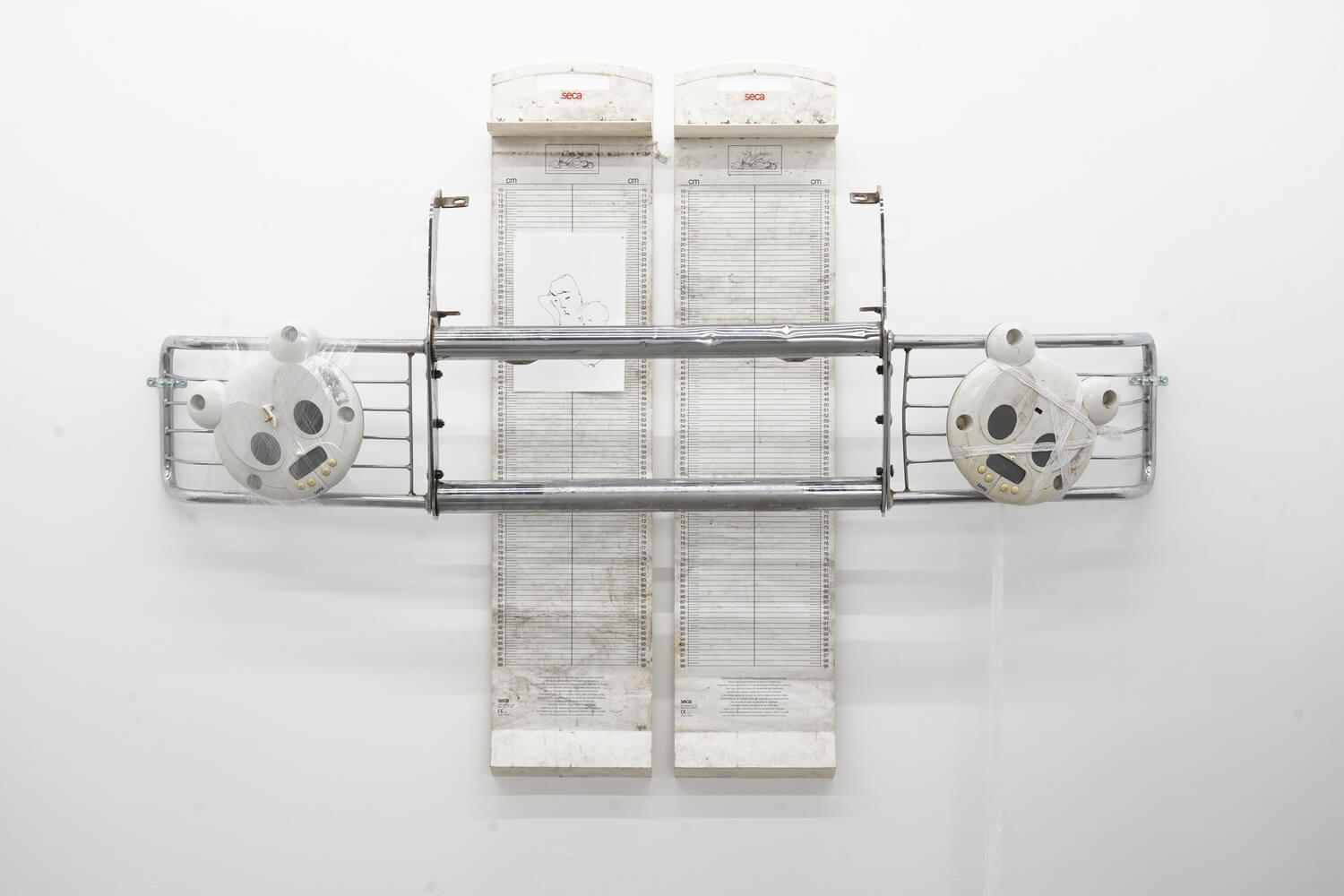
MS: In your presentation for Basel Social Club 2025, the carousel horse appeared almost as a wounded psychological figure – somewhere between prop, body, and failed monument, suspended between animation and collapse, spectacle and trauma. Are you interested in treating objects as carriers of unconscious or collective memory?
SJ: I think they come to me as that, my archive is somewhat of an Auffangstation for them and their various backstories. The objects are both carriers of collective memory as well as carriers of materialist sedimentation. When I combine them into a sculpture, I do it attuned to what I perceive or project to be their invisible psychomaterial entourage. It’s not just an aesthetic composition but a narratological one, too. My joy within it all is to build structures of meaning that are composed across their traits – aesthetic, spiritual, physical, associative, materialist. I want to give them a new role within a collective while celebrating their accumulated use value, emotional value, cultural value, their material raison d’être.
MS: Your exhibitions often ask viewers to navigate physically and mentally through fragments. How important is the viewer’s movement in completing the work?
SJ: Extremely important. I understand my sculptures as syntactic suggestions. I try to juggle assumed associations within a partially shared sociocultural context as well as a partially shared materially affective context but, as with any composition, their existence is contingent on the reader. I want my sculptures to always be in the process of constructing and destructing their own legibility, without hinting towards one right interpretation that needs to be uncovered. They are teasing the audience into a space of uncertainty and, ideally, from there push them towards taking analytical or even just perceptive responsibility. In fact, this process describes the politics of my work: it is vital to engage in a practice of continuous reading, of perpetual sense making, within a structure that doesn’t settle. Nothing is and forever continues to be what it once was, everything is to be continuously reacknowledged and reassigned in its shifting context: understanding the world is an ongoing practice. A name is an act of power, not a discovery, and we must learn not to settle for categories established by systems in place to dominate. Name and named, word and world have to be untethered if we want to keep our minds flexible in the face of fascist dictates.
MS: Your recent projects in Basel seem to deepen the relationship between sculptural assemblage and linguistic fragmentation. Do you see objects and words as operating through similar systems of association and collapse?
SJ: I think they operate within entirely different structures: they meet, as they must in order for communication, poetry, science, transaction to happen, but it is a dangerous fallacy that they can act as placeholders for each other. They exist on different planes, which is why working at their point of contact is so exciting and so fraught.
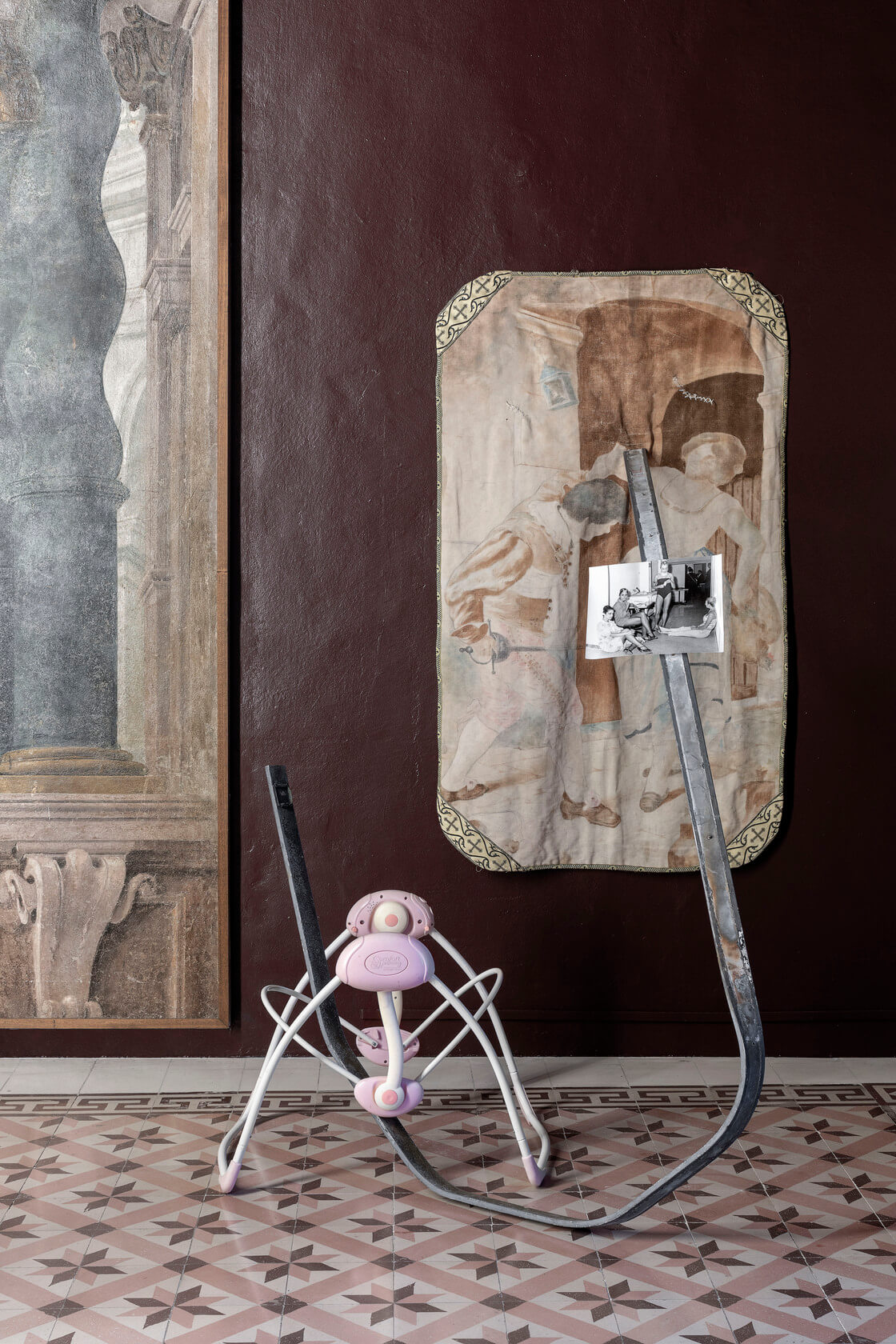
MS: How has living and working in Basel shaped your artistic practice? Is there a particular place in the city – a museum, a street, a landscape, or even a temporary space – that you feel especially connected to or would recommend visiting?
SJ: I think living so close to the border has shaped my thinking a lot: the arbitrariness of nation states and their individual legislatives, cultural and ethical decrees – what becomes an invisible norm is viscerally felt when I stand at the – otherwise unspectacular – Dreiländer Eck where France, Germany and Switzerland meet.


