Ángela Gurría
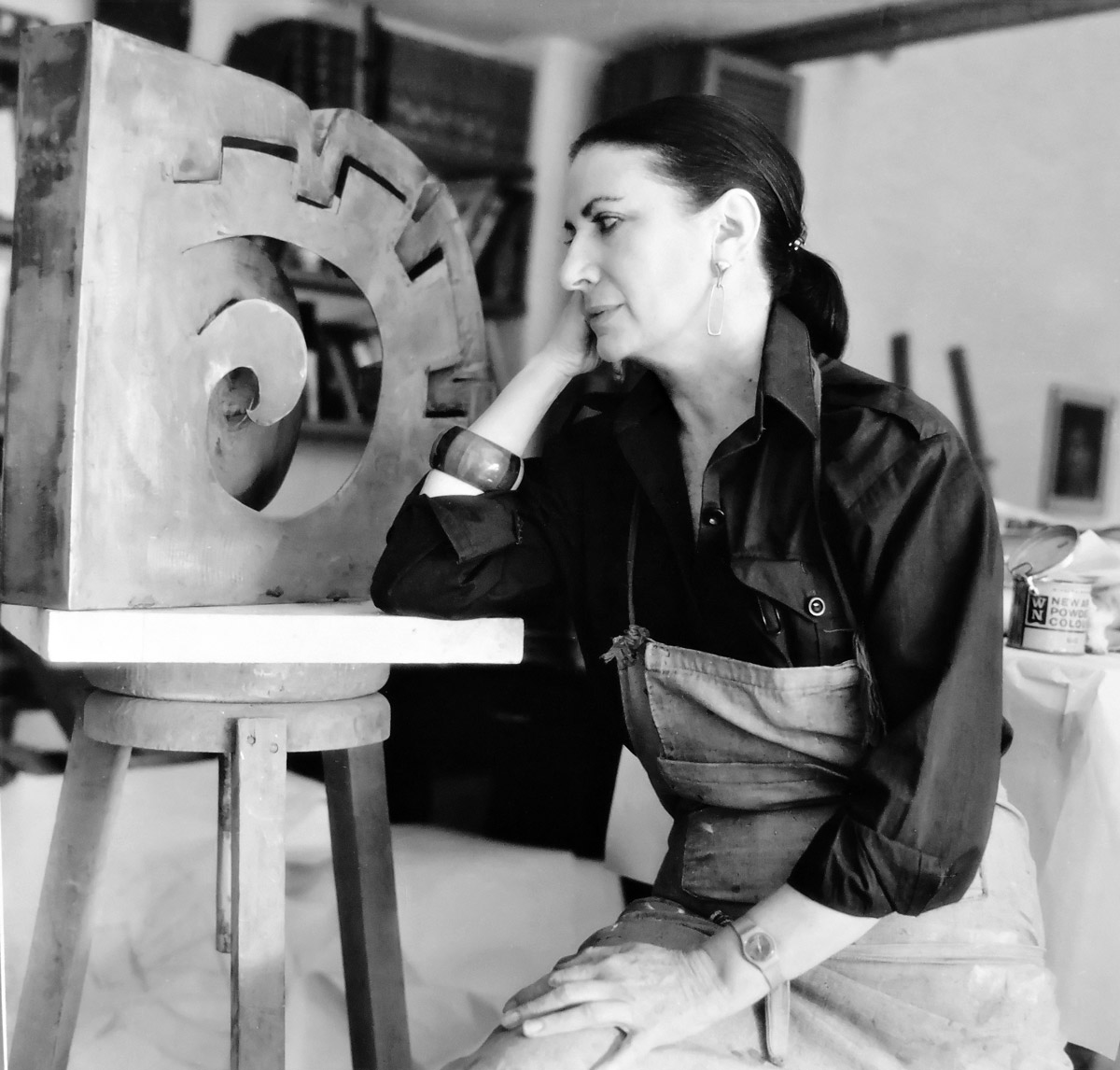
Ángela Gurría (1929–2023, Mexico City) was a pivotal figure in understanding the transition from modern to contemporary art, as well as the development of monumental sculpture in Mexico. In 1974, she became a member of the National Academy of Arts, making her the first woman to be accepted into the institution. Over the following years, she presented major exhibitions at the Museum of Modern Art in Mexico City, the Palacio de Bellas Artes, and the Federico Silva Museum.
Gurría was largely self-taught, later refining her sculptural practice while working as an apprentice to several established artists, including Germán Cueto and Mario Zamora. Throughout the 1950s and 1960s, her career began to take shape, rapidly gaining international recognition through her public sculptures and monumental installations, including “Río Papaloapan” (1970), “Homenaje a los Trabajadores del Drenaje Profundo” (1974), and “Señales” (1968), the latter forming part of La Ruta de la Amistad. Gurría’s work moves between sensitive abstraction and figuration through traditional sculptural techniques. Among the many themes she explored, the most prominent include the dichotomies of life and death, references to pre-Hispanic culture, and—perhaps most evidently—nature, especially the flora and fauna of Mexico.