José Pedro Croft
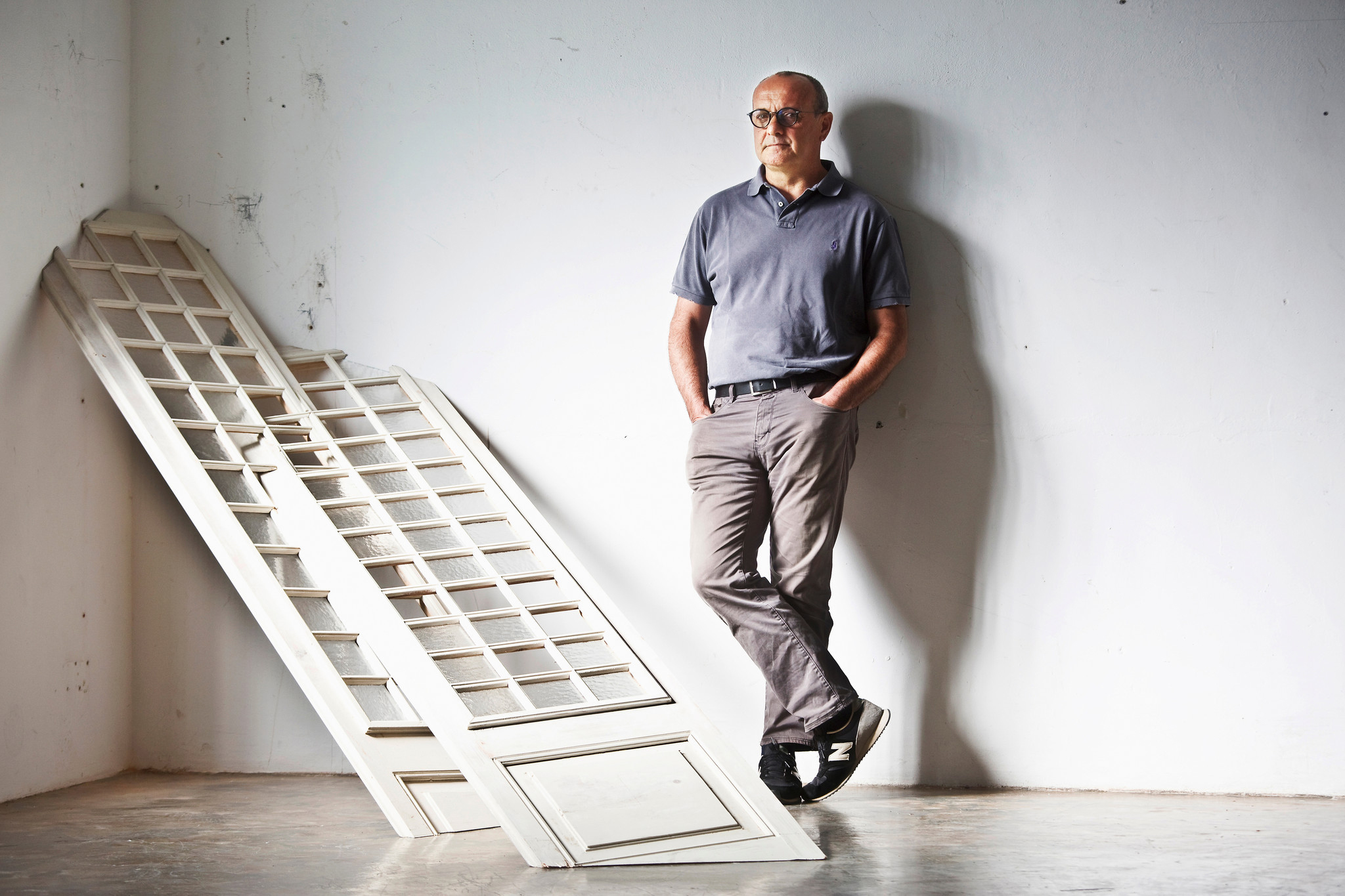
José Pedro Croft is one of the leading figures in the renewal of Portuguese sculpture. His career, both as a sculptor and draughtsman, has been characterised from its earliest stages by a meticulous constructive process that merges his formal vocabulary with his personal world. In this sense, Croft’s artistic project stands apart from the paths outlined by schools or groups.
Aligned with this notion, his works always emerge from an investigation into the processes set in motion within their own making, where the visual, plastic, and poetic dimensions of the objects intermingle. This generates an impression of precarious balance between the stable and the unstable which, for the Portuguese artist, “reflects the transitory nature of the universe.”
His sculptures establish complex relationships with their surroundings and with their own shapes and volumes through simple, almost minimalist structures that unite materiality with formal clarity. In some instances, these qualities are heightened through the application of bright industrial paint, producing sculpture that can be perceived as painting in relief. Croft also employs mirrors and glass to manipulate light, shadow, and reflections, creating new volumes and an altered perception of space—ultimately initiating a dialectical tension between fullness and emptiness that also permeates his works on paper.