Libensky Stanislav & Brychtova Jaroslava
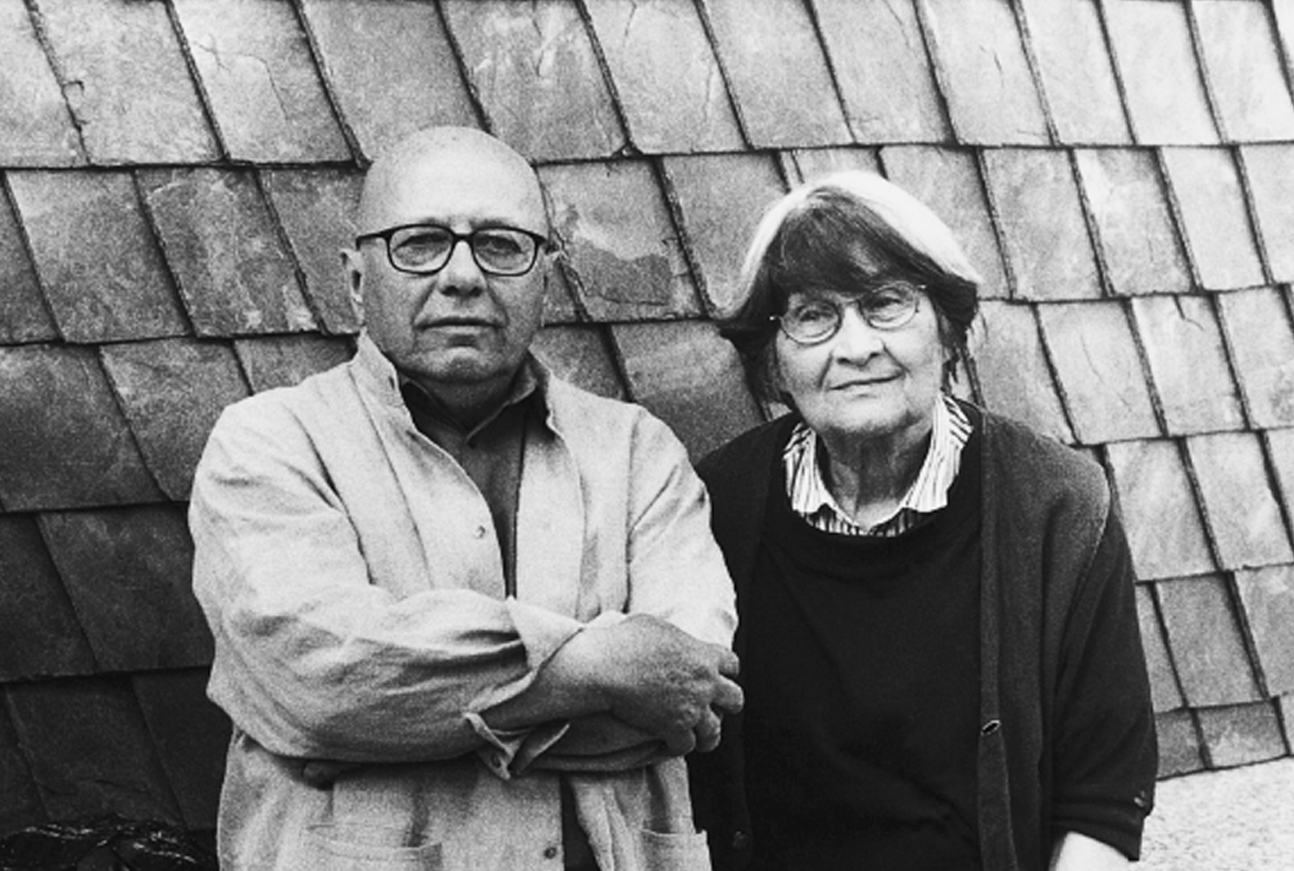
Jaroslava Brychtová (1924–2020) was an internationally acclaimed Czech artist who created monumental glass sculptures with her husband and collaborator, Stanislav Libenský (1921-2002), pioneering new approaches to working with glass, form, and light.
From the late 1950s until 2002, Brychtová and her husband produced an ambitious body of work that was closer to painting, sculpture, and architecture than to decorative art. Some of their pieces weighed over 13 tonnes and stood 14 feet high, often incorporating negative spaces or openings that allowed light to pass through. Their finest works united art and science through the medium of coloured glass, achieving profound visual and emotional effects.
Libenský created the drawings and designs, while Brychtová translated and interpreted them into three dimensions, using clay models to refine form and surface.
Jaroslava Brychtová was born on 18 July 1924 to artistic parents. Her mother, Anna Pekarkova, was a weaver, while her father, Jaroslav Brychtá — a sculptor and glassmaker — founded a local school dedicated to glassmaking, design, chemistry, and technology. He had a major influence on her artistic development.
Following in her father’s footsteps, Brychtová studied sculpture at both the Academy of Arts, Architecture and Design and the Academy of Fine Arts in Prague, before returning to Železný Brod, a small north Bohemian town with a centuries-old glassmaking tradition, where she spent most of her life.
In Železný Brod in the early 1950s, she met Libenský, then director of the glass school. Both were married at the time, and their decision to divorce and work together caused a minor scandal. Their collaboration first gained international attention at the 1958 World’s Fair in Brussels, where they presented coloured glass blocks engraved with reliefs of wild animals.
During Communist rule in Czechoslovakia, when censorship constrained many artists, Brychtová and Libenský found relative freedom working in glass — a medium classified as a “minor” art. Initially supported by the state, they exhibited at World Expos in Montreal (1967) and Osaka (1970). However, after the Soviet-led invasion of 1968, they were expelled from the Communist Party and temporarily banned from travelling abroad together.
Over the decades, as their reputation grew and their works entered the collections of institutions such as The Met in New York and the Victoria and Albert Museum in London, Brychtová became a source of inspiration for younger generations of female glass artists around the world.