

Chiara Crespi on Athens, Art and New Connections
Italian journalist and founder of AAATHENS Chiara Crespi reflects on the journey that brought her from Paris to Athens and on the creation of a platform designed to make the city’s cultural landscape easier to navigate. In this interview, she discusses the evolution of contemporary art in Greece, the growing role of independent spaces and the cultural geography that connects Athens with the islands. At the heart of her vision lies a desire to build bridges: between artists and audiences, local communities and international visitors, established institutions and emerging projects.
Chiara Crespi
How and where did your journey in art and culture begin? What brought you to Athens, and what convinced you to make it your home?
I'm Italian, but I lived in Paris for nineteen long years. For a decade I was the only journalist at Art for Breakfast, a media platform dedicated to contemporary art that, in some ways, anticipated what AAATHENS is today. Writing has always been my natural language: it is the medium through which I express myself best.
During Covid I wrote ZOTA, a screenplay project that led me into extensive research on spirituality and Greek Orthodoxy. From there, an interest emerged that gradually became increasingly personal, eventually bringing me to Athens.
What convinced me to stay was the city itself. I find it extraordinary because it is still accessible, vibrant and deeply human. There is a sense of community and civic awareness that I had rarely encountered elsewhere. Here I found a new balance and, over time, I simply came to feel at home.
How did the idea for AAATHENS come about? How would you describe the platform's mission and the objectives it aims to achieve?
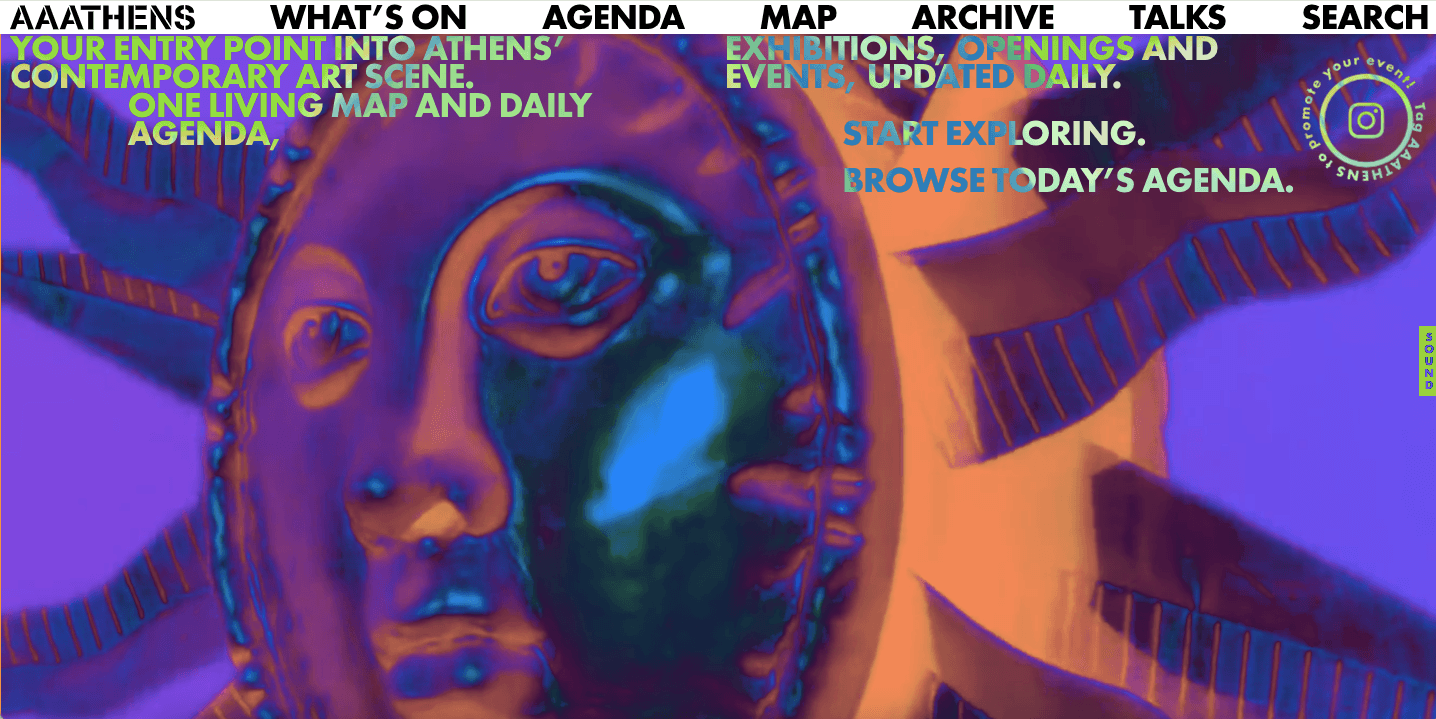
AAATHENS was born out of a very practical need. When I moved to Athens, I realised that the art scene was incredibly vibrant, but also difficult to navigate. There was so much happening, yet it was complicated to find reliable information, understand what was open, and find your way through exhibitions, spaces and events.
In fact, it was a situation I had already experienced years earlier in Paris with Art for Breakfast. That experience taught me that, before telling the story of an art scene, you first need to make it accessible. I immediately understood what kind of platform was needed and decided to build it.
At the time of Art for Breakfast, the Belleville district was emerging as a new hub for contemporary art. Through short videos, we were able to give the same visibility to major museums, from the Palais de Tokyo to the Louvre, as we did to independent galleries and lesser-known artists. Today the format has changed: twenty or twenty-five seconds instead of two minutes, but the idea remains exactly the same.
That is precisely the mission of AAATHENS: to offer visibility across the board, without hierarchies, placing museums, foundations, established galleries, independent spaces and temporary projects on the same level, while helping to introduce the Athenian art scene to an increasingly international audience.
How have you seen the Greek art scene evolve since you have been living there? What have been the most significant changes?
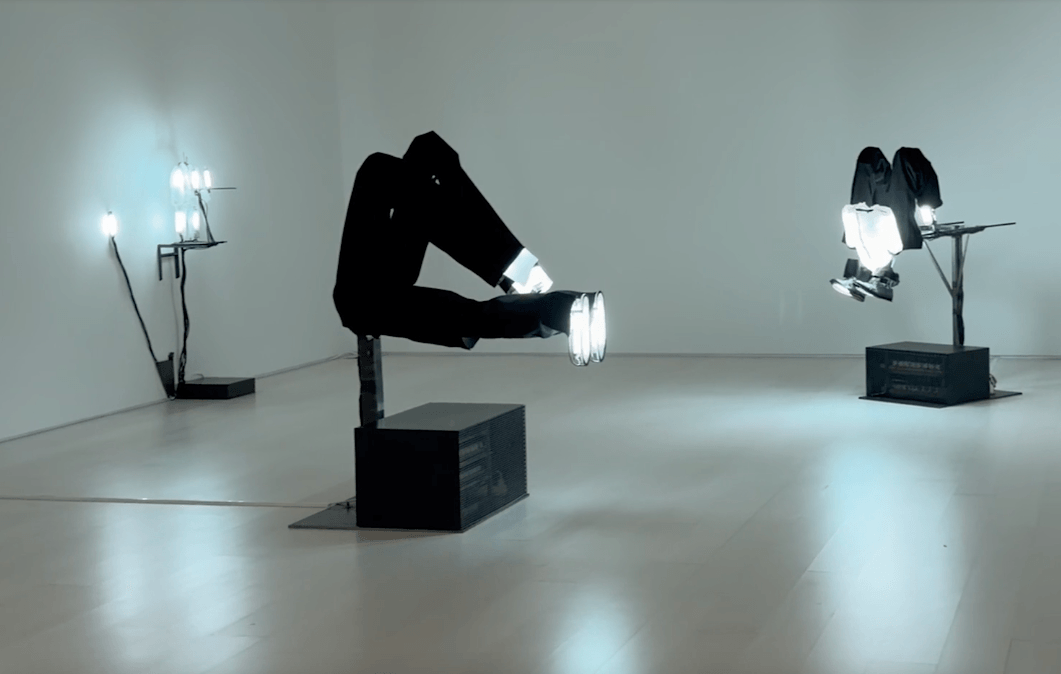
Greece has not experienced a linear history of art; it has been interrupted, to some extent, by economic crises and restrictive political systems. It has undoubtedly evolved, as many people say, since documenta in 2017.
But after an event like that, it takes determination and creativity to carry forward what has been set in motion: the echo of a single moment is not enough.
I have only been living in the city since 2021, but I see more and more creative spaces emerging, along with collaborations between artists and curators, residencies, performances and new projects.
It seems to me that Greece is experiencing a kind of cultural renaissance.
What strikes me most is the openness of the artists and curators, and the room that still exists for experimentation. There is an explosion of creativity that deserves the attention of international collectors and curators.
How does the Greek art scene engage with the international landscape and, conversely, what are the elements that make it unique?
As I was saying, it is about the room for experimentation. The scene is undergoing a major transformation and, while in other countries it has become more saturated, in Greece I feel there is still the possibility to take risks, explore new languages and build collaborations in a more spontaneous way. The cost of producing and collecting art here is still reasonable, and this makes the scene less predictable and more open to discovery.
I feel that, until now, the contemporary Greek cultural reality has remained somewhat under the radar, apart from DESTE’s event on the island of Hydra, which every year brings a huge number of international journalists and art enthusiasts. It is the result of the decades-long work of Dakis Joannou, who founded DESTE in 1983. The summer opening in Hydra always takes place on the same weekend as the closing of Art Basel, and Joannou has managed to create an unmissable event, also thanks to a programme that brings together established international artists and Greek talents.
Dakis has done his part. Now it is up to all of us to continue stimulating and connecting, to create bridges and not wait for a single event each year to attract international attention. Synergies are beautiful and possible, but they need to be built consistently.
I also believe that the work of many Greek artists, often born out of an expressive urgency rather than a commercial logic, has a particular value today: it is rooted in their own history, while at the same time constantly seeking to free itself from it and open up new paths.
In your opinion, what are the most interesting energies within the Athenian scene today? Are there artists, independent spaces, collectives or institutions that are worth keeping an eye on?
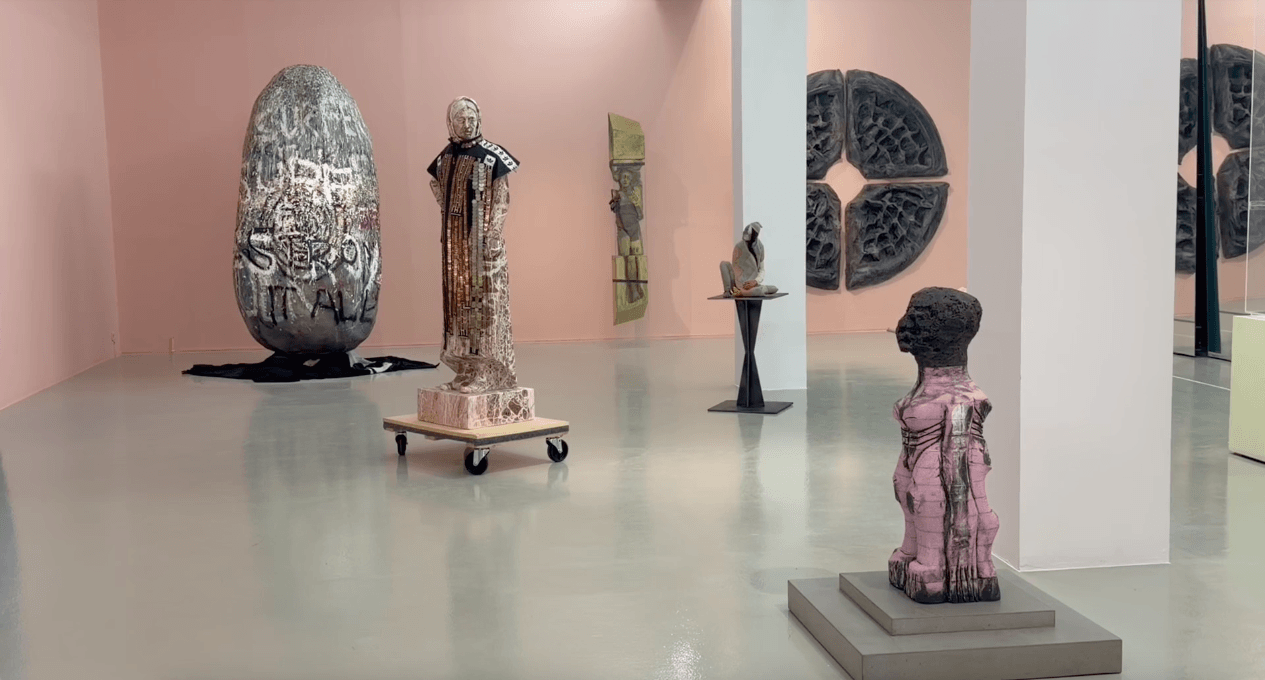
The Athenian scene operates on multiple levels at the same time, and the beauty lies precisely in this coexistence. There are major institutions, such as the Benaki Museum, EMΣT | National Museum of Contemporary Art Athens, Theocharakis Foundation, Basil and Elise Goulandris Foundation, Onassis Stegi and READY, which carry forward extensive programmes spanning exhibitions, theatre, panels and educational projects.
Then there is the network of historic galleries, from Bernier/Eliades Gallery to The Breeder, from Gagosian to Zoumboulakis Galleries. Finally, there is what I consider the real driving force of the scene: the growing network of independent spaces such as ARCH, Cypher, Radio Athènes, Atopos cvc, Upper Ankyle, Alkinois, Living Room and MISC, which multiply year after year and bring new energies, less connected to the market and more focused on research.
I do not feel comfortable recommending specific galleries, because there is such a great diversity within the scene that I would rather invite people to discover it for themselves. I would simply suggest taking a look at aaathens.art to watch videos of recent exhibitions across the city.
For someone visiting Athens with the aim of discovering its art scene, or Greece more broadly, where would you suggest starting? What are the essential stops? Beyond the better-known places, are there spaces or addresses that have gained a special place for you over the years?
I don’t know [laughs]. During the summer, Athens slows down a little, but this is precisely when the Greek art scene expands. Rather than being concentrated in a single city, it spreads across the islands, each with its own identity.
I like to think of summer as an itinerary. Andros continues to be a reference point thanks to the Goulandris Museum of Contemporary Art and its exhibition programme. Tinos combines its artistic tradition with a new generation of independent and site-specific projects. Chios, through DEO Projects, has shown how even an island outside the usual routes can become an internationally recognised place for research. Antiparos continues to grow thanks to realities such as Antiqua Gallery, while islands such as Lesvos, Leros, Kythnos, Kea and Samos are each building, in their own way, an increasingly interesting cultural geography.
The beautiful thing is that there is no single centre: you need to move, follow the artists, and cross the islands. It is a widespread contemporary Greece, made up of small but extremely ambitious places, often more experimental than many much larger realities.
Then, in autumn, everything returns to Athens. This is when the city truly comes alive: openings, exhibitions, fairs, residencies, talks and a very busy calendar of events. And there is one field in which Greece continues to particularly surprise me: performance. There is an extremely vibrant scene, capable of naturally moving between visual arts, theatre, dance and music, without feeling too restricted by boundaries.
To navigate this landscape, I believe the platforms that have built connections between different contexts over the years are essential. My Art Guides is one of them: it has continuously contributed to telling the story of the main international contemporary art events, and today I am happy that there is an opportunity to collaborate. It feels to me that we share the same underlying idea: helping people find their way and create connections.
Ultimately, what truly interests me is this: building bridges. Between those who create and those who observe, between those who live here and those arriving in Athens for the first time. If AAATHENS manages to create even a few unexpected encounters, then it is moving in the right direction.


